

Correcting Guam's History in the PACT Act This bill expands eligibility for a presumption of service-connection for specified diseases associated with exposure to certain herbicide agents. Under a presumption of service-connection, specific conditions diagnosed in certain veterans are presumed to have been caused by the circumstances of their military service. Health care benefits and disability compensation may then be awarded. Under the bill, service performed in Guam or its territorial waters between August 15, 1958, and July 31, 1980, provides a veteran who has a specified disease that is associated with exposure to certain herbicide agents with eligibility for a presumption of service-connection. (Under current law, the eligible time frame for service in Guam is between January 9, 1962, and July 31, 1980.)
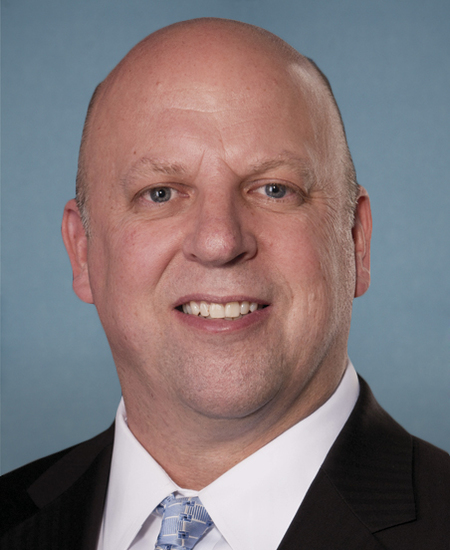
Rep. Scott DesJarlais
Sponsored bills
Maddy summaryHR 1211, the Student Loan Accountability Act, prohibits federal agencies (like the Education Department, Treasury, or Justice Department) from canceling or forgiving most federal student loans on a mass scale. It specifically blocks actions to cancel or modify repayment terms for "covered loans" (most federal student loans under the Higher Education Act or Health Education Assistance Loan Program) unless those changes were already permitted under laws or regulations in effect as of March 12, 2020. The bill allows only existing targeted forgiveness programs under the Higher Education Act to continue, while preventing new executive actions that would alter repayment requirements without explicit new congressional authorization. This bill does not create new benefits but restricts the government's ability to implement broad student loan relief.
Maddy summaryHR 1210, the "Stop Fentanyl Border Crossings Act," amends the Public Health Service Act to give the Secretary of Health and Human Services new authority to block border entries. It directly affects countries with substantial fentanyl smuggling, allowing the Secretary to suspend the introduction of people and property from those nations if they determine it poses a serious public health danger. The key provision permits the Secretary to prohibit border crossings for a set period when fentanyl smuggling creates an increased risk of drugs entering the U.S., based on regulations they establish. This is a procedural change to existing public health law, not a new program.
Maddy summaryThis bill expands the use of 529 college savings accounts to cover career training and credentialing costs. It allows funds to pay for tuition, fees, books, and testing expenses related to recognized postsecondary credential programs (like vocational certifications) that meet specific standards under the Workforce Innovation and Opportunity Act. The change directly affects workers seeking industry-recognized credentials - such as nursing certifications or IT certifications - instead of traditional degrees. It treats these expenses the same as traditional college costs for 529 account withdrawals, making it easier to save for career-focused training. The provision applies to expenses paid after the bill's enactment date.
Maddy summaryThe Military Spouse Hiring Act expands the Work Opportunity Tax Credit to include military spouses. Employers who hire a spouse of an active-duty military member - certified by a local agency as meeting eligibility requirements on the hiring date - can claim this tax credit. The credit reduces the employer's federal tax liability for hiring such individuals. This provision applies to new hires after the bill's enactment date.
Maddy summaryHR 1275 prohibits federal funding from being used to implement Executive Order 14091, which directed federal agencies to advance racial equity and support underserved communities. The bill directly affects federal agencies that would have allocated taxpayer funds toward programs or initiatives under the executive order. Its key provision blocks all federal financial resources for the order's requirements, preventing agencies from carrying out its equity-focused actions. This policy change stops the government from using public money to support the specific racial equity initiatives outlined in the executive order.
No Retaining Every Gun In a System That Restricts Your Rights Act This bill modifies the retention requirements for firearm transaction records of federal firearms licensees (FFLs) that go out of business. Current law generally requires FFLs that go out of business to deliver their firearm transaction records to the Bureau of Alcohol, Tobacco, Firearms and Explosives (ATF). This bill removes the requirement for FFLs that go out of business to deliver their firearm transaction records to the ATF. Further, the bill requires the ATF to destroy all out-of-business records it has collected from FFLs.
Maddy summaryThis bill amends the Higher Education Act to exempt certain family-owned assets from being counted when calculating federal student aid eligibility. Specifically, it excludes family farms where the family resides and small businesses with 100 or fewer full-time equivalent employees owned and controlled by the family. These assets will no longer be considered when determining a student's financial need for aid programs. The change directly affects students from qualifying family farms or small businesses when applying for federal financial aid. The exemption applies to assets held by the family, not just the business itself.
Maddy summaryHR 1202, the REDI Act, amends the Higher Education Act to allow medical and dental residents to temporarily pause federal student loan payments without accruing interest during their internship or residency programs. This directly affects borrowers with federal student loans who are enrolled in qualifying medical or dental training programs. The key provision adds a new rule (paragraph 6) ensuring these borrowers qualify for a deferment period where they don't pay principal and interest accrues at 0%. The change modifies existing loan rules to explicitly include medical/dental residents under the "in-school" deferment category. This policy change provides immediate financial relief during a critical training phase for healthcare professionals.
Maddy summaryHR 1200, the National Right-to-Work Act, prohibits requiring workers to join a union or pay dues as a condition of employment in both private-sector workplaces (covered by the National Labor Relations Act) and railroad industries (covered by the Railway Labor Act). The bill amends key sections of these laws to eliminate provisions that allowed union security agreements, meaning workers in unionized settings would no longer be forced to pay dues to retain their jobs. This directly affects employees in unionized workplaces across the U.S., particularly those in industries with existing union contracts that included mandatory dues. The law changes the legal framework to ensure union membership and dues payment remain voluntary for all workers.