

Stop Federal Vaccine Mandates for Employees Act This bill prohibits the Occupational Safety and Health Administration from issuing any emergency temporary standard that requires an employee to receive a drug, vaccine, or other biological product.
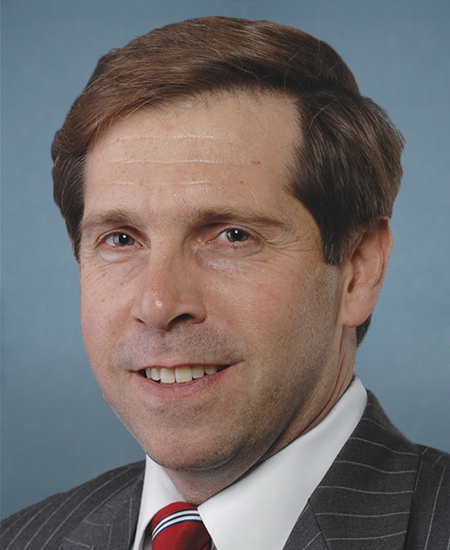
Rep. Charles J. "Chuck" Fleischmann
Sponsored bills
This bill posthumously provides for the award of a Congressional Gold Medal in commemoration of the 13 service members who died on August 26, 2021, while stationed at Hamid Karzai International Airport in Afghanistan.
This resolution expresses that the International Atomic Energy Agency (IAEA) plays an indispensable role in strengthening nuclear security and safety around the globe. The resolution also reaffirms that the United States has a vital interest in preventing the spread of nuclear weapons and securing nuclear materials.
National MEP Supply Chain Database Act of 2021 This bill requires the National Institute of Standards and Technology to establish a database that provides a national overview of the networks of U.S. supply chains.
This joint resolution nullifies a Department of Labor emergency temporary standard for preventing the transmission of COVID-19 in employment settings. Under the standard issued on November 5, 2021, employers with 100 or more employees must require their onsite employees to either be fully vaccinated against COVID-19 or undergo weekly COVID-19 testing.
Eastern Band of Cherokee Historic Lands Reacquisition Act This bill takes specified lands and easements in Monroe County, Tennessee, into trust for the use and benefit of the Eastern Band of Cherokee Indians. These lands include the Sequoyah Museum, the Chota Memorial, the Tanasi Memorial, and land to provide support for these properties and cultural programs. The Tennessee Valley Authority (TVA) maintains its right to carry out river control and development on these lands, including temporarily and intermittently flooding certain lands. The bill specifies the structures that may be constructed with the TVA's written consent on certain lands subject to flooding. Additionally, the TVA must be compensated for lost hydropower capacity from future development of these lands. Further, the bill specifies that the United States is not liable for loss or damage resulting from certain activities, such as the permanent flooding of adjacent lands. In addition, the bill outlines the TVA's continuing responsibilities, including those related to environmental remediation. Finally, the bill prohibits gaming on these lands.
No Vaccine Mandate Act This bill prohibits certain funding made available for the Departments of Labor, Health and Human Services, and Education and related agencies from being used for implementing or enforcing a rule that requires a COVID-19 vaccine.
This bill prohibits the use of federal funds to require a member of the Armed Forces to receive a COVID-19 vaccination. The bill also prohibits adverse action (e.g., punishment) being taken against a member of the Armed Forces because the member refuses to receive a COVID-19 vaccination.
Original National Domestic Violence Awareness Month Resolution of 2021 This resolution supports the goals and ideals of National Domestic Violence Awareness Month. Further, it expresses the sense of the House of Representatives that Congress should continue to raise awareness of and support programs to end domestic violence.
State, Local, Tribal, and Territorial Fiscal Recovery, Infrastructure, and Disaster Relief Flexibility Act This bill allows states, tribes, territories, and localities to use certain COVID-19 relief funds for new categories of spending, including for natural disasters and infrastructure projects. It also makes changes to expenditure deadlines and other aspects of this funding. Specifically, recipients may use funds for emergency relief from natural disasters and associated negative economic impacts of natural disasters. In addition, recipients may use a portion of their COVID-19 relief funds for designated infrastructure projects, such as nationally significant freight and highway projects. Furthermore, the bill allows recipients to expend COVID-19 relief funds on these types of infrastructure projects until September 30, 2026. Under current law, recipients must expend the funds by December 31, 2024. Other changes in the bill include (1) modifying eligibility and allocation requirements for funding set aside for counties and Indian tribes that are near public lands, (2) allowing Indian tribes an additional year to expend their COVID-19 relief funds, and (3) establishing a process for government entities to decline COVID-19 relief funds and requiring any declined funds to be used to reduce the federal deficit.