

Maddy summaryHR 3583 requires funeral honors details presenting a folded U.S. flag to military members or veterans at funerals to recite the 13 specific "Folds of Honor" with their symbolic meanings (e.g., "The 1st fold is a symbol of life"). This applies to flag presentations under federal law for deceased service members or veterans, directly affecting military funeral honors teams. Families may opt out of the recitation if they choose, per the bill's exception clause. The bill adds this requirement to U.S. Code without changing existing funeral procedures.
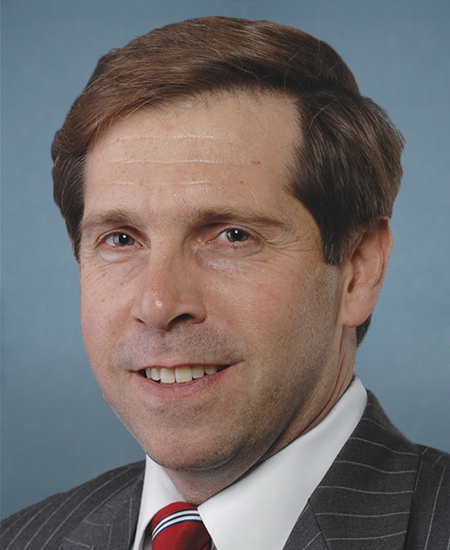
Rep. Charles J. "Chuck" Fleischmann
Sponsored bills
Maddy summaryHR 3463 (COUNTER Act) expands the U.S. military's authority to counter drone threats by allowing the Department of Defense and Coast Guard to neutralize unmanned aircraft systems without being restricted by certain federal laws. It exempts related technology, procedures, and protocols from public disclosure requirements under federal and state laws, and permits military commanders to delegate these actions. The bill applies to both domestic and overseas operations, clarifying that other federal laws do not apply to U.S. military or Coast Guard activities mitigating drone threats abroad. Key changes include broadening legal authority beyond previous restrictions and extending reporting deadlines for related activities.
Maddy summaryThis resolution (HRES 417) is a symbolic gesture to honor the National Science Foundation (NSF) on its 75th anniversary. It recognizes the NSF’s founding in 1950 to advance science, engineering, and education, highlighting its role in supporting research across all 50 states, fostering global scientific collaboration, and enabling key innovations like the internet, MRI technology, and AI. The resolution does not create new policy or funding but formally commends the NSF’s mission and achievements, including its annual support for roughly 350,000 researchers and its contribution to 268 Nobel Prize-winning discoveries. It concludes by reaffirming congressional support for the NSF’s ongoing work.
Maddy summaryHR 2243, the LEOSA Reform Act, updates the Law Enforcement Officers Safety Act to clarify and expand firearm carry rights for qualified current and retired law enforcement officers. It modifies training requirements to allow officers to meet standards set by their former agency, their state, any local agency in their state, or a certified instructor within the state. The bill also adds exceptions for transportation property and public spaces when applying state laws, and permits qualified officers to carry concealed firearms in certain federal facilities (Security Level I/II civilian public access facilities). These changes aim to provide clearer, more flexible standards for firearm carry while maintaining existing safety frameworks.
Maddy summaryHRES 412 is a non-binding House resolution congratulating Pope Leo XIV on his historic election as the 267th pope and the first American-born pope in the Catholic Church's 2,000-year history. The resolution recognizes his Chicago upbringing, missionary work in Peru, and commitment to humility and pastoral care, highlighting his significance for American Catholics. As a symbolic gesture with no legal effect, it expresses the House's support for his leadership without altering any policies or affecting any stakeholders.
Maddy summaryHR 3277, the Ensuring Lasting Smiles Act, requires group health plans and health insurance issuers to cover medically necessary outpatient and inpatient treatments for congenital anomalies or birth defects primarily affecting the eyes, ears, teeth, mouth, or jaw. This includes reconstructive procedures, dental/orthodontic support during treatment, and follow-up care, but excludes purely cosmetic surgery not tied to a medical diagnosis. Cost-sharing (like copays) for these services must not be stricter than for other medical benefits. The law takes effect for plan years beginning January 1, 2026, and mandates insurers to provide notice about this coverage to beneficiaries.
Maddy summaryHR 3220 establishes a "quantum sandbox" program to accelerate near-term quantum technology applications. The bill requires the Commerce Secretary, working with NIST, to create a public-private partnership focused on developing and testing quantum computing, communication, and sensing solutions that can be deployed within 24 months. This program will engage industry groups, national labs, and research centers to break down barriers to accessing quantum hardware for practical uses. The goal is to deliver tangible benefits to U.S. businesses and consumers through faster innovation in quantum applications.
Maddy summaryHR 3028, the Duty Drawback Clarification Act, clarifies tariff classifications for whisky imports by updating the Harmonized Tariff Schedule. It replaces a general whisky tariff code with specific subheadings based on whisky type (Irish/Scotch, Bourbon, Rye, or "other") and container size (under or over 4 liters), adding 8 new statistical suffixes. This change directly affects whisky importers and U.S. Customs officials by standardizing how these products are classified for duty-free entry (as indicated by "Free" in the tariff). The new classifications take effect 15 days after the bill's enactment.
Maddy summaryHRES 337 is a symbolic House resolution honoring linemen for their critical role in maintaining power infrastructure and responding to emergencies. It recognizes them as first responders who work in dangerous conditions 24/7 to keep electricity flowing, supporting schools and businesses during storms. The resolution formally supports designating April 18, 2025, as "National Lineman Appreciation Day" to publicly acknowledge their contributions. As a non-binding resolution, it has no direct policy impact or effect on affected individuals.
Maddy summaryHR 2951, the "Easter Monday Act of 2025," would add Easter Monday as a legal public holiday for federal employees under Title 5 of the U.S. Code. This procedural bill directly affects federal government offices and workers by designating Easter Monday as a paid holiday, following Washington's Birthday in the annual holiday schedule. It does not change funding, create new programs, or impact state or private sector holidays. The change would only apply to federal operations, not private businesses or state governments.