

Maddy summaryHRES 984 is a symbolic resolution designating January 9, 2026, as "National Law Enforcement Appreciation Day." It directly honors all federal, state, local, and tribal law enforcement officers across the United States for their service and sacrifices. The resolution expresses the House's support and gratitude, encourages public observance through ceremonies, and recognizes officers who have made the ultimate sacrifice. As a non-binding resolution, it does not create new laws or policies but serves as a formal expression of appreciation.
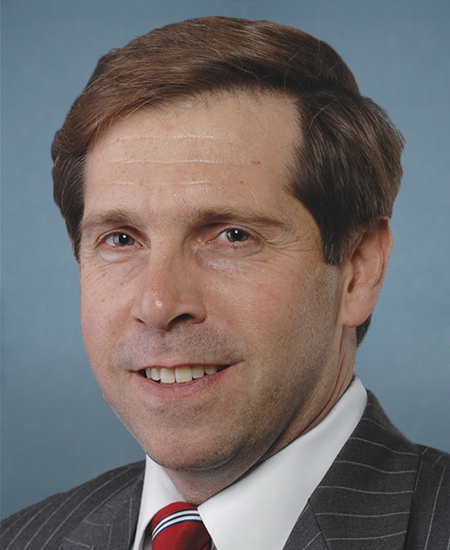
Rep. Charles J. "Chuck" Fleischmann
Sponsored bills
Maddy summaryHR 6454 establishes a 5-year pilot program at five Department of Veterans Affairs (VA) medical centers to improve suicide care for veterans. The program requires VA staff at these sites to complete a 10-week training curriculum based on the Zero Suicide Institute's model, focusing on suicide screening, risk assessment, safety planning, and care transitions. It mandates annual reports to Congress tracking staff training completion, policy alignment with the Institute's standards, and comparisons of suicide-related outcomes (like screenings and hospitalizations) between pilot sites and other VA facilities. The pilot includes one site primarily serving rural veterans and requires site selection based on factors like regional suicide rates and staff capacity. The program will conclude after five years unless the VA extends it for up to two more years.
Maddy summaryThis House resolution (HRES 952) expresses the U.S. House of Representatives' support for Gibraltar's right to determine its own political status as a British Overseas Territory through self-determination. It recognizes Gibraltar's democratic choices - where over 98% of voters chose to remain under British sovereignty in 1967 and 2002 - and highlights Gibraltar's historical role in U.S. military operations, including World War II and NATO missions. The resolution affirms that Gibraltarians' views must be central to any discussions about Gibraltar's future status, while acknowledging the territory's strategic importance to U.S. security interests in the Mediterranean. As a non-binding resolution, it does not alter U.S. policy but formally honors Gibraltar's contributions and right to self-determination under international law.
Essential Caregivers Act of 2025 This bill prohibits certain health care facilities from limiting the access of essential caregivers to residents of those facilities, including during designated emergency periods. Specifically, the bill generally prohibits Medicare skilled nursing facilities, Medicaid nursing facilities, Medicaid intermediate care facilities, and associated inpatient rehabilitation facilities from restricting the access of essential caregivers to residents of the facilities, including during emergency periods in which visitation rights are otherwise restricted. During emergency periods, facilities may restrict access for an initial period of up to seven days and for one additional maximum seven-day period (if the additional period is approved by the state health department). Facilities may restrict access for a total of 7 days (or 14 days with the approval of the state health department) during an emergency period. Essential caregivers must agree to comply with any safety protocols set by the facility, which may be no more stringent for caregivers compared to those for staff. Caregivers who fail to comply with these requirements may be denied access, subject to an appeals process.
Miracle on Ice Congressional Gold Medal Act This act provides for the award of Congressional Gold Medals to the members of the 1980 U.S. Olympic men's ice hockey team in recognition of the team's achievement at the 1980 Winter Olympic Games.
Maddy summaryThis bill establishes new requirements for pharmacy benefit managers (PBMs) working with Medicare Part D prescription drug plans and Medicaid programs. It mandates that PBMs pay pharmacies a specific reimbursement amount based on drug acquisition costs plus a fixed fee, pass through manufacturer rebates directly to beneficiaries at the point of sale, and prohibits steering practices that direct patients to specific pharmacies. The bill applies to Medicare Part D plans and Medicaid managed care organizations beginning January 1, 2027, affecting how PBMs interact with pharmacies and handle drug rebates. Violations could result in criminal penalties of up to $1 million or 10 years in prison for willful noncompliance. The bill aims to increase transparency and fairness in pharmacy drug pricing for Medicare and Medicaid beneficiaries.
Maddy summaryThis bill directs the American Battle Monuments Commission to correct historical errors by identifying Jewish World War I and II veterans buried overseas under incorrect Christian markers (Latin crosses) and replacing them with appropriate markers. It establishes a 10-year program to contact families of affected veterans, with the Commission funding the effort at $500,000 annually through nonprofit contracts. The program specifically targets veterans buried in foreign U.S. military cemeteries with markers indicating non-Jewish faith, addressing a documented mistake affecting approximately 900 Jewish servicemembers. This directly affects Jewish veterans' families by honoring their heritage and correcting past burial inaccuracies.
Maddy summaryHR 6449, the "DO NOT Call Act," amends the Telephone Consumer Protection Act of 1993 to strengthen penalties for illegal robocalls. It increases criminal penalties for willful violations to up to one year in prison (or three years for aggravated offenses like repeated high-volume calls or calls intended to support felonies), and raises fines for inaccurate caller identification from $10,000 to $20,000 per violation. The bill directly affects businesses and entities making unsolicited calls without consent, including those using auto-dialers or prerecorded messages. Key provisions define "calls" broadly to include unsolicited texts sent via auto-dialers without prior permission.
Maddy summaryThis bill expands tax credit eligibility for renewable energy projects by broadening the definition of "energy communities" under two existing tax provisions. It specifically adds non-metropolitan (rural) areas to the list of eligible locations for the increased renewable electricity production credit (Section 45) and removes a restriction affecting the clean electricity investment credit (Section 48E). As a result, renewable energy developers in rural communities will now qualify for higher tax credits previously limited to urban areas. The changes align with permanent provisions from the Inflation Reduction Act, making these expanded credits available for projects in non-urban locations.
Maddy summaryHR 6393, the "DSH in Tennessee Act," permanently restores and guarantees specific federal hospital funding for Tennessee starting in fiscal year 2026. It directs the federal government to provide Tennessee with a Disproportionate Share Hospital (DSH) allotment equal to the state's 2015 level, adjusted annually for inflation based on the Consumer Price Index. This funding directly supports hospitals in Tennessee that serve large numbers of low-income patients, ensuring they receive consistent federal financial assistance. The bill treats Tennessee as a "low DSH state" for future funding calculations, establishing a permanent, inflation-adjusted funding formula.