

Maddy summaryHR 23, the Family and Small Business Taxpayer Protection Act, rescinds unobligated funds previously allocated to the Internal Revenue Service (IRS) under the Inflation Reduction Act of 2022. Specifically, it cancels unused balances from certain IRS funding provisions (sections 10301(1)(A)(ii), (iii), (B), (2), (3), (4), and (5)) of the Inflation Reduction Act. This bill does not change tax laws or directly affect taxpayers; it only redirects unspent IRS budget authority. The provision applies solely to funds that were not obligated by the IRS as of the bill’s enactment date.
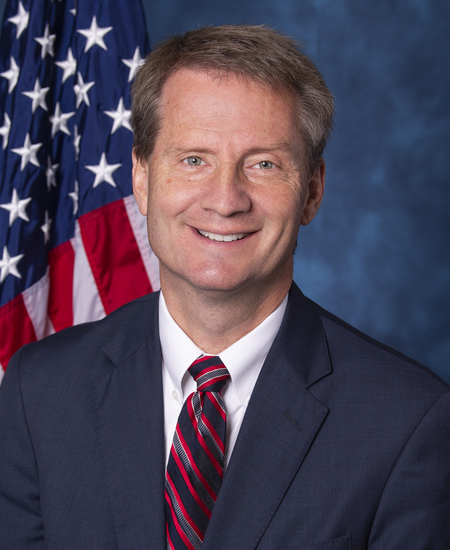
Rep. Tim Burchett
Sponsored bills
Maddy summaryThe Preventing Child Sex Abuse Act of 2023 amends federal law to close legal loopholes in prosecuting child sexual abuse cases. It revises the standard for travel-related abuse from requiring a "motivating purpose" to demanding "intent" to engage in sexual conduct during travel, and creates a new federal crime for individuals (like charity employees) who commit abuse through organizational affiliations affecting interstate or foreign commerce. The bill also clarifies that sexual activity for prosecution purposes includes non-physical acts, such as using webcams or online platforms to exploit minors. These changes ensure perpetrators using travel or charitable work as cover can be prosecuted under federal law, addressing gaps highlighted by cases like Larry Nassar's.
Maddy summaryHR 488, the SNOOP Act of 2023, modifies tax reporting requirements for third-party payment platforms like PayPal or Venmo. It sets new thresholds requiring these platforms to report transaction data to the IRS only when a business or individual receives over $20,000 in payments or has more than 200 transactions in a year. This directly affects payment processors by reducing the number of transactions they must report compared to current rules. The bill aims to streamline reporting for smaller transactions while maintaining oversight for significant activity. It applies to tax returns filed for calendar years starting after 2021.
Maddy summaryHR 175, the Heartbeat Protection Act of 2023, prohibits physicians from performing abortions without first checking for a detectable fetal heartbeat using standard medical practice and informing the patient of the results. It allows exceptions only for abortions necessary to save a mother’s life due to physical conditions (not psychological ones), or for pregnancies resulting from rape or incest against an adult or minor, which require specific documentation like counseling records or police reports. Physicians violating the law face up to five years in prison, while patients cannot be prosecuted. The bill defines "unborn child" as beginning at fertilization and mandates detailed medical documentation for all exceptions. It explicitly excludes psychological conditions from life-threatening exceptions and requires physicians to retain records per federal health privacy rules.
Maddy summaryHCONRES 3 is a non-binding congressional resolution expressing support for pro-life facilities, groups, and churches targeted by vandalism and threats following the Supreme Court's Dobbs decision. It condemns specific incidents like graffiti, window-smashing, and arson at pregnancy centers and churches (e.g., in Frederick, MD, and Portland, OR), while recognizing the role of these organizations in supporting pregnant women. The resolution calls on the Biden Administration to use law enforcement to protect these facilities but does not create new laws or policies. As a symbolic measure, it has no legal effect on the incidents described.
This resolution declares that every state within the United States has the sovereign right to exclude any person who does not have the right to be there. It also declares that the states along the southern border (1) are being invaded by terrorists, narco-terrorist cartels, and criminal actors; and (2) have the sovereign and unilateral authority to defend themselves against such an invasion.
Life at Conception Act This bill declares that the right to life guaranteed by the Constitution is vested in each human being at all stages of life, including the moment of fertilization, cloning, or other moment at which an individual comes into being. Nothing in this bill shall be construed to authorize the prosecution of any woman for the death of her unborn child.
Maddy summaryHR 330, the Title X Abortion Provider Prohibition Act, prohibits federal funding under the Title X family planning program for clinics that perform or fund abortions, except in cases of rape, incest, or when a physician certifies a life-threatening condition. It requires clinics receiving Title X funds to certify they do not provide or fund abortions (with the specified exceptions), and hospitals are exempt if they don't fund non-hospital abortion providers. The bill mandates annual reports to Congress listing all funded clinics, the number of abortions performed under exceptions (including rape/incest cases), and the certification dates for each clinic. This directly affects Title X-funded clinics nationwide that provide abortion services or fund such services, altering their eligibility for federal funding. The law aims to restrict federal support for abortion access within the Title X program while maintaining limited exceptions.
Maddy summaryHR 297 requires the military Secretary to reinstate service members who were involuntarily separated solely for refusing a COVID-19 vaccine. It applies specifically to those separated only due to vaccine refusal, not other reasons. If a covered member chooses reinstatement, they must be returned to their previous rank and branch of service. The bill mandates this action without requiring the member to receive the vaccine.
Maddy summaryHR 24, the Federal Reserve Transparency Act of 2023, requires a comprehensive audit of the Federal Reserve System's Board of Governors and Federal Reserve banks within 12 months of the bill's enactment. The Congressional auditor (Comptroller General) must then submit a detailed report to Congress within 90 days, including findings, conclusions, and recommendations for improving transparency. This bill directly affects the Federal Reserve System by mandating greater oversight of its operations and financial activities. The key provision repeals a prior limitation that prevented audits of certain Fed programs, aiming to clarify which activities are subject to audit under existing law.