

Maddy summaryHR 661, "Sarah’s Law," requires U.S. immigration authorities to detain certain immigrants charged with crimes causing death or serious injury. It applies to immigrants who entered without proper inspection, held revoked temporary visas, or fall under specific deportation categories, and who face charges for violent crimes. The bill mandates that immigration officials notify victims or their families (like parents or spouses) about the immigrant’s identity, immigration status, custody details, and removal efforts. This law does not change existing victim rights but adds specific notification requirements for these cases.
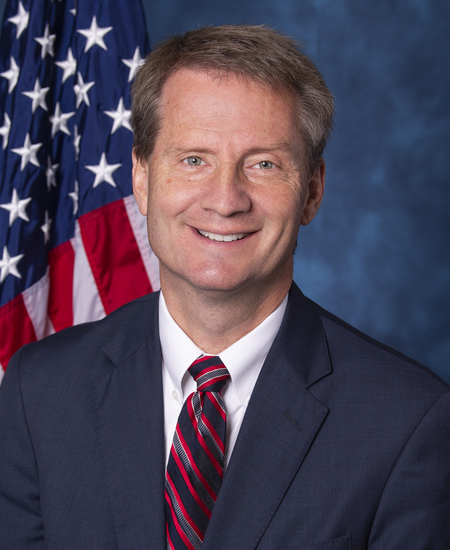
Rep. Tim Burchett
Sponsored bills
Maddy summaryThis bill freezes new energy efficiency standards for distribution transformers. It prohibits the Energy Secretary from proposing or implementing any rules different from the 2013 standards (published April 18, 2013) for five years after the bill's enactment. The law directly affects the Department of Energy and transformer manufacturers by maintaining existing efficiency requirements. It ensures no changes to the 2013 rule during this five-year period.
Maddy summaryHR 7801, the Sultana Steamboat Disaster Commemorative Coin Act of 2024, authorizes the U.S. Mint to produce commemorative coins honoring the 1865 Sultana steamboat disaster - the worst maritime disaster in U.S. history, which killed nearly 1,200 people. The bill specifies three coin types ($5 gold, $1 silver, and half-dollar clad) to be minted between January 1, 2027, and December 31, 2027, with surcharges from sales directed to the Sultana Historical Preservation Society for museum development and artifact preservation. The coins will be sold at face value plus surcharges ($5-$35 per coin), and the funds must support constructing a museum, exhibits, and preserving disaster-related history. This bill does not create new laws but enables commemorative coin sales to fund a specific historical preservation effort.
Maddy summaryHR 7772, the Safeguarding Benefits for Americans Act of 2024, requires individuals to prove U.S. citizenship or nationality to receive most federal benefits like food assistance, housing aid, or Medicaid. It mandates applicants to submit documentary evidence (such as a Social Security card and photo ID) and have their status verified through the Social Security Administration and Department of Homeland Security systems. The bill applies to programs where eligibility is based partly on income or resources, with specific rules for children and households. It takes effect one year after enactment, giving most recipients two years to meet the new requirement, and includes an appeals process for denied applications.
Maddy summaryThis bill establishes a new Office of Public Participation within the Tennessee Valley Authority (TVA) to improve public engagement in TVA's energy planning. It requires TVA to create a formal process for public input, including a 100-day public comment period before releasing draft energy plans and requiring responses to public inquiries within 15 days. The bill mandates that TVA's integrated resource plans include detailed modeling assumptions, show how public feedback influenced the plan, and address factors like resilience and public health impacts. These changes directly affect TVA's customers and communities in the Tennessee Valley region by increasing transparency and participation in energy decision-making.
Dual Citizenship Disclosure Act This bill requires Members of Congress who are foreign nationals to file a statement with the appropriate congressional ethics committee describing their status as a foreign national. The congressional ethics committees may fine a Member up to $2,500 for non-compliance.
Maddy summaryThis bill shortens the deadlines for federal employees to report stock transactions. It requires them to disclose trades within 24 hours instead of 30 days and provide additional details within 72 hours instead of 45 days, as amended under 5 U.S.C. § 13105(l). The change directly affects federal employees covered by the stock reporting rules, aiming to increase transparency around their financial transactions. The key mechanism is the accelerated reporting timeline, reducing the current waiting periods for disclosures.
Maddy summaryHR 7494, the Protect America’s Lands Act, prohibits national securities exchanges from processing transactions involving stocks issued by companies primarily managing land for conservation. It defines "natural asset companies" as those holding rights to ecological performance of specific land areas, with their core purpose being to conserve, restore, or sustainably manage natural assets without causing material harm. The bill directly affects securities exchanges and these specific companies by banning exchange-based trading of their securities. This is a regulatory change to the Securities Exchange Act of 1934, focusing on financial market rules rather than direct land management policies.
Maddy summaryHR 7466, the "Do Your Job Act," would reduce Members of Congress' pay to 90% of their previous rate during a fiscal year if both chambers fail to agree on a budget resolution by the start of that year. It directly affects all sitting Members of Congress by linking their compensation to timely budget passage. The bill repeals automatic salary appropriations (previously guaranteed by law), requiring Congress to explicitly fund their pay each year through regular appropriations processes. This change takes effect for pay periods after the November 2024 federal election. The legislation aims to create a financial incentive for Congress to complete its annual budget work on time.
Maddy summaryHR 7309, the BLOCK Act, replaces 10 specific federal education grant programs with flexible block grants for states starting in 2025. It repeals existing programs including Title I school funding, English language acquisition grants, student support grants, and rural education programs, effective October 1, 2024. States will receive block grants equal to their 2024 funding level for these repealed programs, giving them greater discretion over how to allocate the funds to K-12 schools. The bill directly affects state education departments and local school districts by changing how federal education funds are distributed and used.