

Health Care for Burn Pit Veterans Act This bill updates policies and procedures related to Department of Veterans Affairs (VA) health care and benefits for veterans who have been exposed to toxic substances. Specifically, the bill extends the eligibility period for VA hospital care, medical services, and nursing home care for combat veterans who served after September 11, 2001, and were exposed to toxic substances, radiation, or other conditions, including those who did not enroll to receive VA care during the eligibility period. The VA must incorporate into its existing health care screening a screening to help determine potential exposures to toxic substances during military service. Among other requirements, the VA must also provide annual training to health care and benefits personnel with respect to veterans who were exposed to toxic substances; analyze total and respiratory disease mortality in veterans who served in specified locations on specified dates; conduct an epidemiological study on the health trends of veterans who served in the Armed Forces after September 11, 2001; conduct a study to determine trends in the rates of the incidence of cancer in veterans; publish a list of VA resources for veterans who were exposed to toxic substances, families and caregivers of such veterans, and survivors of such veterans who are receiving death benefits; and report on the data quality of the Individual Longitudinal Exposure Record and its usefulness in supporting veterans in receiving VA health care and benefits.
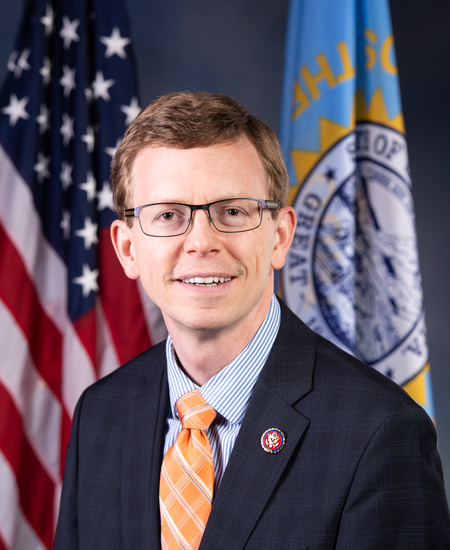
Rep. Dusty Johnson
Sponsored bills
TSA Security Threat Assessment Application Modernization Act This bill requires the Transportation Security Administration (TSA) to standardize the enrollment and renewal system for individuals applying for or renewing multiple TSA Security Threat Assessment programs, including the Transportation Worker Identification Credential, Hazardous Materials Endorsement, and TSA PreCheck programs. The standardization shall permit an individual to (1) enroll at a TSA-designated universal enrollment center once and use the application for one of such programs to enroll in two or more of such programs,with specified exceptions for those applying for or renewing enrollment in more than one program at different times; (2) apply successful, valid clearance results from a TSA Security Threat Assessment to satisfy vetting requirements for participation in any related program without additional cost; and (3) undergo a streamlined and expeditious renewal process. Additionally, the TSA must publish on its website information relating to the standardization of the enrollment system.
Native American Child Protection Act This bill reauthorizes through FY2027 and otherwise revises certain programs related to the prevention, investigation, treatment, and prosecution of family violence, child abuse, and child neglect involving Indian children and families. Specifically, the bill revises the Indian Child Abuse Treatment Grant Program to encourage the use of grants for culturally appropriate treatment services and programs. The bill renames the Indian Child Resource and Family Services Centers as the National Indian Child Resource and Family Services Center. It also requires the center to (1) provide advice, technical assistance, and training to urban Indian organizations; (2) develop certain technical assistance materials for Indian tribes, tribal organizations, and urban Indian organizations; and (3) develop model intergovernmental agreements between tribes and states to prevent, investigate, treat, and prosecute incidents of family violence, child abuse, and child neglect involving Indian children and families. Additionally, the bill revises the Indian Child Protection and Family Violence Prevention Program to allow Indian tribes, tribal organizations, and intertribal consortia to use program funds for additional activities, such as operational costs for child protective services.
This bill requires the Department of Agriculture (USDA) to submit a report on the potential costs and benefits of its proposed rule governing the importation of live sheep, goats, other ruminants, and products derived from sheep and goats. It also bars USDA from finalizing, implementing, administering, or enforcing the rule until one year after the date that USDA submits the report.
Native American Rural Homeownership Improvement Act of 2021 This bill provides statutory authority for a Department of Agriculture pilot program that provides direct loans to Native community development financial institutions to increase homeownership opportunities for tribal communities in rural areas.
This concurrent resolution expresses the sense of Congress that tax-exempt fraternal benefit societies provide critical benefits to the people and communities of the United States and their work should continue to be promoted.
Preventing Mandates on Toddlers Act This bill prohibits federal funds from being used to implement or enforce the Department of Health and Human Services' rule titled Vaccine and Mask Requirements To Mitigate the Spread of COVID-19 in Head Start Programs , published on November 30, 2021, or any substantially similar rule, regulation, or agency statement.
This bill posthumously provides for the award of a Congressional Gold Medal in commemoration of the 13 service members who died on August 26, 2021, while stationed at Hamid Karzai International Airport in Afghanistan.
Chronic Wasting Disease Research and Management Act This bill directs the Department of Agriculture (USDA) to address chronic wasting disease afflicting deer, elk, and moose populations. Specifically, the bill directs USDA to establish a program to research and manage the disease. Under the program, USDA must offer to enter into agreements with state or tribal wildlife agencies and departments of agriculture, institutions of higher education, and research centers to support research on the transmission of, resistance to, and diagnosis of the disease. In addition, USDA must offer to enter into agreements with such agencies and departments to support state and tribal efforts to develop and implement management strategies that address the disease. USDA must also develop and maintain materials to inform the public on chronic wasting disease and techniques to help prevent the spread of the disease. In addition, USDA must solicit public feedback on potential updates and improvements to standards of the chronic wasting disease herd certification program.
Cattle Contract Library Act of 2021 This bill directs the Department of Agriculture (USDA) to establish and maintain a library or catalog of each type of contract offered by packers to producers for the purchase of all or part of the production of fed cattle (including cattle that are purchased or committed for delivery), including any schedules of premiums or discounts associated with the contract. USDA must make the library or catalog publicly available in a user-friendly format and provide weekly or monthly reports as applicable. The bill makes it unlawful for any packer to willfully fail or refuse to provide USDA with accurate contractual information or to comply with any other requirements under the bill. The Agricultural Marketing Service must provide competitive grants to state agricultural experiment stations, universities, national laboratories, and other entities for producer outreach and education efforts on best uses of cattle market information, including information made available through the livestock mandatory reporting program and the library or catalog.