

Hotel Fees Transparency Act of 2025 This bill requires providers of short-term lodging (e.g., hotels, short-term rentals, and third-party online sellers) to include certain price information when displaying, advertising, or marketing reservations for lodging. Specifically, such providers must (1) display the total services price, including the base price and any service fees, if a price is displayed in an advertisement. marketing material, or a price list; (2) disclose the total services price at the time the services are first displayed to an individual seeking to purchase such services and anytime thereafter during the purchasing process; and (3) disclose, prior to the final purchase, any tax, fee, or assessment imposed by any government entity (or quasi-government entity) on the sale of such services. The bill provides for enforcement by the Federal Trade Commission and state attorneys general (or other authorized state officials).
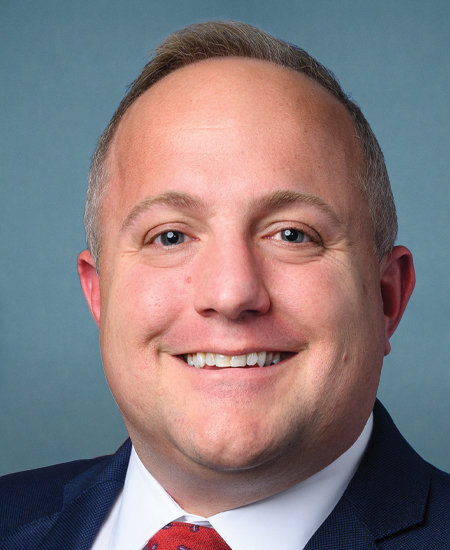
Rep. Russell Fry
Sponsored bills
Maddy summaryThis bill amends federal law (18 U.S.C. § 1362) to explicitly include broadband internet access service infrastructure under protections against destruction. It directly affects entities that operate or damage broadband facilities, such as internet service providers, infrastructure owners, and individuals who might intentionally destroy such infrastructure. Key changes expand the definition of protected "means of communication" to specifically cover broadband facilities and broaden liability to include "any other person or entity" beyond government-controlled systems. The amendment removes the prior exemption for infrastructure used in "military or civil defense functions," ensuring all broadband infrastructure receives equal legal protection. This strengthens existing penalties for damaging broadband networks but does not create new regulatory requirements for service providers.
Maddy summaryHR 877, the Deliver for Veterans Act, amends existing law to ensure the Department of Veterans Affairs (VA) covers the full cost of delivering adaptive vehicles to eligible veterans. Specifically, it updates Section 3902(a) of Title 38 to include "the total shipping price to deliver the automobile or other conveyance to the veteran" in the VA's payment obligation. This change directly affects veterans who receive adaptive vehicles through the VA's program, removing a previous barrier where shipping costs might have been their responsibility. The bill makes no new eligibility rules but clarifies that the VA must pay for both the vehicle purchase and its delivery to the veteran's location. This is a technical adjustment to improve the existing program's implementation.
Maddy summaryHR 2694, the Election Results Accountability Act, sets strict deadlines for states to count ballots and certify results in federal elections. It requires states to count at least 90% of ballots within 72 hours of polls closing and complete full counting with official certification within two weeks. Exceptions apply for major disasters, cyberattacks, technical issues, or recounts, but states missing deadlines risk losing federal election administration funds unless they submit a compliance plan. This bill directly affects all states administering federal elections, aiming to standardize and expedite the certification process while maintaining flexibility for genuine emergencies.
Maddy summaryThis bill, HR 2102 (Major Richard Star Act), allows veterans with combat-related disabilities to receive both full military retired pay and veterans' disability compensation simultaneously, without the previous offset that reduced retired pay. It directly affects veterans already eligible for both benefits due to combat-related injuries, removing the requirement that their retired pay be reduced by the disability compensation amount. The key provision amends Title 10 and Title 38 to eliminate the offset rule (sections 5304 and 5305 of Title 38) for these veterans. The change applies to payments starting after the bill’s enactment date, effective for all qualifying veterans. This is a policy change to increase financial support for affected veterans, not a new benefit.
Maddy summaryThe PEACE Act (HR 2609) requires U.S. diplomats to receive mandatory training on the Abraham Accords and other Middle East peace agreements. It directs the State Department to develop new courses and online modules about these agreements' history, implementation, and diplomatic impact for Foreign Service officers, with a bipartisan advisory board advising on curriculum. The bill also authorizes fellowships for diplomats to engage with partner countries in the region and mandates annual reports to Congress on training progress. This affects U.S. diplomats and State Department training programs, focusing solely on educational requirements without altering diplomatic policy.
Maddy summaryThis bill creates a $500 non-refundable tax credit for homeowners who purchase emergency generators for their primary residence. It applies only to individuals whose homes were in areas affected by two or more federally declared major disasters (excluding public health emergencies) within the past five years, and who previously received individual disaster assistance. The credit phases out for higher-income households ($300,000 joint filer limit, $150,000 for others) and expires two years after the bill becomes law. The credit covers generator costs up to $500 per household, aiming to help disaster-prone communities prepare for power outages.
Maddy summaryHR 2581, the Iranian Terror Prevention Act, requires the U.S. government to designate 29 specific Iranian-backed militant groups as terrorist organizations within 90 days of the bill’s passage. The President must then decide within 60 days whether to impose sanctions on these groups, blocking their U.S. assets and transactions under existing law. The bill also mandates regular reports to Congress on these designations and sanctions, including for any new groups meeting the criteria. This law directly affects the 29 named groups (such as the Badr Organization and Houthis) and any entities controlled by Iran’s Islamic Revolutionary Guard Corps.
Maddy summaryThe Free Speech Fairness Act (HR 2501) would amend tax law to allow 501(c)(3) organizations, such as charities and educational nonprofits, to make political campaign statements as part of their regular activities without risking their tax-exempt status. The bill specifies that these statements must be made in the ordinary course of the organization's exempt purpose and result in only minimal additional costs. This change clarifies that routine political commentary by these groups does not violate their tax-exempt status under current rules. The provision would apply to tax years beginning after the bill's enactment.
Maddy summaryThe SHORT Act (HR 2395) redefines federal firearm definitions to exclude antique and collector firearms from being classified as firearms, and removes distinctions between short-barreled rifles and shotguns in federal regulations. It prevents state laws from imposing taxes or registration requirements on short-barreled rifles and shotguns, requiring state rules to align with federal compliance instead. The bill also mandates the federal government to destroy specific records related to these firearms within one year of enactment.