

This resolution thanks operators of unmanned aircraft systems working in the area of public safety in the United States and promotes the profession by encouraging the public safety community and public officials to recognize National Unmanned Aircraft System Operator Public Safety Day.
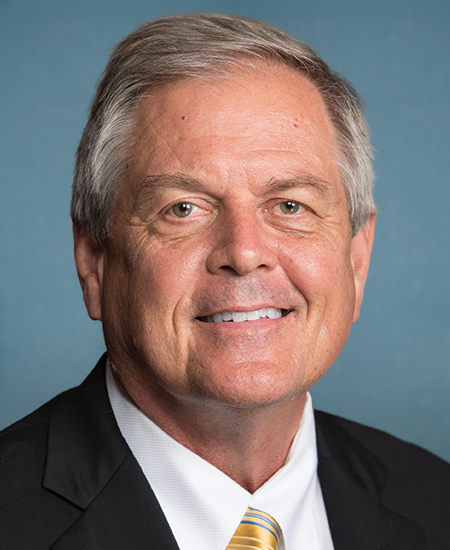
Rep. Ralph Norman
Sponsored bills
Maddy summaryHR 720, the Davis-Bacon Repeal Act, would eliminate the Davis-Bacon wage requirements for federal construction projects. It directly affects federal contractors working on projects funded by the government, removing a longstanding rule that required them to pay prevailing wages. The bill repeals Subchapter IV of Chapter 31 in Title 40 of the U.S. Code, which established these wage standards. The repeal would take effect 30 days after enactment but would not impact existing contracts or bids outstanding on that date.
Maddy summaryHR 646, the SHORT Act, clarifies firearm definitions under federal law to exclude antique firearms and certain collector items from the "firearm" category. It removes restrictions on short-barreled rifles and shotguns used lawfully by eliminating specific prohibitions in federal law and preempts state laws imposing taxes or registration requirements on these weapons. The bill also mandates the destruction of federal records related to short-barreled rifles, shotguns, and other weapons defined under the National Firearms Act within 365 days of enactment. This directly affects owners of these specific firearms, particularly collectors and individuals possessing short-barreled weapons legally under federal law. The key mechanisms include revised definitions, federal preemption of state regulations, and record destruction requirements.
Health Freedom and Flexibility Act This bill revises provisions relating to health savings accounts (HSAs), including to eliminate the requirement that a participant in an HSA be enrolled in a high deductible health plan; repeal certain limitations on deductions for contributions to HSAs; repeal rules relating to eligible individuals who participate in HSAs; repeal the limitation on use of HSAs to purchase health insurance; include certain medical items as medical expenses for HSA purposes, including menstrual care products, over-the-counter medicines, and medically necessary items; include as HSA-eligible medical expenses, direct primary care, exercise equipment, and dental care items; and prohibit the use of HSAs to pay for abortions or for insurance that includes coverage for abortions.
Maddy summaryHR 683 (PASS Act of 2023) expands the Committee on Foreign Investment in the United States (CFIUS) review process to cover foreign investments in U.S. agriculture businesses, agricultural biotechnology, and private farmland. It mandates that the President block transactions involving foreign entities from China, Russia, Iran, or North Korea that would give them control over U.S. agricultural operations or land used for farming. The bill allows limited presidential waivers for national security reasons but requires a 30-day review period before any waiver. Additionally, it requires the Secretary of Agriculture to submit biannual reports to Congress on risks posed by foreign ownership in U.S. agriculture.
Maddy summaryThe Restoring Military Focus Act (HR 678) repeals the Chief Diversity Officer position in the Department of Defense and prohibits the creation of similar roles. It specifically eliminates two existing positions: the Chief Diversity Officer (under pre-2021 Title 10, U.S. Code) and the Senior Advisor for Diversity and Inclusion (under the 2021 National Defense Authorization Act). The bill bans federal funding for any new position that matches or closely resembles these roles. This directly affects the Department of Defense's organizational structure by removing diversity-focused leadership roles and preventing their replacement.
Maddy summaryThe A PLUS Act (HR 631) allows states to consolidate federal education funds into a single funding stream, reducing administrative burdens for school districts. It requires states to submit a "declaration of intent" outlining which programs they’ll bundle (excluding special education funds), report annual student progress data to parents, and ensure federal funds supplement - rather than replace - state education spending. States must limit administrative costs to 1% of consolidated funds (3% if excluding Title I) and maintain public accountability through transparent reporting on achievement gaps and funding use. The act directly affects states, school districts, and students - particularly disadvantaged groups - by streamlining fund management while mandating public reporting on educational outcomes.
This resolution expresses support for the Supreme Court's holding in Dobbs v. Jackson Women's Health Organization (that there is no constitutional right to abortion). The resolution also applauds the courage of the Justices for standing by their allegiance to the Constitution and the legitimacy of the Supreme Court, and it expresses a commitment to supporting policies that continue to protect all life.
This resolution expresses the sense of the House of Representatives that (1) the President should classify synthetic illicit fentanyl-related substances as weapons of mass destruction; and (2) illicit fentanyl, and illicit fentanyl-related substances, should be permanently placed in schedule I (i.e., as drugs, substances, or chemicals with no currently accepted medical use and a high potential for abuse).
Prohibiting Abortion Industry's Lucrative Loopholes Act This bill expands the prohibition on the sale or purchase of human fetal tissue in interstate commerce to include any payments associated with the transportation, implantation, processing, preservation, quality control, or storage of such tissue.