

Maddy summaryHR 899 would end the U.S. Department of Education by requiring its termination on December 31, 2023. This bill directly affects the Department of Education itself, eliminating its federal structure and operations. The key provision is a specific termination date, ending the agency's existence as a standalone cabinet-level department. No other mechanisms or affected groups are specified in the bill text.
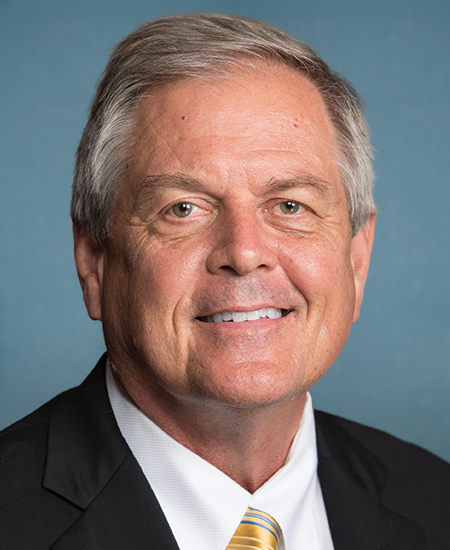
Rep. Ralph Norman
Sponsored bills
Maddy summaryHR 938 would abolish the U.S. Department of Education 30 days after enactment, terminating all its programs except the Federal Pell Grant and Direct Loan programs (which transfer to the Treasury Secretary). It would replace federal education funding with block grants to states, distributing funds based on each state’s share of national individual income tax revenue. States receiving these grants must use the funds exclusively for K-12 education, with no federal restrictions on how they allocate the money. The bill aims to shift control over K-12 education funding directly to states, removing the federal department’s administrative role.
Maddy summaryHR 932 repeals two key congressional authorizations for military force in Iraq: the 1991 resolution (Public Law 102-1) and the 2002 resolution (Public Law 107-243). This bill removes the legal foundation that has permitted U.S. military operations in Iraq for over two decades. It directly affects the executive branch’s authority to conduct military actions under these specific resolutions, requiring future operations to seek new congressional approval. The repeal is a procedural change that would end the statutory basis for ongoing military engagement in Iraq without altering other laws or policies.
Felony Murder for Deadly Fentanyl Distribution Act of 2023 This bill makes the distribution of fentanyl resulting in death a first degree murder. An individual who is guilty of first degree murder by distributing fentanyl is subject to death or life in prison.
Maddy summaryHR 29, the Border Safety and Security Act of 2023, grants the Secretary of Homeland Security authority to restrict entry at U.S. land or maritime borders for certain immigrants deemed "covered aliens" (those inadmissible under immigration law due to lack of proper documentation). The bill requires the Secretary to suspend entry if they cannot detain or process these individuals as required by existing immigration law. It also allows state attorneys general to sue the Secretary in federal court if they believe border policies harm their state's residents. The law defines "operational control" using terms from the Secure Fence Act of 2006. This bill directly affects immigrants seeking entry who fall under the specified inadmissibility category.
Maddy summaryHCONRES 9 is a symbolic resolution passed by the U.S. House of Representatives that formally denounces socialism as incompatible with American values, citing historical examples of socialist regimes causing widespread suffering and authoritarian rule. It states Congress opposes the implementation of socialist policies in the United States. This resolution has no legal effect, does not change any laws, and serves solely as a non-binding statement of congressional opinion. It directly affects no individuals or policies, as it is purely a declarative position.
This resolution condemns Iranian state-sponsored terrorist attacks against U.S. citizens and officials and Iranian dissidents. The resolution also expresses support for the people of Iran who are legitimately defending their rights for freedom against repression and condemns the killing of Iranian protesters by the Iranian regime.
Maddy summaryHCONRES 13 is a concurrent resolution expressing Congress's support for maintaining the current policy that prohibits imposing new fees on local radio stations for playing music. It states that Congress should not impose any performance fee, tax, royalty, or charge on local radio stations for broadcasting sound recordings over the air, or on businesses like bars and restaurants that play music publicly. The resolution argues that such fees would harm local radio stations - critical sources for emergency information and community programming - and jeopardize the economic model that has supported both radio and the music industry for decades. This resolution does not create new law but formally opposes potential legislative changes to the existing fee structure.
Maddy summaryHRES 96, the "Transparency in Federal Spending Resolution," requires that any House bill, resolution, or amendment authorizing or making appropriations must include a machine-readable table detailing program-specific funding amounts, annual breakdowns, and estimated debt servicing costs. This procedural rule change applies to all appropriations-related legislation considered by the House, directly affecting how such bills are processed. The bill itself does not alter spending levels but mandates greater disclosure of fiscal details before debate can begin. It aims to improve transparency in federal budgeting by standardizing how spending information is presented. (Note: As a procedural rule change, this summary is concise per the bill's nature.)
Protecting Dogs Subjected to Experiments Act This bill prohibits the National Institutes of Health from funding biological, medical, or behavioral research that involves testing dogs.