

Maddy summaryHR 2445 establishes a new Office of the Special Inspector General for Ukraine Assistance to oversee all U.S. military and nonmilitary aid to Ukraine since January 2022. The Inspector General will conduct independent audits and investigations into how funds are spent, track weapons transfers, review contracts, and monitor compliance with U.S. requirements, directly affecting all agencies administering Ukraine aid. Quarterly reports to Congress must detail all obligations, expenditures, and comparisons of U.S. support versus other NATO allies' contributions. The office is funded with $70 million for fiscal year 2023 and terminates 180 days after unspent aid drops below $250 million.
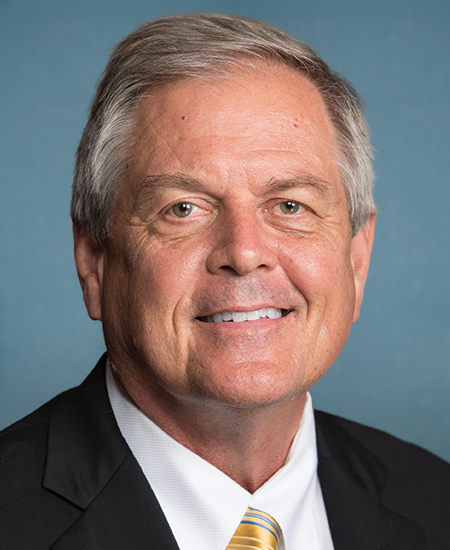
Rep. Ralph Norman
Sponsored bills
Maddy summaryHR 2366, the "90-Day Review Act," shortens the deadline for processing certain transportation-related claims from 150 days to 90 days. It amends provisions in Title 23 (U.S. Code) covering highway programs and Title 49 (transportation law), specifically changing "150 days" to "90 days" in sections related to claims review and funding. This is a technical procedural adjustment affecting federal transportation claim processing timelines, not a new policy or program. The bill directly modifies existing administrative deadlines without creating new obligations or affecting specific groups.
Maddy summaryHR 1818, the Aviation Workforce Development Act, expands tax-advantaged savings plans (529 plans) to cover costs for specific aviation training programs. It allows funds from these plans to pay for tuition, fees, and required materials at FAA-certified aviation maintenance technician schools (Part 147) or commercial pilot training programs (Part 61 or 141). This directly affects students pursuing careers as aircraft maintenance technicians or commercial pilots by making these training costs more affordable through existing tax-advantaged savings. The bill amends the tax code to include these programs under "qualified higher education expenses" for 529 plan distributions.
Maddy summaryHR 5, the Parents Bill of Rights Act, would require public schools receiving federal funding to provide parents with greater access to educational information. The bill mandates that schools post curricula online or widely distribute it to parents, include school budgets in report cards, and provide specific information about school activities including violent incidents and plans to eliminate gifted programs. It also guarantees parents the right to meet with teachers twice a year, review library materials, and address school boards. These requirements would apply to all local educational agencies and schools covered by the Elementary and Secondary Education Act. The bill amends existing education laws to strengthen parental transparency and involvement in their children's education.
Assessing Unintended Drivers of Illegal Trafficking Act or the AUDIT Act This bill prohibits certain federal agencies from giving grants to implementing partners that provide abortion services to asylum seekers. The bill also requires these agencies to submit quarterly reports to Congress on grants that the agencies have provided for migrant services programs in Central and South America. The reporting requirements and grant prohibitions apply to (1) the U.S. Agency for International Development; (2) the Department of State's Bureau of Population, Refugees, and Migration; and (3) the State Department's Bureau of Democracy, Human Rights, and Labor. These federal agencies may not give grants to any implementing partners that (1) perform abortions, (2) provide health services that include referrals for abortions, or (3) provide assistance or funding in any manner for obtaining abortions. Among other required elements, the quarterly reports for specified migrant services grants shall explain why each implementing partner was chosen, the amount of money the partner received, the availability of asylum claims processing in countries where those partners operate, and the number of asylum claims processed in those countries.
Maddy summaryHR 1777 establishes a $50 million annual fund (2024-2028) for collaborative defense research between the U.S. and Israel in emerging technologies like artificial intelligence, cybersecurity, directed energy, and automation. The bill directly supports U.S. and Israeli military forces by enabling joint development of new warfare capabilities to address current and future defense challenges. Key provisions include authorizing $50 million per year for collaborative projects, building on existing U.S.-Israel defense partnerships like counter-tunnel and counter-drone systems. This funding aims to strengthen bilateral defense innovation without altering existing military aid structures.
Ensuring Lawful Collection of Hidden Assets to Provide Order Act or the EL CHAPO Act This bill requires the forfeited profits of Joaquin Archivaldo Guzman Loera (El Chapo) from his illicit drug trafficking enterprise to be reserved for border security measures between the United States and Mexico, including the completion of a wall. Additionally, it requires the forfeited funds from the felony conviction of a member of a drug cartel to be reserved for border security measures between the United States and Mexico, including the completion of a wall.
Maddy summaryH.J. Res. 30 seeks to block a Department of Labor rule that would have required retirement plan managers (like those handling 401(k)s) to follow strict "prudence and loyalty" standards when selecting investments and voting on company matters. The rule, published in December 2022, aimed to protect retirement savings by ensuring fiduciaries prioritize participants' interests. This resolution, if passed, would prevent the rule from taking effect, avoiding new compliance requirements for retirement plan managers and sponsors. It directly affects retirement plan administrators and the millions of participants in these plans.
This resolution supports the preservation of the stepped-up basis tax rule that allows recipients of inherited assets such as land, equipment, or buildings to adjust the cost basis of the assets to reflect their fair market value. The resolution opposes any efforts to impose new taxes on family farms or small businesses and recognizes the importance of generational transfers of farm and family-owned businesses.
Maddy summaryThis bill requires the Consumer Financial Protection Bureau (CFPB) to explicitly consider the impact of proposed rules on small businesses during rulemaking. It amends the Dodd-Frank Act to mandate that the CFPB evaluate small business effects and adds a requirement for the agency to provide detailed justifications if it decides not to consider small business needs in a rule. These changes apply specifically to the CFPB's regulatory process and directly affect small businesses by requiring the agency to address their unique challenges in rule development. The bill focuses on procedural changes to existing regulatory flexibility analysis requirements under Title 5 of the U.S. Code.