

Maddy summaryThis bill amends the Food and Nutrition Act to clarify that households must meet existing income and asset limits to qualify for food assistance benefits (like SNAP). It directly affects individuals and families applying for or receiving federal food aid by requiring strict adherence to current eligibility criteria under the law. The key provision explicitly states that households failing to meet these income and resource standards - already part of the program - cannot receive benefits. The amendment takes effect one year after enactment, with existing certification periods unaffected. This change enforces current rules without creating new restrictions.
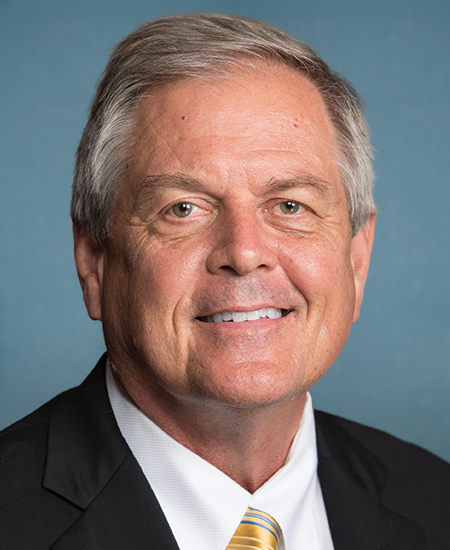
Rep. Ralph Norman
Sponsored bills
Maddy summaryHR 5200, the HUNTER Act, requires the Secret Service Director to submit a report to Congress within 180 days of enactment. The report must detail steps taken to prevent controlled substances from entering the White House, identify security vulnerabilities allowing drugs inside, provide a full account of the 2023 cocaine investigation at the White House, and offer recommendations for oversight or resources. This bill directly affects the Secret Service’s reporting obligations and informs Congress on preventing illicit drug use in the Executive Branch. It does not create new laws but mandates a specific review of existing protocols.
Maddy summaryHR 5167, the Protecting Girls with Turner Syndrome Act of 2023, prohibits abortions performed specifically because of a prenatal diagnosis of Turner syndrome - a chromosomal condition affecting females (missing or partially missing X chromosome). It requires medical providers to ask pregnant patients about Turner syndrome diagnoses and inform them of the prohibition before performing an abortion based on that diagnosis. Violations could result in criminal penalties (up to 5 years imprisonment) or civil lawsuits allowing victims (including women, fathers, or grandparents) to seek damages and injunctions. The bill also mandates privacy protections for women involved in such cases and bars federal funding for violations.
Maddy summaryHR 5144, the GOT Act, prohibits all federal employees, elected officials, and judges from maintaining official government accounts on TikTok or any account operated by TikTok's parent company, ByteDance. It directly affects every member of the executive, legislative, and judicial branches of the U.S. government who uses TikTok for work-related purposes. The bill bans creating, establishing, or keeping such accounts on TikTok or equivalent platforms owned by ByteDance. This is a direct policy change to prevent federal personnel from using the platform for official business, citing national security concerns.
This resolution honors and recognizes the patriotism and contributions made by generations of veterans service organizations, veteran advocacy groups, and volunteers and commends the members of such organizations for their dedicated service to members of the Armed Forces, veterans, their families, and their communities. The resolution also encourages the people of the United States to promote awareness of the contributions and dedication of members of veterans service, organizations, veteran advocacy groups, and volunteers to members of the Armed Forces, veterans, and their families. Additionally, the resolution calls on citizens to follow the example of such groups and volunteer support and services to those who have served the country.
Maddy summaryHR 5130, the "Finish It Act," requires the Department of Defense to use stored border wall construction materials (valued at approximately $300 million) for building permanent barriers along the U.S.-Mexico border within 30 days of the bill's enactment. It mandates that states receiving materials certify they will use them exclusively for border barriers, with penalties for unused materials (requiring repayment of the original cost) and imposes a 1% budget cut for every two days of delay in implementation. The bill also demands a detailed report from the Department of Defense within 90 days, including internal communications about storage costs and contracts with private landowners. This legislation directly affects the Department of Defense and border states, focusing on redirecting existing resources rather than creating new funding or construction.
Maddy summaryThis is a ceremonial resolution (HRES 622), not a substantive bill. It expresses the U.S. House of Representatives' gratitude and congratulations to the U.S. Coast Guard for its maritime border security efforts in fiscal year 2022. The resolution cites specific achievements like interdicting over 330,000 pounds of narcotics, 12,500 illegal immigrants, and 6,300 vessel boardings. It has no policy impact or legal effect - it solely serves to honor the Coast Guard's service.
Maddy summaryHR 5020 prohibits the U.S. Department of Health and Human Services (HHS) from funding or conducting animal testing research in China, Iran, North Korea, Russia, or other countries designated as "of concern" after consultation with the State and Defense Departments. It blocks federal grants, contracts, or support for such research conducted by foreign entities or facilities owned by these countries. HHS must submit detailed reports to Congress within 60 days when adding new countries to the list, explaining its reasoning.
Maddy summaryThe ACES Act of 2023 requires ByteDance (TikTok's Chinese parent company) to divest all U.S. assets related to TikTok - including user data collected in the United States - within 90 days of enactment, with possible 30-day extensions. It mandates weekly compliance reports to CFIUS, a final data destruction certification, and prohibits U.S. app stores or internet services from supporting TikTok operations after a 45-day grace period. The bill directly affects ByteDance and TikTok, forcing separation of U.S. operations from Chinese ownership to address national security concerns. CFIUS oversees verification, including facility inspections and audits, to ensure full compliance with the divestment requirements.
Maddy summaryHCONRES 57 is a non-binding concurrent resolution expressing Congress's support for Israel. It states three key points: (1) that Israel is not a racist or apartheid state, (2) that Congress rejects antisemitism and xenophobia, and (3) that the U.S. will remain a steadfast supporter of Israel. This resolution does not create new laws or alter policies - it simply records the expressed sentiment of Congress. It directly affects the U.S. government's public stance on Israel, with no legal effect on citizens or other entities.