

Maddy summaryHR 5636, the "Protect Children’s Innocence Act," prohibits federal criminal penalties for performing gender-affirming medical care on minors under specific circumstances. It defines prohibited care as surgeries (like hysterectomy or mastectomy), puberty blockers, and hormone therapies at supraphysiologic doses, with exceptions for medical emergencies, intersex conditions, or life-threatening illnesses. The law only applies when the care involves interstate commerce (e.g., payments, communications, or travel across state lines). Minors receiving such care cannot be prosecuted, but they may sue providers for civil damages. The bill directly affects minors under 18, healthcare providers, and families seeking gender-affirming medical treatment.
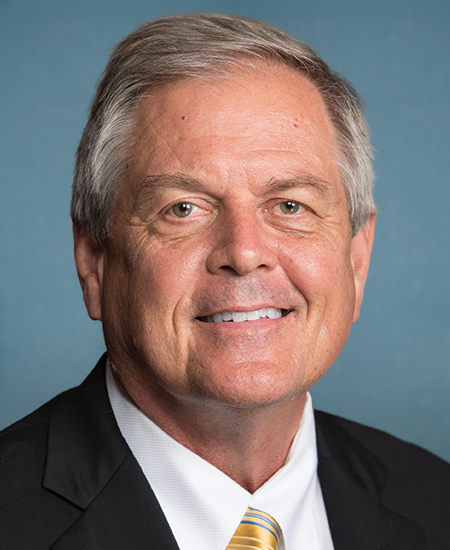
Rep. Ralph Norman
Sponsored bills
Maddy summaryHR 5609 bans the use of federal funds for security protection (including U.S. Marshal services) for the former director of the National Institute of Allergy and Infectious Diseases who served from January 1984 to December 2022. The bill directly affects that specific individual by ending federal funding for their security needs after their tenure. It does not alter security eligibility for other former officials or create new protections. The policy change is limited to removing federal funding for this one former position’s security coverage.
Maddy summaryHR 5590, the "No More Hard Stops Act," requires federal officials testifying before congressional committees to remain at the hearing until every committee member present has had the opportunity to ask a question. It prevents officials from leaving early ("hard stops") before all members can question them, ensuring all members receive equal questioning time. This procedural rule applies to officials mandated by law to regularly testify before committees and takes effect after the bill's enactment. The bill focuses solely on the process of committee hearings, not on substantive policy changes.
Maddy summaryThis bill raises the mandatory minimum prison sentence for trafficking minors under 18 from the previous term to **not less than 25 years or life imprisonment** under federal law (18 U.S.C. § 1591). It directly affects individuals convicted of trafficking children, increasing penalties for this specific offense. The key mechanism is amending the existing sentencing provision to eliminate lower minimums and mandate these severe penalties. The bill focuses solely on strengthening criminal penalties for child trafficking, with no new funding or program requirements.
Maddy summaryThis bill requires the Congressional Budget Office to calculate the true long-term cost of federal loan and guarantee programs (like student loans or small business loans) using "fair-value" accounting standards, rather than traditional budgeting methods that only count initial costs. It mandates that these fair-value estimates be included in official budget reports and used by Congress to enforce spending limits. The Office of Management and Budget must also submit annual reports detailing these fair-value costs for all federal credit programs. The bill changes how program costs are measured but does not alter the programs themselves or their operation.
Maddy summaryHR 5531, the "End U.N. Censorship Act," prohibits U.S. federal funds from supporting specific United Nations initiatives related to information labeling. It bans funding for the UN's iVerify tool, any effort to label speech as "mal-, mis-, or disinformation," and voluntary contributions to the UN or other international groups supporting such labeling efforts. The bill applies directly to federal agencies like the Department of State, restricting how they use taxpayer money for these purposes. Any funds withheld under this law must be deposited into the Treasury general fund and not repaid to the UN. The bill focuses solely on restricting federal spending, not on regulating speech or censorship.
Maddy summaryThe Life.Gov Act (HR 5406) requires the U.S. Department of Health and Human Services to create a federal website called life.gov within one year of enactment. The website will provide pregnant and postpartum women with locally tailored resources - such as health services, financial assistance, and mental health support - via zip code searches, multilingual access, and user feedback tools. States must submit resource recommendations meeting strict criteria (e.g., no abortion providers, 3+ years of service), and the website cannot list "prohibited entities" (defined as abortion providers or supporters). The Secretary must report to Congress within 180 days on website usage, user feedback, and gaps in resources, using existing HHS funding.
Maddy summaryThe Freedom to Breathe Act (HR 5368) prohibits the use of federal funds to enforce mask mandates for passengers traveling on air carriers, public transit, or in elementary, secondary, and higher education institutions from enactment until December 31, 2024. It bans federal agencies from requiring masks in these settings and prevents transportation providers or schools from denying service to individuals who refuse to wear masks. The law also overrides conflicting state or local rules during the applicable period. This applies specifically to settings receiving federal funding, such as public schools and federally supported transit systems.
Maddy summaryThis bill requires the HHS Secretary to publish all HHS-held information about the origins of the COVID-19 pandemic within 90 days of enactment, including research records, communications with Chinese institutions, and data from Wuhan. Specific categories include unpublished reports (like the 2019 CDC workshop), grant applications, EcoHealth Alliance records, and records of researchers in China. HHS may withhold classified, personally identifiable, or sensitive commercial information. Failure to comply results in daily $1 million rescissions from HHS funds, deposited to reduce the national debt.
Maddy summaryHR 5508, the "Respect for the Second Amendment Act," prohibits state and local governments from enforcing laws that restrict firearm ownership or use unless those laws align with the U.S. historical tradition of firearm regulation. The bill directly affects state and local laws governing gun possession, carrying, and ownership, requiring courts to block any regulation that fails this historical test. Key mechanisms include allowing the Attorney General or individuals harmed by such laws to sue for injunctions, with prevailing plaintiffs entitled to legal fees. The bill does not preempt stronger state gun rights protections but focuses on challenging state laws deemed inconsistent with the Second Amendment as interpreted by Supreme Court rulings like *Heller* and *Bruen*.