

Maddy summaryHR 6410, the U.S. Data on U.S. Soil Act, requires major technology platforms with over 100 million monthly U.S. users to store and restrict access to U.S. citizen data within the United States. Specifically, it forbids storing this "covered data" (including personal identifiers linked to U.S. nationals) in data centers located in foreign adversary countries or allowing officials from those countries to access it. The Federal Trade Commission enforces these rules as violations of unfair business practices, with penalties under the FTC Act. The law applies to large consumer-facing platforms like social media and apps, while preserving stricter state privacy laws and excluding data not tied to U.S. citizens.
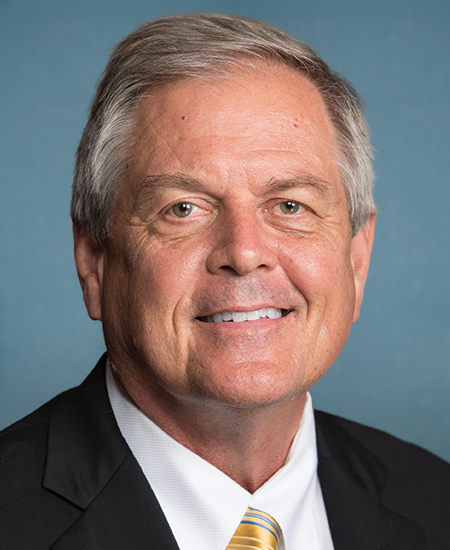
Rep. Ralph Norman
Sponsored bills
Maddy summaryHR 6432, the Safeguarding Honest Speech Act, prohibits federal agencies from using funds to require employees or contractors to use preferred pronouns or names that conflict with a person’s biological sex at birth (defined as "sex" based on reproductive biology and genetics). It directly affects federal workers and contractors by banning mandatory language use tied to gender identity. The bill mandates agencies issue a formal response within 30 days of a complaint about such policies and allows affected employees to sue for damages, including up to $100,000 in punitive damages, with a one-year statute of limitations. Key provisions focus on preventing compelled speech in federal workplaces through funding restrictions and enforceable legal remedies.
Maddy summaryHR 6383 prohibits the Department of Homeland Security (DHS) from using federal funds to implement or enforce a "remain in Texas policy." This policy would require migrants released by DHS or HHS to stay in Texas after entering the U.S. The bill's key mechanism is a funding ban, blocking DHS from enforcing such requirements without congressional approval. It directly affects migrants subject to release by DHS/HHS and DHS operations. The policy change is purely procedural, restricting how federal funds can be used for migration management in Texas.
Maddy summaryThis bill prohibits federal funding for two specific initiatives: the Justice40 Initiative (focused on delivering 40% of climate benefits to disadvantaged communities) and the American Climate Corps (a program announced in a September 2023 White House fact sheet to create climate jobs for young people). It blocks all federal budget allocations for these programs, directly affecting their implementation. The bill does not create new programs or alter existing laws, but prevents the use of taxpayer funds to support these two named initiatives.
Maddy summaryThis bill requires the Secretaries of Defense and State to submit biannual reports to Congress assessing Ukraine's compliance with U.S. end-use monitoring for defense exports (under the Blue Lantern and Golden Sentry programs since February 2022). It mandates listing Ukrainian officials found violating these monitoring requirements, making them ineligible for U.S. visas, entry, or immigration benefits. The bill also requires immediate revocation of any existing U.S. visas held by listed individuals, regardless of when the visa was issued. It directly affects Ukrainian government officials involved in defense export monitoring violations, not the general public or broader policy.
Maddy summaryThis bill expands grounds for denying entry to foreign nationals under U.S. immigration law. It makes individuals inadmissible if they engage in activities related to espionage/sabotage (even if such activity would violate U.S. law if done domestically), violate export laws for sensitive goods/technology, or seek entry to oppose the U.S. government by force. It also bars spouses or children of inadmissible individuals if the qualifying activity occurred within the last five years. The changes apply directly to foreign nationals seeking visas or entry into the United States.
Maddy summaryThe SHIP Act imposes sanctions on foreign entities that knowingly handle Iranian petroleum, targeting those involved in port operations, transportation, refining, or ship-to-ship transfers of Iranian oil. Starting 90 days after enactment, the President must block assets, deny visas, and impose penalties on individuals or companies engaging in these activities, including family members or owners of sanctioned entities. It requires annual reports tracking Iran's oil exports, revenues, and key players like shipping companies and ports. The sanctions terminate if the President certifies Iran has stopped supporting terrorism and dismantled weapons programs.
Maddy summaryThis bill requires the Inspector General of five specific federal agencies (State, Defense, Homeland Security, FBI, and CIA) to report within 90 days on any employees with financial, organizational, or communication ties to Hamas - including social media posts supporting Hamas. It also mandates a broader 180-day report from the Comptroller General on the prevalence of such ties across these agencies, including recommendations for future legislation. The bill directly affects all employees (including military personnel) in those agencies who have any connection to Hamas as defined by the legislation. It focuses on transparency and investigation, not immediate action against employees, and does not change current hiring or employment policies.
Maddy summaryThis bill prohibits federal funding for Planned Parenthood Federation of America and its affiliates, clinics, or related entities. It directs that funds previously allocated to Planned Parenthood must instead support other providers - including community health centers, hospitals, and clinics - that offer women’s health services like contraception, cancer screenings, and prenatal care. The bill explicitly states it does not reduce overall federal funding for women’s health care or affect existing abortion-related funding restrictions in appropriations laws. It ensures continued access to these services through alternative providers, particularly in underserved communities.
Maddy summaryHRES 798 is a House resolution condemning support for Hamas, Hezbollah, and other terrorist organizations at colleges and universities. It states such support may create a hostile environment for Jewish students, faculty, and staff, citing incidents like blaming Israel for the October 7 Hamas attack. The resolution urges the Secretary of Education to direct the Office for Civil Rights to investigate and take action where appropriate. This non-binding resolution expresses the House's position but does not create new law or policy changes.