

This resolution expresses the sense of the House of Representatives that former President Trump did not engage in insurrection or rebellion against, nor give aid or comfort to the enemies of, the United States.
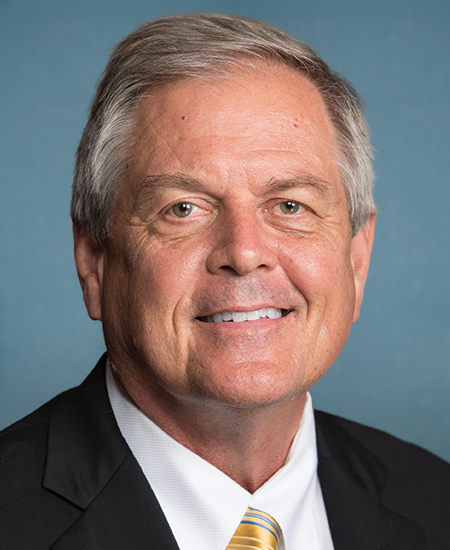
Rep. Ralph Norman
Sponsored bills
Maddy summaryHR 7249, the SUBMIT IT Act, requires the President to submit both the National Security Strategy and the annual budget request to Congress before the leadership of either chamber can invite the President to deliver a State of the Union Address. The bill amends the Congressional Budget Act to change the deadline from "First Monday in February" to "President submits budget request prior to delivering any State of the Union address." This directly affects the President's timing for submitting these key documents and Congress's leadership regarding scheduling the State of the Union. The bill aims to address repeated delays in submissions (e.g., Biden's FY2024 budget submitted 31 days late) by aligning the State of the Union invitation with the statutory requirement for timely submissions.
Maddy summaryThis bill establishes a fast-track process for Congress to review presidential requests to cancel or rescind funding from appropriations bills. The President must submit detailed proposals within 10 days of an appropriations bill passing, specifying which funds to rescind, the reasons, and remaining funding amounts. Congress then has just 3 days to introduce an "approval bill" that can only approve the rescission without any other changes, with a 30-day deadline for action. If Congress fails to act within 30 days, the proposed rescission is automatically rejected, and the original funding remains in place. This process aims to provide a streamlined, time-limited mechanism for Congress to consider presidential spending reduction requests.
Maddy summaryThis resolution disapproves a Department of Energy rule that would have set new energy efficiency standards for consumer furnaces. The rule, published in the Federal Register (88 Fed. Reg. 87502), aimed to require furnace manufacturers to produce models meeting higher energy conservation levels. If enacted, this resolution would cancel the rule, preventing it from taking effect. As a result, current energy efficiency standards for furnaces would remain unchanged, and manufacturers would not face the new requirements.
Maddy summaryHJRES 107 is a congressional resolution seeking to block a Federal Communications Commission (FCC) rule published on January 22, 2024 (89 Fed. Reg. 4128). The resolution aims to disapprove the FCC's rule implementing digital discrimination protections under the Infrastructure Investment and Jobs Act, which would have required internet providers to prevent discriminatory practices. If passed, this resolution would nullify the FCC rule, preventing it from taking effect under the Congressional Review Act (Chapter 8 of Title 5, U.S. Code). The bill directly affects the FCC's regulatory authority over digital discrimination enforcement in broadband services.
Maddy summaryHR 7183, the PROTECTS Act of 2024, prohibits federal funding from being used to provide or refer for specific gender transition procedures to individuals under 18. The bill defines prohibited procedures broadly to include surgeries (like hysterectomy, mastectomy, or genital reconstruction), puberty-blocking medications, and hormone treatments administered at supraphysiologic doses. It includes limited exceptions for medically necessary care, such as treating precocious puberty or correcting genetic disorders of sex development. The law directly affects minors seeking gender-affirming medical care covered by federal programs, restricting federal financial support for these services.
Maddy summaryThis resolution seeks congressional disapproval of a Treasury Department rule (88 Fed. Reg. 80584, November 2023) that established spending guidelines for $350 billion in federal Coronavirus State and Local Fiscal Recovery Funds. If passed, it would nullify the rule, preventing the Treasury from enforcing its specific restrictions on how states and localities could use these pandemic recovery funds. The bill does not alter the underlying funding program but targets the implementation rules through a procedural disapproval process under Title 5 of the U.S. Code. It directly affects the Treasury Department's authority to administer the fund distribution rules.
Maddy summaryHR 7202 requires the U.S. Secretary of State to report to Congress within 90 days on all U.S. funding provided to UNRWA (the UN agency supporting Palestinian refugees) from fiscal years 2020 through 2024, including monthly spending details. The bill also prohibits U.S. federal funds from being used to support UNRWA, either directly or indirectly, starting upon its enactment. This bill affects U.S. government funding decisions for UNRWA and mandates transparency about past financial support. The legislation focuses on requiring a spending report and blocking future U.S. financial assistance to the agency.
Maddy summaryThis bill repeals a law (18 U.S.C. § 1715) that previously prohibited mailing firearms without a license. It directly affects the U.S. Postal Service, firearm sellers, and individuals mailing firearms by preventing the Postal Service from creating rules that would block firearm mailings or require disclosure of sensitive records like sales receipts or firearm serial numbers. Key provisions include removing the existing ban on mailing firearms and prohibiting the Postal Service from imposing new restrictions on firearm mailings or demanding customer transaction data. The bill ensures that firearm mailings can proceed without these specific federal restrictions, while applying to ongoing legal cases under the repealed law.
Think Tank and Nonprofit Foreign Influence Disclosure Act This bill requires tax-exempt charitable organizations to disclose in annual reports contributions and gifts exceeding $50,000 received from foreign governments and foreign political parties. The reports must disclose the names of such governments and political parties and the aggregate amounts of contributions and gifts. The bill requires the Department of the Treasury to make publicly available in a searchable database information relating to such gifts and contributions received from foreign governments and political parties and the aggregate amount received in each year from the the People's Republic of China, and (stated separately) from the Chinese Communist Party.