

Maddy summaryThis bill would require U.S. citizenship for voting in Washington, D.C. municipal elections. It mandates that voters present proof of U.S. citizenship to the District's Board of Elections for races including Mayor, Council members, Attorney General, State Board of Education, and Advisory Neighborhood Commissioners, as well as for local ballot initiatives. The bill repeals the 2022 Local Resident Voting Rights Amendment, which had allowed non-citizens to vote in certain D.C. elections. This change directly affects all D.C. residents seeking to vote in these specific local elections, shifting the requirement from residency to citizenship. The policy change would take effect upon the bill's enactment, altering current voting eligibility rules for D.C. local offices.
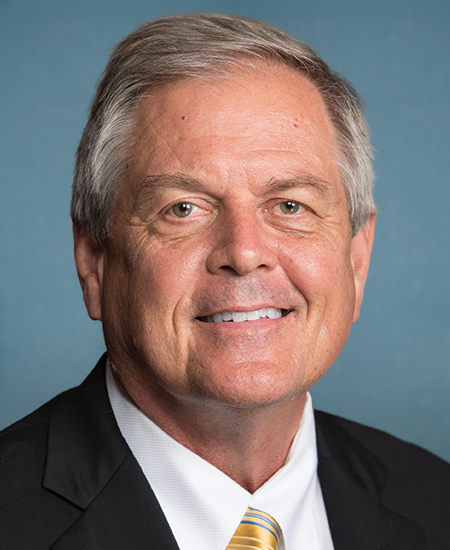
Rep. Ralph Norman
Sponsored bills
Maddy summaryHR 615, the Protecting Access for Hunters and Anglers Act of 2023, prevents federal agencies from banning lead ammunition or tackle on public lands and waters managed for hunting or fishing, except in specific cases. The bill allows exceptions only if a state wildlife department confirms lead use is harming local wildlife, and the federal action aligns with state law or state agency approval. It directly affects hunters and anglers using federal lands and waters, ensuring they can continue using lead products unless a state verifies a local wildlife issue requiring a ban. The law requires federal agencies to justify any exception with state data and policy compliance in official notices.
Maddy summaryThis resolution (HRES 1183) formally commends the University of South Carolina Gamecocks women’s basketball team for winning the 2024 NCAA Women’s Basketball National Championship. It recognizes their undefeated 38-0 season, record-breaking championship game TV ratings, and their second national title in three years. The resolution directs the House Clerk to send a copy to the university president, head coach Dawn Staley, and athletics director. As a ceremonial resolution, it has no policy impact or direct effect on legislation or funding.
Maddy summaryHR 8147 repeals the Corporate Transparency Act, which required certain businesses (typically those with more than 20 employees) to report beneficial ownership details to the Treasury Department. This bill eliminates the requirement for companies to disclose who ultimately owns or controls them, directly affecting business owners and financial institutions that previously submitted this information. The bill also makes minor technical changes to Title 31 of the U.S. Code to remove references to the repealed provisions. The repeal would end the existing financial transparency reporting obligation for covered entities.
Maddy summaryThis resolution (HRES 1157) is a symbolic gesture recognizing the work of linemen. It does not create new laws or policies; instead, it formally expresses the House's support for designating April 18, 2024, as "National Lineman Appreciation Day." The resolution highlights linemen's critical role in maintaining power infrastructure, their work as first responders during emergencies, and their safety risks. It directly affects no individuals or entities through policy changes - it solely offers ceremonial recognition of linemen's contributions to public safety.
Maddy summaryThis bill would reform the U.S. patent system by reverting to a "first-to-invent" system (replacing the current "first-to-file" system), abolishing inter partes and post-grant review proceedings, and ending automatic publication of patent applications after 18 months. It would restore patents as private property rights with a presumption of validity, strengthen remedies for patent infringement including a presumption of irreparable harm for injunctions, and eliminate fee diversion to fully fund the U.S. Patent and Trademark Office. The bill aims to protect inventors' rights and encourage innovation by making the patent system more favorable to patent holders. It would also reverse several Supreme Court decisions that have limited patentability for software and scientific discoveries.
Maddy summaryHR 8129, the American Nuclear Workforce Act, creates a Department of Energy initiative to strengthen nuclear workforce development. It directs the Secretary of Energy to encourage states to enhance nuclear science education at "covered schools" (defined as schools within 25 miles of operating nuclear plants or developers, or designated by the Secretary). Key provisions include promoting relevant degrees (like nuclear engineering), arranging plant tours for students, establishing industry mentorship programs, and leveraging campus research reactors for student training. The bill directly affects schools near nuclear facilities and aims to connect students with internships, scholarships, and career opportunities in the nuclear energy sector.
Maddy summaryHR 8051, the Earmark Elimination Act of 2024, prohibits the House of Representatives from considering any bill, amendment, or conference report containing a congressional earmark, limited tax benefit, or limited tariff benefit. This directly affects lawmakers who attempt to include specific spending requests for particular projects, entities, or small groups of beneficiaries (e.g., a grant for a single local project or a tax break for 10 or fewer companies). The bill establishes a procedural rule where a point of order can be raised to strike such provisions from a measure if sustained by the House. It defines "earmarks" as targeted spending requests made at a member’s request, excluding those from formula-driven processes, and similarly defines limited tax/tariff benefits affecting few beneficiaries.
Maddy summaryHR 6046, the Standing Against Houthi Aggression Act, requires the Secretary of State to designate Ansarallah (the Houthis) as a Foreign Terrorist Organization within 90 days of enactment and mandates the President to impose sanctions under existing authorities (Executive Orders 13224 and 13780) against Ansarallah and its members, agents, or affiliates. The bill directly affects Ansarallah and any foreign entities linked to it by triggering U.S. sanctions. Key provisions set strict 90-day deadlines for both the designation and sanctions implementation. The law focuses on reversing a prior designation revocation and enforcing existing legal mechanisms against the group.
Maddy summaryHR 5947 terminates specific U.S. waivers and licenses related to Iran, ending a 2023 waiver that allowed funds transfer from South Korea to Qatar. It prohibits the Treasury Department from reissuing similar waivers or licenses for the same purpose and blocks the President from granting Iran access to certain designated financial accounts established under prior laws. The bill directly affects U.S. foreign policy implementation by restricting how Treasury handles Iran-related financial transactions. It enacts concrete policy changes by ending existing authorizations and preventing future approvals for Iran to access specific accounts.