

Maddy summaryThis bill rescinds unspent funds from specific federal programs. It targets leftover money from pandemic relief (like the CARES Act and American Rescue Plan) and certain infrastructure initiatives (including education stabilization funds and transportation programs like the Congestion Mitigation Program). The rescission is limited to amounts already allocated for Israel, Ukraine, and Indo-Pacific security supplements under recent appropriations. Unspent funds must be returned to the Treasury, with no new spending created.
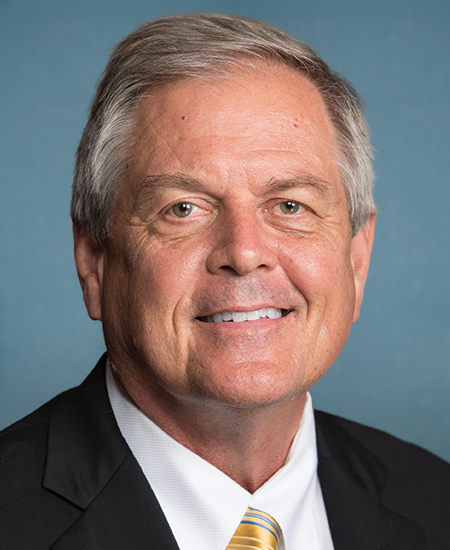
Rep. Ralph Norman
Sponsored bills
Maddy summaryHRES 1303 is a resolution passed by the U.S. House of Representatives on June 14, 2024, that condemns the Biden administration's suspension of pending approvals for liquefied natural gas (LNG) exports to countries without free trade agreements with the U.S. The resolution argues this action is politically motivated, citing studies showing economic benefits of LNG exports and noting that previous administrations conducted similar environmental reviews without halting permits. It calls for lifting the suspension to restore confidence in the energy sector, prioritize U.S. workers and communities, and align with the administration's stated goals of economic growth. As a non-binding resolution, it does not change policy but formally expresses congressional disapproval of the administration's approach.
Maddy summaryHR 8737, the "Free Market Drives Itself Act," repeals a working group established under the Infrastructure and Investment and Jobs Act to coordinate electric vehicle infrastructure efforts and prohibits the Departments of Energy and Transportation from continuing or creating any similar advisory group. This bill directly affects these federal agencies by eliminating an existing advisory body focused on electric vehicle policy and banning its replacement. The key mechanism is the explicit repeal of Section 25006 of the Infrastructure and Investment and Jobs Act and a binding prohibition on reestablishing comparable structures. The policy change removes a specific coordination mechanism without altering broader electric vehicle funding or regulations.
Maddy summaryThis bill amends the Northern Border Security Review Act to establish a new annual deadline for threat analysis (September 2, 2025, and each year after) and requires the Department of Homeland Security to update its northern border strategy within 90 days of each analysis. It mandates that the Secretary provide a classified briefing to congressional committees within 30 days of each threat analysis and develop performance measures for U.S. Customs and Border Protection's Air and Marine Operations to secure the northern border in air and maritime areas within six months of enactment. The bill directly affects the Department of Homeland Security and congressional committees by imposing specific reporting deadlines and review requirements. These changes focus on improving the frequency and structure of security assessments without altering existing border security operations.
Maddy summaryHR 537 authorizes a Congressional Gold Medal to honor 60 diplomats who saved Jewish lives during the Holocaust by issuing visas and passports against their governments' orders, risking expulsion and personal danger. The medal will be presented to the next of kin of these diplomats, alongside representatives from their home countries, and permanently displayed at the United States Holocaust Memorial Museum. The bill also permits the sale of bronze duplicates to cover production costs, with proceeds going to the U.S. Mint. This legislation recognizes the diplomats' humanitarian actions without creating new government programs or altering existing laws.
Maddy summaryHR 8653 authorizes the posthumous award of a Congressional Gold Medal to Major Thomas D. Howie, a U.S. Army officer who died during the Battle of Normandy in WWII. The bill specifies the medal will be presented to his nephew, Tom Howie, or his next of kin, and then permanently displayed at The Citadel Museum. It also permits the U.S. Mint to produce and sell bronze duplicates to cover costs. This is a commemorative measure honoring Major Howie's military service and sacrifice, with no substantive policy changes.
Maddy summaryHR 5403, the CBDC Anti-Surveillance State Act, prohibits the Federal Reserve from issuing or facilitating central bank digital currency (CBDC) directly or indirectly to individuals through financial institutions. It specifically bans Federal Reserve banks from offering digital products to individuals, maintaining individual accounts, or using CBDC for monetary policy implementation. The bill also clarifies that its restrictions do not apply to existing physical cash or private, permissionless digital payment systems. This bill directly affects the Federal Reserve's ability to develop or deploy a government-run digital dollar. The law aims to prevent the Federal Reserve from creating a digital currency that could enable transaction tracking or government oversight of personal financial activity.
Maddy summaryHRES 1267 is a non-binding House resolution supporting the Second Amendment and opposing the Biden administration's gun-related policies. It criticizes executive orders, Bureau of Alcohol, Tobacco, Firearms, and Explosives (ATF) regulations, and export restrictions as efforts to undermine constitutional rights, though the resolution itself has no legal effect. The bill does not change laws or directly affect anyone, as it serves only as a symbolic statement of congressional opinion. It specifically references the administration's actions on firearm regulations and exports, but does not propose new policies or alter existing ones.
Maddy summaryHJRES 146 is a congressional disapproval resolution targeting a Centers for Medicare & Medicaid Services (CMS) rule published on May 8, 2024, that would have clarified eligibility for health insurance subsidies under the Affordable Care Act for Deferred Action for Childhood Arrivals (DACA) recipients and certain other noncitizens. The rule aimed to allow these individuals to access premium tax credits, cost-sharing reductions, and basic health programs through health insurance marketplaces. If enacted, this resolution would block the CMS rule from taking effect, maintaining current restrictions that prevent DACA recipients from qualifying for these subsidies.
Maddy summaryHRES 1255 is a non-binding House resolution introduced on May 23, 2024, that calls on all Americans to observe Memorial Day 2024 as a day of remembrance for military personnel who died in service. The resolution specifically honors "the men and women of the Armed Forces who have died in the pursuit of freedom and peace" and urges the public to demonstrate appreciation for their sacrifices. It does not create new laws or policies but serves as a symbolic expression of national gratitude, emphasizing respect for those who died while defending democratic values. The resolution was co-sponsored by multiple House members and aligns with the traditional observance of Memorial Day.