

Maddy summaryHR 152, titled the "Hearing Protection Act," actually addresses firearm silencers (suppressors), not hearing protection. The bill removes federal registration requirements for silencers by directing the Attorney General to destroy all existing silencer records within 365 days. It also preempts state laws that tax, register, or impose recordkeeping requirements on silencers, making such state rules unenforceable. Additionally, the bill updates tax codes to include silencers as taxable items and clarifies their definition in firearm laws.
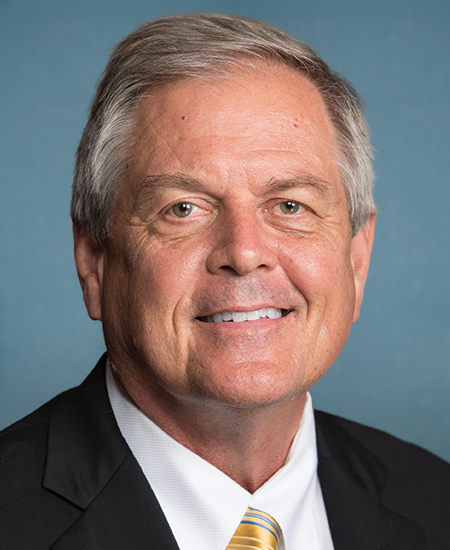
Rep. Ralph Norman
Sponsored bills
Maddy summaryHJRES 142 is a congressional disapproval resolution targeting a Department of Labor rule issued on April 25, 2024. It seeks to block the "Retirement Security Rule: Definition of an Investment Advice Fiduciary" (89 Fed. Reg. 32122), which defined standards for financial advisors handling retirement accounts. If passed, this resolution would make the Labor Department's rule ineffective, directly affecting retirement plan advisors and financial institutions subject to the regulation. The bill uses a specific procedural mechanism under Title 5, U.S. Code, to nullify the rule without creating new law.
Maddy summaryHR 10414 seeks to repeal the Impoundment Control Act of 1974 (2 U.S.C. 681 et seq.), a law that limited the President's authority to withhold funds Congress had appropriated. This bill would remove the legal restrictions requiring the President to seek Congressional approval before delaying or refusing to spend money already approved by Congress. The repeal would directly affect the executive branch's budget implementation powers, restoring the pre-1974 practice where the President could withhold funds without specific Congressional consent. This is a procedural change altering the legal framework governing federal spending, with no new provisions or direct impact on specific programs or citizens.
Maddy summaryThis bill requires the Congressional Budget Office (CBO) to provide at least two annual updates to the budget baseline, with one update including the economic data used in its calculations. It also mandates that the President submit technical budget data to Congress by February 1 each year, covering current/prior year estimates and credit reestimates for the upcoming fiscal year. These updates aim to improve the timeliness and transparency of budget information available to Congress. The bill directly affects the CBO and the Executive Branch in their annual budget reporting processes.
Maddy summaryThis bill denies federal Community Development Block Grants (CDBG) to any state or local government designated as a "sanctuary jurisdiction." A sanctuary jurisdiction is defined as one with policies restricting sharing immigration status information with federal authorities or refusing to comply with DHS detainer requests (with an exception for victims/witnesses of crimes). The law amends the 1974 Housing Act to require grant recipients to certify they are not sanctuary jurisdictions and will not become one during the grant period. This directly affects cities or counties with such policies by cutting off a key source of federal funding for housing, infrastructure, and community programs. The policy change is limited to CDBG funding under the 1974 Act, with no broader immigration enforcement provisions.
Maddy summaryHR 7438 directs the U.S. Treasury to mint commemorative coins for the 2026 FIFA World Cup, including 100,000 $5 gold coins, 500,000 $1 silver coins, and 750,000 half-dollar coins. The coins will be sold to the public at face value plus surcharges ($35, $10, and $5 per coin, respectively), with all surcharge revenue paid to FWC2026 US, Inc. for U.S. soccer programs. These funds must support soccer initiatives, particularly in underserved communities and youth development, as specified in the bill. The coins are legal tender but will only be issued during 2026, with no net cost to the U.S. government.
Maddy summaryThe Grant Transparency Act of 2023 requires federal agencies to clearly disclose how they evaluate competitive grant applications in their funding notices. Specifically, agencies must describe their rating systems, explain any weighted scoring methods (including how much each criterion is weighted), and detail other merit-based evaluation approaches. The law also mandates standardized reporting of basic application data, including the number of applications received and the city/state locations of all submitting organizations. This applies only to future notices of funding opportunity issued after the law takes effect (120 days post-enactment), does not create new funding, and does not override existing legal requirements for specific grant programs.
Maddy summaryThis bill reinstates a pre-American Rescue Plan Act (ARP) tax reporting rule for gig economy platforms. It requires third-party payment platforms (like Uber or DoorDash) to report transactions to the IRS only if a gig worker earns over $20,000 in total or completes more than 200 transactions in a year. This directly affects gig workers whose income falls below these thresholds, exempting them from the reporting requirement. The provision effectively reverses a change made by the ARP, reducing administrative burden for both platforms and lower-earning gig workers. The bill amends IRS Code Section 6050W to restore these specific de minimis payment thresholds.
Maddy summaryHR 10299, the Medicaid Funds Integrity Act of 2024, amends federal Medicaid law to prohibit using federal funds for gun violence prevention or intervention programs. Specifically, it adds a new provision (paragraph 28) to Section 1903(i) of the Social Security Act, blocking federal financial participation for such programs under Medicaid. This directly affects state Medicaid programs that might have sought federal funding for initiatives addressing gun violence. The bill creates a concrete funding restriction, ensuring Medicaid dollars cannot be spent on these specific types of programs.
Maddy summaryThis bill amends the Food Security Act of 1985 to change how conservation programs accept private funding. It removes references to "public-private partnerships" and restricts non-Federal funds to specific conservation programs under subtitle D, requiring these funds to be deposited into dedicated sub-accounts for each program. The bill deletes previous provisions that allowed broader use of such contributions. It directly affects conservation programs administered by the Secretary, altering the mechanism for handling private donations. The change simplifies the process by limiting where and how these funds can be used within conservation initiatives.