

Life at Conception Act This bill declares that the right to life guaranteed by the Constitution is vested in each human being at all stages of life, including the moment of fertilization, cloning, or other moment at which an individual comes into being. Nothing in this bill shall be construed to authorize the prosecution of any woman for the death of her unborn child.
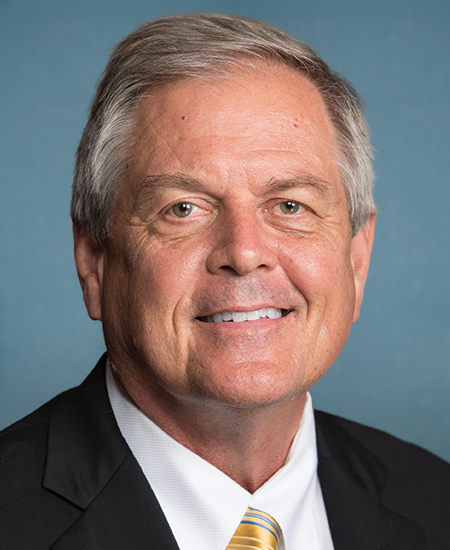
Rep. Ralph Norman
Sponsored bills
Maddy summaryHRES 59 is a symbolic resolution expressing the House of Representatives' disapproval of a sermon delivered by Bishop Mariann Edgar Budde at the National Prayer Service on January 21, 2025, at the National Cathedral. It declares the sermon "a display of political activism" and condemns its "distorted message," though it does not change any laws or policies. The resolution directly addresses the bishop's remarks during a nonpartisan religious event, making no concrete policy changes but reflecting the House's view on the content of that specific sermon. As a procedural resolution, it has no legal effect beyond expressing the House's stance.
Maddy summaryHR 643, the Federal Insurance Office Elimination Act, eliminates the Federal Insurance Office within the Treasury Department and removes the position of its Director. The bill updates federal law by deleting references to the office from the Dodd-Frank Act and other legislation, while clarifying that Treasury retains all existing authority over insurance matters. This change directly affects the structure of federal financial regulation by removing a specific oversight role and modifying related statutory language. The bill does not alter insurance policy or create new regulatory requirements, only removing an existing office and its associated references.
Maddy summaryHR 685, the SAVE Moms and Babies Act of 2025, prohibits the FDA from approving new abortion drugs or allowing investigational use of existing ones. It restricts existing abortion drugs to in-person administration by certified healthcare providers in clinics or hospitals (not pharmacies), limits use to pregnancies under 70 days gestation, and requires providers to certify they can handle complications like severe bleeding or ectopic pregnancies. The bill mandates reporting of adverse events (such as hospitalizations or infections) to the FDA without patient identifiers and defines "abortion drug" broadly as any drug intended to terminate pregnancy, excluding specific medical exceptions. This directly affects FDA approval processes, healthcare providers prescribing these drugs, and drug manufacturers.
Maddy summaryHR 645, the National Constitutional Carry Act, would prevent all U.S. states and localities from requiring permits or imposing penalties for carrying firearms in public. It directly affects eligible U.S. citizens (including non-residents) who legally possess firearms under state and federal law, removing current permit requirements for public carry. The bill’s key provision amends federal law to invalidate any state or local law that criminalizes or discourages public firearm carry, except where private property owners clearly prohibit firearms or security screening occurs. This would override existing state permit laws, making permitless carry legal across all states and territories for qualified individuals.
Maddy summaryHR 703, the Main Street Tax Certainty Act, makes a key tax deduction permanent for small business owners. It removes the temporary sunset provision (subsection (i)) from Section 199A of the tax code, ensuring the qualified business income deduction remains available for eligible small businesses. This change directly affects pass-through business owners (like S-corps, partnerships, and sole proprietorships) who currently qualify for this deduction. The permanent change takes effect for tax years starting after December 31, 2025.
Maddy summaryHJRES 28 proposes a constitutional amendment to permanently fix the number of justices on the U.S. Supreme Court at nine. This would require ratification by 38 state legislatures (three-fourths of states) within seven years to become part of the Constitution. The amendment directly affects the structure of the Supreme Court, which has had nine justices since 1869 but could otherwise be altered by future congressional action. It does not change current court operations or create new laws, but instead seeks to make the nine-justice composition a permanent constitutional requirement.
Maddy summaryHRES 56 is a non-binding resolution proposing to memorialize unborn children by encouraging the public to lower the U.S. flag to half-staff on January 22 each year. It cites the anniversary of Roe v. Wade's 1973 ruling and the 2022 overturning of that decision, referencing the claim that over 62 million unborn children have "perished" since 1973. The resolution specifically urges the public to observe this day as the "Day of Tears," encourages flag lowering to "mourn and honor" those affected, and promotes legislative efforts to "affirm the sanctity of life" regarding abortion. As a symbolic gesture, it does not create new law but seeks to influence public observance. The resolution was introduced by multiple House members and referred to the Oversight Committee.
Maddy summaryHR 627 requires states receiving Medicaid funds for family planning services to submit standardized abortion data to the CDC annually, covering 10 specific variables like maternal age, gestational age, race, procedure type, and whether the child survived. States must report by December 31 of the previous year, with delayed submissions allowing retroactive payments but false reporting risking one year of lost Medicaid funding. This creates a uniform national system to replace inconsistent state reporting, aiming to fill gaps where some states currently report no data. The bill directly affects states administering Medicaid family planning programs, linking their funding eligibility to data submission.
Maddy summaryHR 7 prohibits federal funds from being used for abortions or health insurance plans covering abortion, with exceptions for pregnancies resulting from rape, incest, or when a woman's life is endangered. It blocks federal premium tax credits under the Affordable Care Act for health plans covering abortion (except in specified cases) and requires clear disclosure of abortion coverage and related surcharges in plan materials. The bill allows individuals or employers to purchase separate abortion coverage using non-federal funds, such as out-of-pocket payments, without affecting federal subsidies. It directly affects federal health programs, ACA marketplace plans, and health insurance issuers offering coverage that includes abortion services.