

Maddy summaryHR 1313, the "One Flag for All Act," prohibits displaying any flag other than the U.S. flag on the exterior or in publicly accessible areas (like lobbies or hallways) of covered public buildings, including government offices, military bases, and embassies. The bill allows specific exceptions, such as POW/MIA flags, state flags for congressional offices, historical U.S. flags (like the Betsy Ross flag), and flags representing military units or tribal governments. This law directly affects how flags are displayed in federal and public spaces, requiring exclusive use of the U.S. flag in those designated areas while preserving established exceptions.
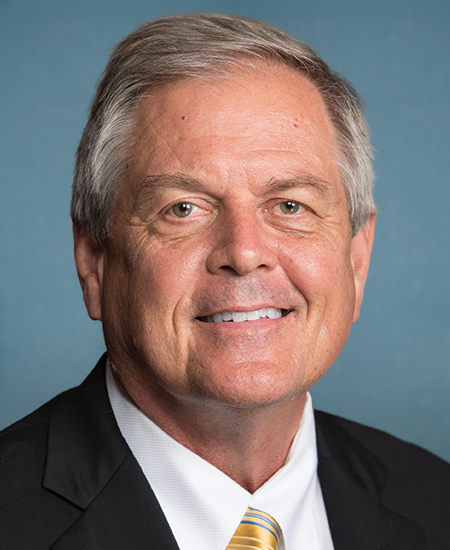
Rep. Ralph Norman
Sponsored bills
Maddy summaryHR 1232, the National Right-to-Work Act, would make union membership voluntary for workers in most private-sector jobs by removing legal requirements for employees to join a union or pay dues as a condition of employment. It directly affects workers in unionized workplaces covered by the National Labor Relations Act (including most private employers) and railroad workers covered by the Railway Labor Act. The key change eliminates provisions that allowed "union security agreements" (requiring dues or membership), meaning workers could no longer be forced to pay union fees to keep their jobs. This bill does not change other labor rights or create new programs - it only modifies existing laws to allow workers to opt out of union membership and financial obligations.
Maddy summaryHR 1226, the Restoring Checks and Balances Act, requires most new federal regulations to expire automatically five years after taking effect unless Congress specifically reauthorizes them. This directly affects federal agencies that issue regulations, mandating they submit detailed reauthorization requests to Congress by December 1 of the year before expiration, including justifications and related rules. The bill requires agencies to publicly post these requests online and prohibits agencies from reissuing or modifying expired regulations. It excludes certain rules, such as those related to national security, criminal enforcement, agency operations, or imminent health/safety emergencies. The law does not change existing regulations, only new ones issued after its enactment.
Security And Fairness Enhancement for America Act of 2025 or SAFE for America Act of 2025 This bill eliminates the diversity visa program. This program provides up to 55,000 visas annually to individuals from countries with low rates of immigration to the United States.
Maddy summaryThis bill prohibits financial institutions and payment processors from using specific merchant category codes that separately identify businesses selling firearms or ammunition. It directly affects banks, credit card networks, and payment processors that handle transactions for firearm retailers. The key provision amends the Truth in Lending Act to require these covered entities to treat firearm merchants the same as other businesses for transaction categorization purposes. The law does not change gun ownership laws or restrict firearm sales, only addressing how financial transactions are classified.
Maddy summaryThis bill, titled "Emergency Border Control Resolution," is actually a budget resolution establishing fiscal year 2025-2034 budget levels for the U.S. government. It sets detailed revenue, spending, and deficit targets across various government functions, including defense, health, and social programs. The resolution includes reconciliation instructions for committees to adjust laws within their jurisdictions to meet deficit targets. The title appears to be a political label rather than an accurate description of the bill's content, as it contains no actual border control provisions.
Maddy summaryThis bill would abolish the United States Agency for International Development (USAID) by ending all federal funding for its operations. Starting on the bill's enactment date, no funds may be used for USAID's functions under the Foreign Assistance Act or other laws, and any unused funds as of the day before enactment would be rescinded. All remaining USAID assets and liabilities would be transferred to the Secretary of State. The bill directly affects USAID's ability to carry out international development and humanitarian assistance programs.
Maddy summaryHR 1137, the "No Kill Switches in Cars Act," repeals Section 24220 of the Infrastructure Investment and Jobs Act (Public Law 117-58), which previously required vehicle manufacturers to implement advanced impaired driving technology. This bill directly affects car manufacturers by removing a mandate to integrate specific safety technology designed to detect driver impairment. The key provision is the repeal itself, eliminating the requirement without creating new obligations or altering existing vehicle safety standards.
Maddy summaryHR 1095, the Restoring Military Focus Act, eliminates two specific diversity-related positions within the Department of Defense (DoD): the Chief Diversity Officer (repealing Section 147 of Title 10, U.S. Code) and the Senior Advisor for Diversity and Inclusion (repealing Section 913 of the 2021 defense bill). The bill prohibits using federal funds to create any new position "substantially similar" to these roles. This directly affects DoD leadership and staffing by removing existing diversity-focused roles and preventing their replacement. The key mechanism is a federal funding ban on establishing comparable positions, aiming to refocus DoD resources on military operations.
Maddy summaryHR 1040, the Senior Citizens Tax Elimination Act, would stop taxing Social Security benefits for seniors by repealing the current tax rule that includes some benefits in gross income. It directly affects senior citizens who currently pay federal income tax on portions of their Social Security payments. The bill adds a provision stating Section 86 of the tax code (which taxes Social Security benefits) no longer applies after enactment. To offset the lost tax revenue, the bill requires the government to appropriate funds to the Social Security and Railroad Retirement trust funds, ensuring they remain fully funded without requiring tax increases.