This resolution supports reopening the U.S. Capitol Building and House Office Buildings to visitors under the public visitation policies that were in place before the COVID-19 pandemic.
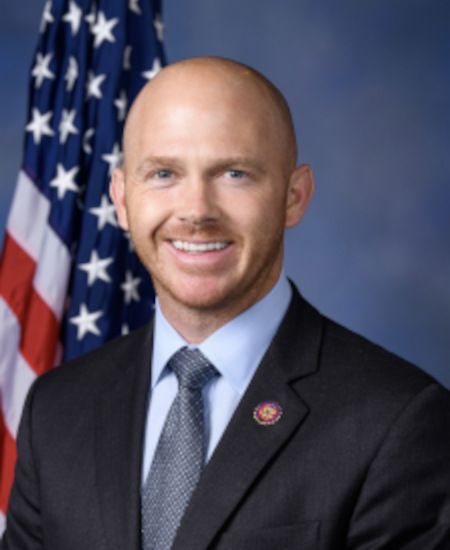
Rep. William R. Timmons IV
Sponsored bills
Small Lenders Exempt from New Data and Excessive Reporting Act or the Small LENDER Act This bill exempts certain financial institutions and transactions from the Consumer Financial Protection Bureau (CFPB) reporting requirements with respect to data about small business credit applications. Under the bill, the requirements apply only to financial institutions that originate at least 500 credit transactions to small businesses in each of the preceding two years. The bill further defines small businesses as those with annual revenue of $1 million or less. Currently, the CFPB has proposed a rule that the requirements apply only to financial institutions that originate at least 25 annual credit transactions to small businesses in each of the preceding two years. The rule further defines small businesses as those with annual revenue of $5 million or less.
100th anniversary of the Lincoln Memorial Commemorative Coin Act This bill directs the Department of the Treasury to mint and issue not more than 500,000 $1 coins in commemoration of the 100th anniversary of the Lincoln Memorial. All sales of coins issued under this bill shall include a surcharge which shall be paid to the Trust of the National Mall for the purpose of restoring and preserving the Lincoln Memorial.
Can't Cancel Your Own Debt Act of 2022 This bill prohibits a Member of Congress from receiving student loan cancellation for time served in Congress or from a student loan program established or amended by an act of Congress, or set forth by an executive order or agency action, during the period in which the individual is serving as a Member.
Health Care for Burn Pit Veterans Act This bill updates policies and procedures related to Department of Veterans Affairs (VA) health care and benefits for veterans who have been exposed to toxic substances. Specifically, the bill extends the eligibility period for VA hospital care, medical services, and nursing home care for combat veterans who served after September 11, 2001, and were exposed to toxic substances, radiation, or other conditions, including those who did not enroll to receive VA care during the eligibility period. The VA must incorporate into its existing health care screening a screening to help determine potential exposures to toxic substances during military service. Among other requirements, the VA must also provide annual training to health care and benefits personnel with respect to veterans who were exposed to toxic substances; analyze total and respiratory disease mortality in veterans who served in specified locations on specified dates; conduct an epidemiological study on the health trends of veterans who served in the Armed Forces after September 11, 2001; conduct a study to determine trends in the rates of the incidence of cancer in veterans; publish a list of VA resources for veterans who were exposed to toxic substances, families and caregivers of such veterans, and survivors of such veterans who are receiving death benefits; and report on the data quality of the Individual Longitudinal Exposure Record and its usefulness in supporting veterans in receiving VA health care and benefits.
Blockchain Solutions for Small Businesses Act This bill requires the Small Business Administration to study the current and potential uses of blockchain technology (i.e., the technology that supports digital currencies such as Bitcoin) in making loans to qualified small businesses.
TSA Security Threat Assessment Application Modernization Act This bill requires the Transportation Security Administration (TSA) to standardize the enrollment and renewal system for individuals applying for or renewing multiple TSA Security Threat Assessment programs, including the Transportation Worker Identification Credential, Hazardous Materials Endorsement, and TSA PreCheck programs. The standardization shall permit an individual to (1) enroll at a TSA-designated universal enrollment center once and use the application for one of such programs to enroll in two or more of such programs,with specified exceptions for those applying for or renewing enrollment in more than one program at different times; (2) apply successful, valid clearance results from a TSA Security Threat Assessment to satisfy vetting requirements for participation in any related program without additional cost; and (3) undergo a streamlined and expeditious renewal process. Additionally, the TSA must publish on its website information relating to the standardization of the enrollment system.
Kids in Classes Act This bill prohibits a state educational agency from receiving specified federal education funds unless funds are provided directly to a parent or guardian of an eligible child for certain qualified educational expenses (e.g., educational materials, tutoring, or private school tuition). Eligible child refers to a child who attends a public elementary or secondary school and such school (1) receives specified federal education funds; and (2) does not provide, for more than three days during a school year and for reasons related to a public health emergency or collective bargaining action, in-person instruction for all students who wish to attend.
Improving Cybersecurity of Small Businesses, Nonprofits, and Local Governments Act This bill requires reporting and other efforts to improve the cybersecurity of small entities. These include small businesses, governments (or certain governmental bodies) that represent populations of less than 50,000, and small nonprofits. Specifically, the Cybersecurity and Infrastructure Security Agency (CISA) must periodically report on and make recommendations about cybersecurity policies and controls for small entities. CISA, the Small Business Administration (SBA), and the Minority Business Development Agency must (1) promote the report, including by making it available through their respective websites; and (2) make voluntary training and technical assistance available to employees of small entities concerning cybersecurity recommendations identified in the report. In addition, the Department of Commerce must report to Congress about improving the cybersecurity of small entities. Further, the SBA must collect information from small businesses concerning cybersecurity matters and report to Congress about the cybersecurity of small businesses.

Designates the facility of the United States Postal Service located at 11 Robert Smalls Parkway Suite C, in Beaufort, South Carolina, as the "Robert Smalls Post Office."