

Lower Costs, More Cures Act of 2021 This bill establishes and modifies several programs and requirements to address prescription drug prices. The bill modifies provisions under Medicare and Medicaid relating to prescription drug coverage and price transparency. Among other changes, the bill requires the Centers for Medicare & Medicaid Services to publish certain information, as reported by pharmacy benefit managers (PBMs), relating to generic dispensing rates, drug discounts and rebates, and payments between PBMs, health plans, and pharmacies; caps annual out-of-pocket spending under the Medicare prescription drug benefit; allows prescription drug plan sponsors under the Medicare prescription drug benefit to offer additional plans in a region; requires pass-through pricing models, and prohibits spread-pricing, for payment arrangements with PBMs under Medicaid; and allows states to include in the Medicaid Drug Rebate Program covered outpatient drugs that are provided as part of physician or outpatient hospital services. The bill also generally modifies other provisions relating to the regulation and costs of generic and brand-name drugs. Among other changes, the bill prohibits the manufacturer of a brand-name, generic, or biosimilar drug from entering into certain agreements to resolve or settle a patent infringement claim in connection with the sale of a drug or biological product; permanently allows high deductible health plans to waive deductibles for insulin and associated products; and establishes the position of Chief Pharmaceutical Negotiator in the Office of the U.S. Trade Representative.
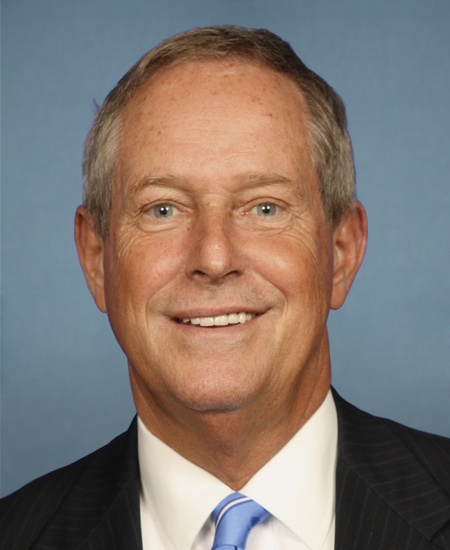
Rep. Joe Wilson
Sponsored bills
Maximum Pressure Act This bill expands sanctions and economic penalties on Iran. It also restricts the President from unilaterally lifting or waiving the sanctions or penalties and increases congressional oversight of them. Specifically, the bill requires the President to impose visa- and asset-blocking sanctions. Additionally, it modifies existing sanctions, including by (1) providing statutory authority for executive orders imposing sanctions; (2) applying sanctions to additional sectors of Iran's economy; and (3) broadening sanctionable conduct to cover, for example, assisting Iran with the acquisition of ballistic missiles and the complicity of Iranian officials in human rights violations in specified countries. The bill also requires reporting on licenses that authorize activities subject to sanctions. The bill prohibits U.S. representatives at the International Monetary Fund from voting to allow Iran's access to special drawing rights (a currency support tool) and places restrictions on financial transactions with Iran. The restrictions include requiring domestic financial institutions to implement special measures with respect to foreign financial institutions that conduct significant transactions connected to the Instrument in Support of Trade Exchanges (a European mechanism that bypasses U.S. sanctions when carrying out trade with Iran). The Department of State must maintain the Islamic Revolutionary Guard Corps' designation as a terrorist organization and must designate Ansharallah (or Houthis), which operates in Syria, as a foreign terrorist organization. The bill also requires reports on U.S. sanctions concerning Iran, the status of Iran's nuclear weapons program, and other matters.
Iran Human Rights and Accountability Act of 2021 This bill requires certain reports and determinations with respect to actions by Iran (and designated Iranian officials) that violate human rights. Specifically, the President must determine whether specified Iranian officials meet certain criteria for the application of sanctions based on their responsibility for, or complicity in, human rights abuses. The Department of State must report on human rights abuses in relation to protests in Iran since 2017 and determine whether certain actions by Iran, Hezbollah, and Iranian-backed militias constitute genocide or war crimes. Further, the State Department must report on the estimated net worth and known sources of income (including from corrupt or illicit activities) of Iranian Supreme Leader Ayatollah Ali Khamenei and his family members.
Sanctioning Iranian-Backed Militia Terrorists Act This bill requires the President to impose property- and visa-blocking sanctions with respect to Kata'ib Sayyid al-Shuhada and any foreign person that is a member, agent, or affiliate of, or owned or controlled by, Kata'ib Sayyid al-Shuhada. Kata'ib Sayyid al-Shuhada is an Iranian-backed Iraqi militia that has worked with groups that have been designated as foreign terrorist organizations and has deployed forces to Syria to engage in military operations supporting the Syrian government.
Prohibiting IRS Financial Surveillance Act This bill prohibits the Department of the Treasury from requiring a financial institution to report the transfers into and out of a financial account. This prohibition does not apply to laws or regulations in effect on October 1, 2021.
This resolution condemns Belarusian authorities' assault on freedom of expression and human rights in Belarus since the August 2020 presidential election. The resolution also calls for the immediate release of journalists, cultural figures, and dissidents currently held as political prisoners in Belarus. Furthermore, the resolution calls on the Biden Administration to support initiatives to assist survivors of torture and other human rights violations from Belarus, including by working with allies in the region to grant them protection and providing avenues for them and their families to access safety in the United States; examine all available accountability options for violators of human rights and fundamental freedoms; and demand that Belarus cooperate fully with international partners and organizations, including the United Nations High Commissioner for Human Rights. Finally, the resolution supports the aspirations of the Belarusian people in their struggle for freedom and human rights.
Establishing New Authorities for Businesses Laundering and Enabling Risks to Security Act or the ENABLERS Act This bill expands the definition of a financial institution for purposes of reporting suspicious transactions, anti-money laundering programs, and other related measures. Specifically, the bill expands this definition to include persons who provide investment advice for compensation; persons who trade in works of art, antiques, or collectibles; attorneys, law firms, or notaries involved in financial or related activity on behalf of another person; certain trusts and company service providers; certified public accountants and public accounting firms; persons engaged in the business of public relations, marketing, communications, or other similar services in such a manner as to provide another person anonymity or deniability; and persons engaged in the business of providing third-party payment services. Additionally, the Financial Crimes Enforcement Network must establish a task force to develop a strategy to impose anti-money laundering safeguards and enforce requirements on certain professions. Finally, domestic title insurance companies must obtain, maintain, and report to the Department of the Treasury information on the beneficial owners of entities that purchase or sell residential or commercial real estate in transactions involving the domestic title insurance company.
This resolution requests the President and directs the Department of State to transmit to the House of Representatives, not later than 14 days after the adoption of this resolution, copies of both classified and unclassified documents that refer or relate to certain information on the withdrawal of the United States from Afghanistan, including reactions, concerns, or objections expressed by certain allies and partners; any agreement reached with the Taliban related to the evacuation of specified individuals; and numbers of specified individuals in contact with the State Department to request evacuation assistance from Afghanistan, from July 30, 2021, to the present.
This resolution condemns any actions taken by any terrorist organization or government in Afghanistan to oppress women and girls. It also demands that the Taliban preserve and advance the rights and freedoms of all women and girls.
Israel Relations Normalization Act of 2021 This bill requires the Department of State to take certain actions promoting the normalization of relations between Israel, Arab states, and other relevant countries and regions. Specifically, the State Department must develop a strategy on expanding and strengthening the Abraham Accords (the term used to refer collectively to agreements between Israel and the United Arab Emirates and between Israel and Bahrain marking the public normalization of relations between the two Arab countries and Israel). The strategy must include a description of how the U.S. government will encourage further normalization of relations with Israel. In addition, the State Department must report on options for U.S. international efforts to promote the strengthening of ties between Israel, Arab states, and other relevant countries and regions. The State Department must also report on the status of the normalization of relations with Israel, including information on (1) laws that punish individuals for people-to-people relations with Israelis (i.e., anti-normalization laws), and (2) evidence of steps taken by Arab governments toward permitting or encouraging normalized relations between their citizens or residents and Israeli citizens.