

Maddy summaryThe Death Tax Repeal Act would eliminate the federal estate tax and generation-skipping transfer tax for estates of people who die on or after the bill's enactment date, and for generation-skipping transfers made after that date. It would also establish a new $10 million lifetime gift tax exemption (adjusted annually for inflation) and replace the existing gift tax rate schedule with a revised structure. These changes would primarily affect high-net-worth individuals and their heirs, as the estate tax and gift tax typically apply to large estates or gifts exceeding the new exemption threshold. The bill's provisions would take effect on the date of enactment, with transitional rules for the year the bill is signed into law.
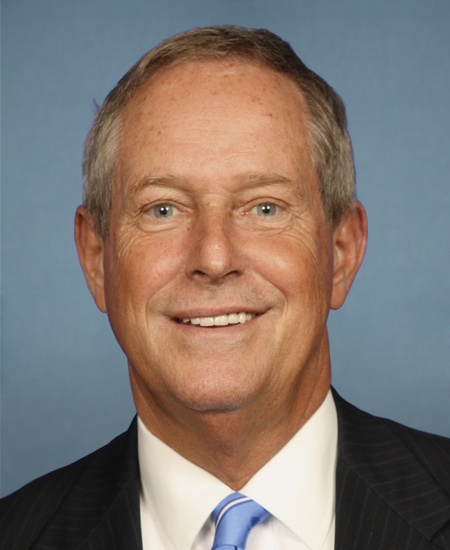
Rep. Joe Wilson
Sponsored bills
Maddy summaryHRES 963 is a symbolic resolution honoring Korean American Day, which commemorates the January 13, 1903 arrival of the first large wave of Korean immigrants to the U.S. It recognizes Korean Americans' contributions to U.S. society, including their economic, cultural, and military impacts, and marks the 121st anniversary of this historic migration. The resolution urges all Americans to observe Korean American Day to appreciate these contributions. As a commemorative measure, it does not create new policies or affect specific groups beyond this ceremonial recognition.
Maddy summaryThe REMAIN in Mexico Act of 2024 would require the U.S. government to reinstate the Migrant Protection Protocols (MPP), a policy that forces certain asylum seekers to wait in Mexico while their U.S. immigration cases are processed. It directly affects asylum seekers from Mexico and Central America who are seeking entry to the United States and would be subject to the MPP under this law. The bill mandates implementation of the MPP as described in a 2019 policy memo by former Homeland Security Secretary Nielsen. This would reverse the current administration's decision to end the program, requiring asylum seekers to remain in Mexico during their immigration proceedings.
Maddy summaryThe Count Only Citizens Act requires the U.S. Census Bureau to include a citizenship or lawful presence question on the 2030 and future decennial census forms. It mandates that the Secretary of Commerce adjust population counts for congressional apportionment to exclude non-citizens and individuals not lawfully present in the U.S. This change directly affects how congressional seats are allocated among states, potentially reducing representation for states with large non-citizen populations. The bill does not alter census counts used for other purposes, such as federal funding distribution.
Maddy summaryHR 1147, the Whole Milk for Healthy Kids Act of 2023, allows schools participating in the National School Lunch Program to offer whole milk as an option during lunch. It amends the school lunch law to explicitly permit schools to serve flavored and unflavored whole milk alongside reduced-fat, low-fat, and fat-free milk choices for students. The bill also requires the Secretary of Agriculture to adjust meal regulations to account for saturated fat from whole milk, ensuring it doesn't count against meal fat limits. This change directly affects participating schools and the students who receive school lunches, expanding their milk beverage options.
Maddy summaryHRES 932 is a ceremonial resolution recognizing the 120th anniversary of diplomatic relations between the United States and Bulgaria, established on September 19, 1903. It contains no new policies, funding, or obligations - it simply affirms the historical partnership through symbolic language and acknowledges shared values like democracy and NATO cooperation. The resolution has no direct effect on citizens, legislation, or government operations. As a procedural resolution, it serves only to commemorate a milestone in U.S.-Bulgaria relations.
Maddy summaryHRES 927 is a symbolic resolution passed by the U.S. House of Representatives condemning antisemitism on college campuses and criticizing the testimony of three university presidents (Harvard’s Claudine Gay, MIT’s Sally Kornbluth, and Penn’s Elizabeth Magill) before the House Education Committee. It specifically addresses their evasive responses when asked whether calls for the genocide of Jews violate campus policies, noting their statements about "context" and lack of clear condemnation. The resolution does not create new laws or policies but formally expresses the House’s stance against antisemitism and holds university leadership accountable for their testimony. It directly affects the referenced university presidents and their institutions by publicly criticizing their handling of campus antisemitism.
Maddy summaryHR 6416, the "Russian War Crimes in Ukraine Tax Act," imposes a 100% tax on interest and dividends earned from frozen Russian and Belarusian sovereign assets held abroad. This tax revenue is directed into a new Ukraine Reconstruction Trust Fund, which must be used for Ukraine's reconstruction, humanitarian aid, economic development, and transparent governance. The bill requires U.S. financial institutions to withhold this tax from qualifying income and overrides international treaty obligations to ensure implementation. It also mandates annual reports on fund usage to Congress, specifying that all revenues from the tax must support Ukraine's recovery efforts as defined in the legislation.
Maddy summaryThis resolution condemns CNN for using images captured by a photojournalist who allegedly had prior knowledge of the October 7, 2023 Hamas attack on Israel. It symbolically expresses the House's disapproval of media outlets utilizing such imagery, referencing a New York Post article and Prime Minister Netanyahu's statements. As a procedural resolution, it does not create new laws or directly affect any individuals or groups - it serves only as a formal statement of disapproval.
Maddy summaryHJRES 88 is a resolution seeking to block a Department of Education rule that would have improved income-driven repayment options for federal student loan borrowers. The rule, published in the Federal Register on July 10, 2023, targeted the William D. Ford Direct Loan Program and the Federal Family Education Loan (FFEL) Program. This resolution uses the Congressional Review Act process to disapprove the rule, preventing it from taking effect and preserving the current repayment structure. If enacted, it would stop the proposed changes to repayment terms without altering existing loan policies.