

Maddy summary# Summary of U.S. Legislative Acts Document This document presents a comprehensive compilation of proposed or enacted U.S. legislative acts focused on international sanctions, counterterrorism measures, and foreign policy actions. The key themes and provisions include: ## Major Legislative Acts 1. **Iran Sanctions & Accountability Measures**: - Comprehensive sanctions targeting Iran's Supreme Leader, President, IRGC leadership, and security apparatus - Requirements for the President to report on financial institutions and assets connected to Iranian officials - Restrictions on financial institutions providing services to Iranian officials - Sanctions on Chinese financial institutions involved in transactions with Iran 2. **Terrorism Financing & Counterterrorism**: - Sanctions against Hamas, Palestinian Islamic Jihad, and other designated terrorist groups - Measures to disrupt global fundraising and financing networks for terrorist organizations - Sanctions against entities using human shields in conflict zones - Enhanced measures against cyber-enabled threats to U.S. security 3. **Illicit Trafficking & Drug Control**: - Specific sanctions targeting the illicit Captagon (amphetamine) trafficking network - Measures to disrupt production and trafficking of stimulants from Syria 4. **Financial & Economic Measures**: - Application of foreign direct product rules to Iran - Restrictions on financial transactions involving Iran - Requirements for reporting on terrorist financing networks ## Common Elements Across Acts - Multiple reporting requirements to Congress with specific deadlines - Detailed definitions of key terms (e.g., "foreign person," "knowingly," "material support") - Waiver provisions for national security interests - Sunset clauses (typically 4-7 years after enactment) - Exemptions for humanitarian assistance and intelligence activities - Congressional oversight requirements This legislative package represents a broad U.S. strategy to counter terrorism, hold accountable state sponsors of terrorism, disrupt terrorist financing networks, and address specific security threats including Iranian malign activities and illicit drug trafficking. The acts collectively form a comprehensive framework for international sanctions and counterterrorism measures.
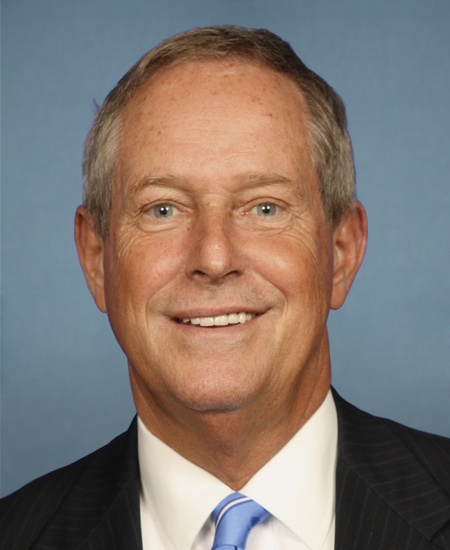
Rep. Joe Wilson
Sponsored bills
Maddy summaryHR 8066, the Ammunition Supply Chain Act, requires the Secretary of the Army to submit a report to Congress within 180 days of enactment. The report must assess the U.S. supply chain for ammunition components like nitrocellulose and smokeless gunpowder, focusing on improving sourcing, avoiding single points of failure, managing global demand risks, and leveraging private sector capacity. This bill directly affects the Department of Defense and ammunition manufacturers by mandating a review of supply chain vulnerabilities. It is procedural in nature, establishing a reporting requirement without creating new regulations or funding.
Maddy summaryHR 8051, the Earmark Elimination Act of 2024, prohibits the House of Representatives from considering any bill, amendment, or conference report containing a congressional earmark, limited tax benefit, or limited tariff benefit. This directly affects lawmakers who attempt to include specific spending requests for particular projects, entities, or small groups of beneficiaries (e.g., a grant for a single local project or a tax break for 10 or fewer companies). The bill establishes a procedural rule where a point of order can be raised to strike such provisions from a measure if sustained by the House. It defines "earmarks" as targeted spending requests made at a member’s request, excluding those from formula-driven processes, and similarly defines limited tax/tariff benefits affecting few beneficiaries.
Maddy summaryHR 6603, the No Technology for Terror Act, requires export licenses for certain foreign-made items destined for Iran if they were produced using U.S. technology or equipment. Specifically, it targets foreign goods that are direct products of U.S.-origin technology (as defined by the Commerce Control List) and are sent to Iran or used in Iran’s production of controlled items. The law applies to exporters of technology, equipment, or components but includes limited exceptions for food, medicine, and communications services. It expands existing U.S. export control rules to cover foreign-produced items made with U.S. technology, effective 120 days after enactment. The bill does not address terrorism directly but aims to restrict technology transfers to Iran under existing export frameworks.
Maddy summaryHR 5947 terminates specific U.S. waivers and licenses related to Iran, ending a 2023 waiver that allowed funds transfer from South Korea to Qatar. It prohibits the Treasury Department from reissuing similar waivers or licenses for the same purpose and blocks the President from granting Iran access to certain designated financial accounts established under prior laws. The bill directly affects U.S. foreign policy implementation by restricting how Treasury handles Iran-related financial transactions. It enacts concrete policy changes by ending existing authorizations and preventing future approvals for Iran to access specific accounts.
Maddy summaryThis bill requires the U.S. government to monitor and report on $6 billion in Iranian funds held in Qatar, ensuring they aren't used for non-humanitarian purposes like military spending. It mandates annual reviews of all U.S. nationals held hostage by Iran over the past decade, with the President identifying individuals or entities responsible for hostage-taking and determining if sanctions should apply. The bill also directs the President to restrict travel for Iranian diplomats at the U.N. if they face sanctions related to terrorism or hostage-taking, and requires the State Department to assess whether U.S. passports should be invalidated for travel to Iran due to security risks. These provisions directly affect the Iranian government, its officials, and entities involved in detaining U.S. citizens, focusing on accountability and financial oversight.
Maddy summaryHR 4681, the Illicit Captagon Trafficking Suppression Act of 2023, imposes U.S. sanctions on foreign individuals and entities involved in the illicit production and trafficking of Captagon - a stimulant drug. It directly affects foreign persons (including officials and networks linked to Syria’s government or Hezbollah) who materially contribute to Captagon trafficking. Key mechanisms include blocking their U.S. assets, denying visas or entry to the U.S., and imposing penalties for violations. The bill requires the President to identify and sanction specific targets within 180 days, such as Syrian officials named in the bill, to dismantle trafficking networks. The policy aims to disrupt transnational criminal organizations profiting from Captagon trafficking, consistent with U.S. national security interests.
Maddy summaryHR 4691 requires the President to submit detailed reports to Congress before terminating Iran sanctions, waiving sanctions for specific individuals, or making significant changes to U.S. foreign policy toward Iran through licensing actions. Congress then has 30 days (or 60 days for reports submitted between July 10 and September 7) to review these reports, during which the President cannot implement the proposed action without congressional approval. If Congress passes a joint resolution of disapproval, the President cannot proceed with the action for 12 days after the resolution passes, or 10 days after a presidential veto. This bill applies to actions involving sanctions under multiple laws, including the Iran Sanctions Act of 1996 and the Comprehensive Iran Sanctions Act of 2010. It does not change the sanctions themselves but establishes a formal review process for executive branch decisions affecting them.
Maddy summaryThis resolution (HRES 288) urges the European Union to formally designate Iran's Islamic Revolutionary Guard Corps (IRGC) as a terrorist organization under EU legal framework Common Position 931. It does not create new laws but requests the EU take this specific action, noting the EU has previously sanctioned IRGC individuals but not the organization as a whole. The resolution cites the IRGC's role in human rights abuses, support for proxy groups, and involvement in conflicts like Ukraine as context for the request. Introduced in April 2023 by 20+ House members, it is a non-binding expression of congressional preference.
Maddy summaryHRES 1148 is a resolution passed by the U.S. House of Representatives that condemns the Iranian government for supporting terrorism, regional proxy conflicts, and internal suppression of dissent - including its crackdown on protests following Mahsa Amini's death in 2022. It specifically calls for maintaining sanctions against Iran, supporting the Iranian Resistance's Ten-Point Plan (which advocates for a democratic, secular, nonnuclear Iran), and protecting Iranian political refugees in Albania. The resolution also affirms the Iranian people's right to self-determination under international law and urges the U.S. to recognize their struggle for freedom. As a non-binding resolution, it does not create new laws but formally expresses congressional stance.