

This bill increases the annual limit on the tax credit for qualified railroad track maintenance expenses (also referred to as the short line railroad tax credit) and expands eligibility for claiming the credit. Under current law, the tax credit is limited each tax year to $3,500 multiplied by the sum of the number of miles of railroad track owned or leased by the taxpayer (miles owned or leased) and the number of railroad track miles assigned to the taxpayer by a Class II or III railroad (miles assigned). This bill increases the annual limit to $6,100 multiplied by the sum of miles owned or leased and miles assigned. The $6,100 amount used in the calculation of the tax credit limit is adjusted for inflation for tax years beginning after 2025. The bill also expands eligibility for the tax credit to include gross expenses for maintaining railroad tracks owned or leased as of January 1, 2024. Under current law, the tax credit is limited to gross expenses for maintaining railroad tracks owned or leased as of January 1, 2015.
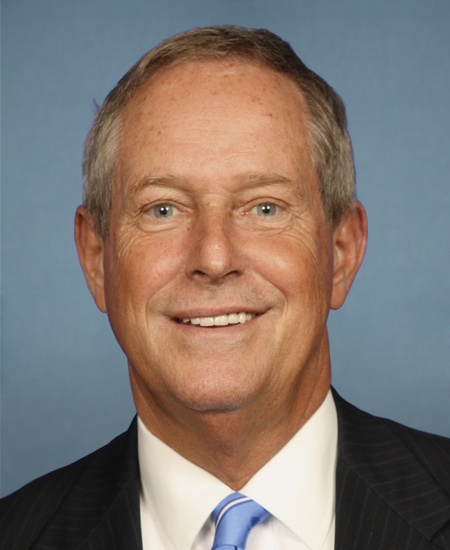
Rep. Joe Wilson
Sponsored bills
Maddy summaryHR 476, the "No Russian Tunnel to Crimea Act," requires the U.S. President to impose sanctions on foreign individuals or entities that knowingly help build, maintain, or repair any tunnel or bridge connecting Russia to Crimea. The bill directly affects foreign businesses or officials involved in such infrastructure projects, which the bill states would support Russia’s occupation of Crimea - internationally recognized as Ukrainian territory. Key mechanisms include blocking U.S. assets of sanctioned parties and barring them from entering the U.S. via visa restrictions, with exceptions for humanitarian aid and certain national security activities. The legislation targets potential infrastructure projects discussed between Russian and Chinese officials in late 2023, aiming to disrupt Russia’s military use of Crimea during its invasion of Ukraine.
Maddy summaryHR 243 prohibits the U.S. government from recognizing or implying recognition of Georgia's government led by Bidzina Ivanishvili, directing federal officials to avoid any actions supporting such recognition. It requires the U.S. to recognize Georgia's current president before the October 2024 elections as the legitimate leader and mandates implementing existing sanctions under Executive Order 14024 against Ivanishvili's regime. The policy would end if Georgia restores its constitution through free and fair elections certified by the U.S. Helsinki Commission. This bill directly affects U.S. diplomatic recognition policy toward Georgia's government.
Maddy summaryHR 429, the Rosie the Riveter Commemorative Coin Act, authorizes the U.S. Treasury to mint and sell three types of commemorative coins ($5 gold, $1 silver, and half-dollar) to honor women who worked on the U.S. home front during World War II. The coins will be sold at face value plus surcharges ($35 for gold, $10 for silver, $5 for half-dollar), with all surcharge revenue directed to the Rosie the Riveter Trust to support the Rosie the Riveter WWII Home Front National Historical Park and related educational programs. The coins must be issued between January 1, 2028, and December 31, 2028, in specified quantities (50,000 gold, 400,000 silver, 750,000 half-dollar), with all costs covered by the sales revenue to avoid net government expense.
Parris Island Protection Act This bill prohibits the use of federal funds to close or realign Marine Corps Recruit Depot, Parris Island in South Carolina, or to conduct any planning or other activity related to such closure or realignment.
Maddy summaryHR 404, the "Hearing Protection Act," reclassifies firearm silencers (devices that reduce gunfire noise) as firearms for federal tax and regulatory purposes. It imposes a 10% federal tax on silencers, requires the destruction of all existing federal silencer registration records within one year, and preempts state laws that tax or regulate silencers. The bill clarifies that silencers are treated as firearms under federal law, including for licensing and marking requirements, and defines "firearm silencer" to include specific components. Note: The bill’s title is misleading - it addresses firearm silencer regulation, not hearing protection for people.
Maddy summaryHR 450, the FORCE Act, prevents the U.S. government from removing Cuba from the State Sponsors of Terrorism list. It requires the President to make a specific determination under the 1996 LIBERTAD Act before Cuba can be removed. The bill directly affects Cuba's international designation status and U.S. foreign policy actions toward the country. It does not change existing law but blocks any removal until the specified determination is made. The provision applies to both the President and the Secretary of State.
Maddy summaryHR 436 prohibits U.S. federal funds from being used to support Russia's participation in the Group of Seven (G7) or to reconstitute a Group of Eight (G8) including Russia. The bill blocks any federal spending for actions facilitating Russia's involvement in G7 meetings or the return of Russia to a G8 format. This directly affects U.S. government agencies and programs that manage international funding or diplomatic engagement. The policy change requires the U.S. to stop providing financial support for Russia's role in these international forums, without altering the G7's own rules.
Maddy summaryThis bill requires colleges and universities receiving federal funding to include a specific definition of antisemitism in all campus conduct documents. The definition states antisemitism is a perception of Jews that may manifest as hatred, targeting both Jewish individuals/non-Jewish people and property, as well as Jewish community institutions. It mandates that institutions explicitly state antisemitic conduct is prohibited, with student offenders facing expulsion and employees facing termination. The law directly affects all institutions covered by the Higher Education Act, setting clear consequences for antisemitic behavior on campus.
Maddy summaryHR 377, the Regulation Reduction Act of 2025, requires federal agencies to repeal three existing rules before issuing new ones that impose costs or responsibilities on businesses, state/local governments, or individuals. For major new rules, agencies must also certify that the new rule’s cost does not exceed the cost of the repealed rules. Agencies must publish all repealed rules in the Federal Register and submit a 90-day review to Congress identifying costly, ineffective, duplicative, or outdated regulations. This bill directly affects how federal agencies develop new rules, aiming to reduce regulatory burden by mandating rule removal before new rule creation.