Maddy summaryHR 2581, the Iranian Terror Prevention Act, requires the U.S. government to designate 29 specific Iranian-backed militant groups as terrorist organizations within 90 days of the bill’s passage. The President must then decide within 60 days whether to impose sanctions on these groups, blocking their U.S. assets and transactions under existing law. The bill also mandates regular reports to Congress on these designations and sanctions, including for any new groups meeting the criteria. This law directly affects the 29 named groups (such as the Badr Organization and Houthis) and any entities controlled by Iran’s Islamic Revolutionary Guard Corps.
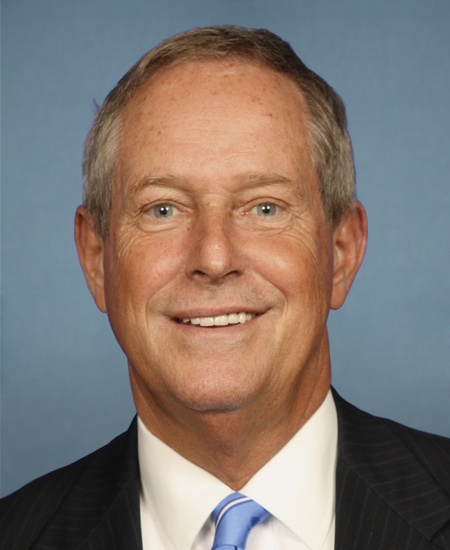
Rep. Joe Wilson
Sponsored bills
Sanctioning Russia Act of 2025 This bill imposes penalties on certain persons (individuals and entities) if the President determines that the Russian government or a person acting at Russia's direction is involved with (1) refusing to negotiate a peace agreement with Ukraine; (2) violating a negotiated peace agreement; (3) initiating another invasion of Ukraine; or (4) overthrowing, dismantling, or seeking to subvert the Ukrainian government. If the President makes such a determination, the bill requires certain actions including the President must impose visa- and property-blocking sanctions on specified persons such as the Russian president, certain Russian military commanders, and any foreign person that knowingly provides defense items to the Russian armed forces; the President must increase the rate of duty on all goods and services imported from Russia into the United States to at least 500% relative to the value of such goods and services; the President must increase the rate of duty on all goods and services imported into the United States from countries that knowingly engage in the exchange of Russian-origin uranium and petroleum products to at least 500% relative to the value of such goods and services; the Department of the Treasury must impose property-blocking sanctions on any financial institution organized under Russian law and owned wholly or partly by Russia, and any financial institution that engages in transactions with those entities; and the Department of Commerce must prohibit the export, reexport, or in-country transfer to or in Russia of any U.S.-produced energy or energy product.

Maddy summaryHR 2551, the Military Installation Retail Security Act of 2025, prohibits the U.S. Department of Defense from renewing, extending, or entering into long-term retail contracts with businesses controlled by "covered nations" (nations designated under existing law as security concerns) on military installations in the U.S. It requires retailers to disclose ownership ties to covered nations to the Committee on Foreign Investment in the U.S. (CFIUS), which must assess national security risks within 180 days. The bill allows limited waivers only if essential services for troops' welfare are unavailable elsewhere and security risks are mitigated, with strict reporting requirements. Retailers failing to disclose ownership changes or misrepresenting control face immediate contract termination. This directly affects retailers operating on military bases with potential foreign ties.
Maddy summaryHRES 281 is a non-binding resolution designating March 2025 as "Bulgarian-American Heritage Month" to recognize the cultural and historical contributions of Bulgarian-Americans. It urges the public to observe the month through events highlighting Bulgarian-American achievements in fields like science, arts, business, and education. The resolution emphasizes longstanding U.S.-Bulgaria ties, including diplomatic history and cultural exchanges, without creating new policies or affecting specific groups. It serves as a symbolic gesture to promote appreciation for Bulgarian heritage within American society. (This is a procedural resolution; no substantive policy changes are implemented.)
Maddy summaryThe Free Speech Fairness Act (HR 2501) would amend tax law to allow 501(c)(3) organizations, such as charities and educational nonprofits, to make political campaign statements as part of their regular activities without risking their tax-exempt status. The bill specifies that these statements must be made in the ordinary course of the organization's exempt purpose and result in only minimal additional costs. This change clarifies that routine political commentary by these groups does not violate their tax-exempt status under current rules. The provision would apply to tax years beginning after the bill's enactment.
Maddy summaryThe DETERRENT Act requires higher education institutions receiving federal funding to disclose foreign gifts and contracts meeting certain value thresholds ($50,000 or more for regular foreign sources, all for "foreign countries of concern" or "foreign entities of concern"). Institutions must report details including the foreign source's identity, purpose, and financial value, with all disclosures made public through a searchable database. The bill prohibits contracts with designated "foreign countries of concern" or "foreign entities of concern" without a specific waiver, and includes enforcement mechanisms with fines for non-compliance. Institutions must also maintain policies requiring faculty and staff to disclose foreign connections that meet certain criteria.
Maddy summaryThe Freedom from Unfair Gun Taxes Act of 2025 would prohibit states and local governments from imposing taxes on the sale of firearms, ammunition, or firearm parts during interstate or foreign commerce. This bill directly affects state tax policies and manufacturers or dealers selling these items across state lines. It explicitly states that the bill does not change the existing federal tax on firearms and ammunition that funds wildlife conservation programs. The key provision bans state-level taxes for these sales in interstate transactions while preserving current federal funding mechanisms.
Maddy summaryThis bill requires colleges receiving federal financial aid to prohibit events promoting antisemitism, using the International Holocaust Remembrance Alliance's 2016 working definition (including contemporary examples). It bans institutions from authorizing, funding, or otherwise supporting such events on campus. The policy change applies directly to all higher education institutions covered by the Higher Education Act of 1965. This amendment modifies existing federal funding requirements for colleges.
Maddy summaryHRES 254 is a non-binding resolution recognizing the 250th anniversary of the United States Marine Corps, to be observed on November 10, 2025. The resolution honors the Corps' founding at Tun Tavern in Philadelphia on November 10, 1775, its history of service in major conflicts, and its values of honor, courage, and commitment. It encourages public participation in commemorative events and local recognition of Marines' contributions to national defense.
Maddy summaryHR 2381, the SCREENS for Cancer Act of 2025, reauthorizes and updates the National Breast and Cervical Cancer Early Detection Program (NBCCEDP). It directly affects low-income, uninsured, or underinsured women across all 50 states, territories, and tribal communities by expanding access to breast and cervical cancer screenings, diagnostic services, and patient navigation support. Key provisions include updating program language to emphasize prevention alongside detection and control, adding specific strategies to reduce disparities, and appropriating $235 million annually for fiscal years 2026-2030. The bill also requires a GAO study by 2027 to assess program eligibility, service trends, and barriers to screening access.