

Maddy summaryThis bill repeals specific sections (102, 201, 202, 203, and 204) of the prior law PL 112-208. It does not create new policy but removes existing provisions from that law. The repeal directly affects the legal framework governed by those specific sections of PL 112-208. The bill's impact depends entirely on the content of the repealed sections, which are not described in this bill text.
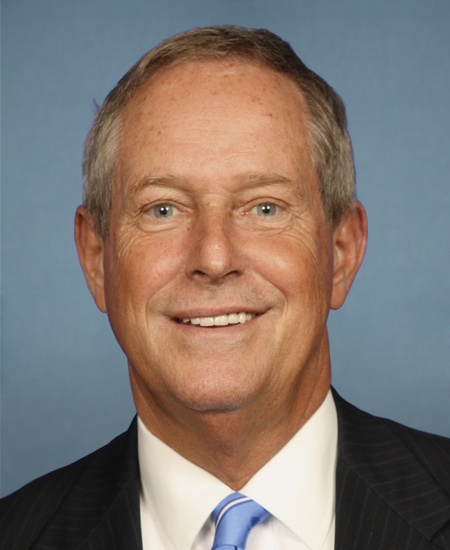
Rep. Joe Wilson
Sponsored bills
Maddy summaryThis bill directs the U.S. President to identify Pakistani officials responsible for undermining democracy and human rights within 180 days of enactment, then impose Global Magnitsky sanctions on them. It targets senior government, military, or security officials found to have committed gross human rights violations or interfered with democratic processes, such as during Pakistan’s 2024 elections or through constitutional changes. Sanctions would include asset freezes and travel bans, with exceptions for humanitarian aid, UN obligations, and national security activities. The bill expires on September 30, 2030, and aims to pressure Pakistan to uphold democratic norms, human rights, and judicial independence.
Maddy summaryThe House of Representatives passed HRES 681 to commemorate General Lafayette's service during the American Revolution and the bicentennial of his 1824-25 farewell tour. The resolution expresses gratitude for his contributions, including his diplomatic role in securing French military and financial support during the Revolutionary War, and acknowledges his lifelong advocacy for human rights and the Franco-American alliance. This is a ceremonial resolution with no legislative effect, solely honoring historical figures and events.
Sickle Cell Disease Comprehensive Care Act This bill allows state Medicaid programs to establish health homes to provide coordinated care for individuals with sickle-cell disease. (Under current law, state Medicaid programs may establish health homes to provide coordinated care for individuals with specified chronic conditions.) States must ensure that such care includes dental and vision services. The Centers for Medicare & Medicaid Services must issue best practices for states on how to design and implement such health homes.
Maddy summaryHR 5198, the Rural Health Clinic Location Modernization Act of 2025, changes Medicare eligibility rules for rural health clinics by updating the definition of "urban area" used to determine clinic qualification. It replaces the current "urbanized area" standard with a clearer definition: any urban area (per Census Bureau data) having a population of 50,000 or more. This adjustment directly affects clinics seeking Medicare certification, ensuring they meet consistent geographic criteria for rural designation. The change takes effect January 1, 2027, aiming to simplify qualification rules without altering Medicare coverage or benefits.
Maddy summary# Summary of Proposed FEMA Reform Legislation (FEMA Act of 2025) This comprehensive legislative document proposes significant reforms to the Robert T. Stafford Disaster Relief and Emergency Assistance Act, with four main sections addressing: ## 1. Disaster Assistance Reforms - **Expanded eligibility** for assistance, including clarifying that absence of a fixed address doesn't disqualify individuals from sheltering assistance - **Improved rental assistance** with consideration of local post-disaster rent increases - **Direct assistance** for those unable to use financial assistance, with no requirement to show other assistance can cover costs (except insurance) - **Enhanced notices** for applicants, including documentation of denial decisions - **Clarification of displacement assistance** eligibility, stating insurance shouldn't be considered a duplication of benefits ## 2. Mitigation Program Enhancements - **Preapproved project mitigation plans** requiring states to develop plans with peer review processes - **Improved allocation of funds** with formulas prioritizing vulnerable communities, high-risk areas, and rural/economically distressed communities - **Resilient buildings** requirements for housing retrofits using the latest building codes - **Streamlined application processes** for hazard mitigation funds across multiple programs - **Study on mitigation benefits** to evaluate cost savings and effectiveness ## 3. Transparency and Accountability Measures - **Public dashboards** for both individual assistance (431) and public assistance (432) showing application status, approvals, denials, and funding - **Transparency requirements** for disaster declarations with detailed justifications for approvals/denials - **GAO studies** on numerous topics including: - Identity theft in disaster assistance (409) - Insurance utilization for public assistance facilities (410) - Wildfire management plans (411) - Effectiveness of alerting systems (412) - Cost savings of repair/rebuilding reforms (415) - **Prohibition on political discrimination** in assistance distribution ## 4. Workforce and Operational Improvements - **Study on workforce retention** in noncontiguous communities - **Pilot program** for preliminary damage assessments in remote communities - **Fast-moving disasters working group** to develop best practices for rapid response The legislation focuses on improving efficiency, transparency, and effectiveness of disaster relief programs while prioritizing vulnerable populations and communities with higher risk of disasters. It also emphasizes data-driven decision making through required studies and reports to continuously improve disaster management policies.
Maddy summaryThis bill suspends U.S. funding for Tunisia's security forces linked to human rights abuses or repression and requires the President to create a public list of Tunisian officials who undermine democracy or commit serious abuses against citizens. Sanctions include blocking U.S. assets and banning visas for listed individuals, with conditions for ending sanctions (restoring Tunisia's 2014 constitution, holding free elections, and releasing political prisoners). The law expires after four years, and the State Department must submit a democracy restoration strategy to Congress within 180 days. It directly affects Tunisia's security services and targeted officials, not the general population.
Maddy summaryHJRES 116 is a ceremonial resolution honoring 13 U.S. service members who died in the August 26, 2021, Abbey Gate bombing at Kabul's airport. It designates a National Day of Remembrance for those who perished during the Afghanistan withdrawal, expresses condolences to their families, and commemorates their service. The resolution does not create new policies or funding but formally recognizes their sacrifice and the role they played in saving lives during the evacuation. It directly affects the Gold Star families of the named service members and the broader public through this national acknowledgment.
Maddy summaryHR 5054 amends federal law to clarify that using threats or violence to interfere with commerce (including labor disputes) is a crime, but exempts peaceful picketing and minor incidents during labor disputes. The bill specifically states that minor bodily injury, property damage, or threats related to such activities - when not part of coordinated violence - do not violate the law. It also specifies that state and local authorities, not federal prosecutors, handle cases involving these exempted activities. The law explicitly preserves existing labor protections under the National Labor Relations Act and other federal statutes.
Maddy summaryThis bill authorizes the U.S. Secretary of State to establish an annual strategic dialogue with Belarus's democratic movement. It seeks to support free elections, assist Belarusians abroad with essential services, address regional security impacts from Belarus and Russia, impose sanctions on President Lukashenka's regime for human rights abuses and support for Russia's Ukraine invasion, and facilitate the release of political prisoners. The dialogue directly affects Belarus's democratic opposition, citizens inside and outside Belarus, and civil society groups working toward democratic reforms. Key provisions include funding cultural programs, restoring democratic institutions, and coordinating regional responses to political instability.