

Afghanistan Accountability Act This bill requires the President to impose sanctions on certain foreign persons, such as Taliban officials, and requires reports related to Afghanistan. The President must impose asset- and visa-blocking sanctions on any foreign person who (1) is an official, agent, or instrumentality of the Taliban; (2) has acted to undermine democratic institutions or threaten the stability of Afghanistan; (3) has acted to limit or penalize freedom of expression in Afghanistan, particularly the freedom of expression of women; (4) has committed serious human rights abuses in Afghanistan; or (5) operates in the mining sector in Afghanistan. The sanctions also apply to certain immediate relatives of such persons and those who provide material support to such persons. The bill also requires reports to Congress on (1) the intelligence provided to the President and policymakers prior to and concerning the withdrawal of U.S. troops from Afghanistan, (2) whether the Taliban meets the criteria for designation as a foreign terrorist organization, and (3) human rights violations by the Taliban against individuals who supported U.S. efforts in Afghanistan.
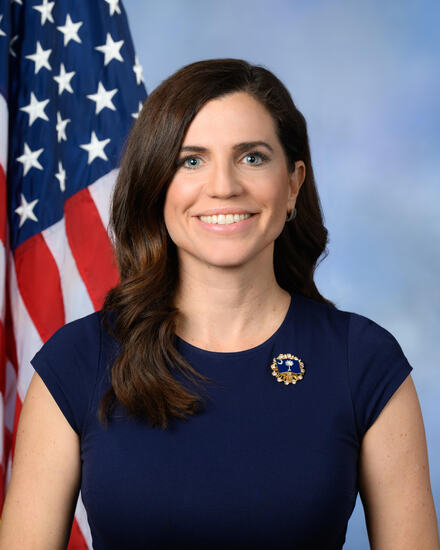
Rep. Nancy Mace
Sponsored bills
Judiciary Accountability Act of 2021 This bill applies certain civil rights and employee protection laws to judicial branch employees. Specifically, the bill applies to judicial branch employees laws that prohibit discrimination based on race, color, religion, sex (including sexual orientation or gender identity), national origin, age, or disability. Further, the bill prohibits retaliation against whistleblowers within the judicial branch. Additionally, the bill establishes (1) the Commission on Judicial Integrity to oversee a program to prevent workplace misconduct; (2) the Office of Judicial Integrity to oversee confidential reporting systems regarding workplace misconduct, training programs on workplace behavior and bystander intervention, and other reporting initiatives regarding employee metrics and demographics; (3) the Special Counsel for Equal Employment Opportunity to investigate alleged workplace misconduct and complaints; and (4) the Office of Employee Advocacy to provide legal assistance, representation, and consultation to judicial employees. Finally, the bill establishes workplace discrimination, harassment, and retaliation as judicial misconduct.
Freedom and Right to Emancipate from Exploitation (FREE) Act This bill establishes rights for individuals who are subject to legal guardianship or conservatorship. Specifically, these individuals have the right to petition the court to replace their private legal guardian or conservator with a state guardian or other designated individual; and communicate with a caseworker employed by the state, without the interference or objection of the individual's legal guardian or conservator. Furthermore, the bill creates a private right of action for individuals whose rights have been violated. The bill also authorizes the Department of Health and Human Services to provide grants to states to hire state-employed caseworkers, legal guardians, and conservators for legally incompetent adults.
This bill establishes the National Commission on Domestic Terrorist Attacks on the United States by Antifa. The commission must investigate and report on the involvement of antifa in the riots some cities experienced in 2020 and make recommendations to prevent further attacks and violent riots by antifa.
H-2B Returning Worker Exception Act of 2021 This bill modifies the H-2B (temporary nonagricultural workers) nonimmigrant visa program, including by exempting certain workers from an annual numerical limit on such visas and requiring civil penalties for program violations. Under this bill, if a worker seeking a H-2B visa has been counted toward the 66,000 annual cap on such visas in one of the three preceding fiscal years, that worker shall not be counted against the cap again. Furthermore, the Department of Homeland Security (DHS) must impose a civil monetary penalty on an employer for (1) failing to meet requirements related to an H-2B visa petition, or (2) making a willful misrepresentation of material fact in such a petition. DHS must also ensure the establishment of an electronic platform (1) for employers to submit and request approval of an H-2B petition, and (2) to act as a single point of access for applicants and the relevant government agencies. The Department of Labor must maintain a publicly available online database of all job orders by H-2B employers. Furthermore, Labor may take certain actions to enforce program requirements, such as imposing penalties and seeking injunctions. The bill provides statutory authority for the current practice of limiting the program to workers who are nationals of countries approved by DHS. DHS may make exceptions to this limitation in individual cases if it is in the U.S. interest to do so. DHS shall select approved countries based on various factors, such as the rate of overstay by H-2B visa holders from each country.
COVID-19 Safer Detention Act of 2021 This bill expands statutory authority for federal prisoners to be released before completing their sentences or to be placed in the community to serve the final portion of their sentences. First, the bill makes changes to the early release pilot program. The early release pilot program authorizes the Bureau of Prisons to release early and place on home confinement elderly offenders and terminally ill offenders who meet eligibility criteria. This bill expands eligibility to offenders serving time for an offense under the laws of the District of Columbia, expands eligibility to offenders who have served at least one-half (currently, two-thirds) of their prison term, reduces the amount of time an offender must serve by the good time credits earned by the offender, and creates a judicial review process for prisoners and shortens the waiting period for judicial review during the COVID-19 pandemic. Second, the bill modifies the compassionate release process. The compassionate release process authorizes federal courts to reduce a prisoner's sentence and impose a term of probation or supervised released in certain circumstances. This bill expands eligibility to prisoners sentenced before November 1, 1987, specifies that vulnerability to COVID-19 is a basis for compassionate release, and shortens the waiting period for judicial review during the COVID-19 pandemic.
First Step Implementation Act of 2021 This bill makes various changes related to federal sentencing law and requires the Department of Justice (DOJ) to establish procedures to ensure the prompt release and accuracy of employment-related background check records. The bill allows certain reduced mandatory minimum sentences for drug offenses to be applied retroactively to offenders who committed their offenses on or before December 21, 2018; permits a court, in certain circumstances, to grant safety valve relief (i.e., impose a sentence without regard to the statutory mandatory minimum penalty for certain drug offenses) for an otherwise eligible defendant who does not meet the requirement pertaining to criminal history; permits a court to reduce a sentence imposed on a defendant convicted as an adult for an offense committed as a juvenile if the defendant has served at least 20 years of the sentence; establishes a process to seal and expunge certain records of juvenile nonviolent offenses; and requires DOJ to establish and enforce procedures to ensure that records exchanged for employment-related background checks are promptly released and accurate.
Separation of Powers Restoration Act of 202 1 This bill modifies the scope of judicial review of agency actions to authorize courts reviewing agency actions to decide de novo (i.e., without giving deference to the agency's interpretation) all relevant questions of law, including the interpretation of (1) constitutional and statutory provisions, and (2) rules made by agencies. No law may exempt a civil action from the standard of review required by this bill except by specific reference to such provision.
Original National Domestic Violence Awareness Month Resolution of 2022 This resolution supports the goals and ideals of National Domestic Violence Awareness Month. Further, it expresses the sense of the House of Representatives that Congress should continue to raise awareness of and support programs to end domestic violence.
Protecting Access for Hunters and Anglers Act of 2022 This bill bars the Department of the Interior and the Department of Agriculture from prohibiting or regulating the use of lead ammunition or tackle on federal land or water that is under the jurisdiction of such departments and made available for hunting or fishing. The bill makes exceptions for specified existing regulations and where the applicable department determines that a decline in wildlife population at the specific unit of federal land or water is primarily caused by the use of lead in ammunition or tackle, based on the field data from such unit, and the state approves the regulations.