Right to Try Clarification Act This bill specifies that investigational drugs that are provided directly to individuals from manufacturers without the need for federal regulatory approval (i.e., via the Right to Try pathway) are exempt from restrictions that would otherwise apply under the Controlled Substances Act (e.g., restrictions on the use or possession of schedule I controlled substances).
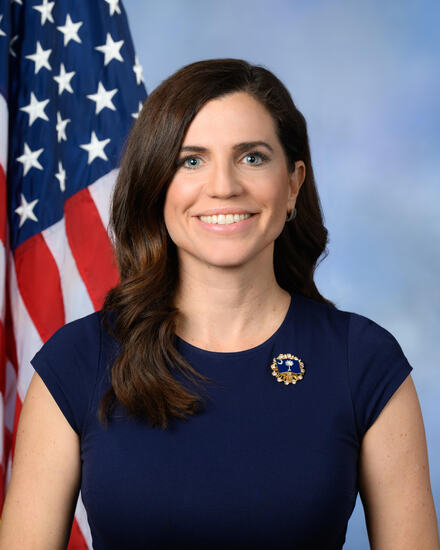
Rep. Nancy Mace
Sponsored bills
Protect Our Judiciary Act of 2022 This bill removes the intent requirement for the criminal offense related to picketing or parading in or near a building or residence used by a judge, juror, witness, or court officer.
Solitary Confinement Study and Reform Act of 2022 This bill establishes the National Solitary Confinement Study and Reform Commission to study the impact of solitary confinement on governments, communities, and social institutions. Additionally, the bill (1) directs the Department of Justice to publish national standards to reduce solitary confinement in correctional facilities; and (2) authorizes grants for community-based prevention and education programs, community-based mental health care, or community-based drug treatment or harm reduction.
Secure Every School and Protect Our Nation’s Children Act or the STOP II Act This bill reauthorizes and supports various grants to enhance school safety and security initiatives. It also provides statutory authority for the federal clearinghouse of school safety resources. (The clearinghouse identifies and publishes best practices and recommendations for school safety for use by state and local educational and law enforcement agencies, institutions of higher education, health professionals, and the public.)
Build the Wall Now Act This bill addresses issues related to the construction of a barrier along the U.S.-Mexico border, such as (1) requiring the Department of Homeland Security to resume any project related to the construction of such a barrier (and any related infrastructure); and (2) exempting such construction projects from various legal requirements, including requirements stemming from the Administrative Procedure Act, the Clean Air Act, and the Clean Water Act.
Women in Criminal Justice Reform Act This bill establishes programs and requirements to address the health and wellness of women in the criminal justice system. For example, the bill requires the Bureau of Prisons to (1) ensure that all incarcerated women have access to basic standards of health care specific to their needs, and (2) develop and implement gender-responsive training for its officers and employees.
Safe Sponsor Act of 2022 This bill prohibits the placement of an unaccompanied alien child with a proposed custodian who is not a U.S. citizen or a lawful permanent resident. The bill also requires a custodian to post a bond as assurance that the child will attend each necessary immigration-related legal proceeding.
They Had Our Back We Have Theirs Act of 2022 This bill provides specified levels of educational assistance and federal student loan forgiveness to children and spouses of eligible public safety officers. An eligible public safety officer is a public safety officer who died or was permanently and totally disabled from an injury sustained in the line of duty.
Porch Pirates Act of 2022 This bill extends federal criminal penalties for obstruction of correspondence and theft of stolen mail matter (which apply to U.S. Postal Service mail) to matter (e.g., packages) sent or delivered by private or commercial interstate carriers.
Immigration Transparency and Transit Notification Act of 2022 This bill requires notifications to certain officials before an unaccompanied alien child or a non-U.S. national ( alien under federal law) without lawful immigration status may be placed in or transported to a state or local jurisdiction. The bill also authorizes the office of the governor of the relevant state to prohibit the placement or transportation. At least seven calendar days before taking such an action, the Department of Homeland Security (DHS) or the Department of Health and Human Services (HHS) must notify (1) the relevant state governor's office, (2) the state attorney general's office, (3) the county or municipal government, (4) local law enforcement, and (5) federal and state legislators representing the relevant jurisdiction. The action may not take place if the state governor's office objects no later than three calendar days after receiving the notification. This authority to object shall not apply if the action is to place an unaccompanied child with, or transport the child to, a family member.