

No Asylum for Criminals Act of 2023 This bill bars an individual who has been convicted of a crime from receiving asylum, with limited exceptions. Specifically, the Department of Homeland Security may designate political offenses committed outside of the United States that shall not be considered a crime for this purpose. Currently, an individual shall be barred from receiving asylum for only certain types of criminal convictions, such as if the individual is convicted for (1) an aggravated felony, or (2) a particularly serious crime and as a result deemed a danger to the United States.
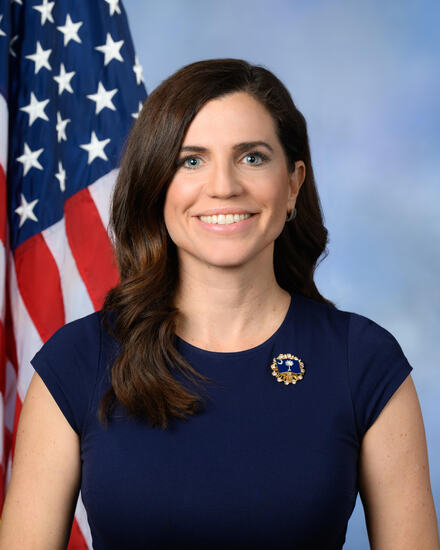
Rep. Nancy Mace
Sponsored bills
Maddy summaryHR 932 repeals two key congressional authorizations for military force in Iraq: the 1991 resolution (Public Law 102-1) and the 2002 resolution (Public Law 107-243). This bill removes the legal foundation that has permitted U.S. military operations in Iraq for over two decades. It directly affects the executive branch’s authority to conduct military actions under these specific resolutions, requiring future operations to seek new congressional approval. The repeal is a procedural change that would end the statutory basis for ongoing military engagement in Iraq without altering other laws or policies.
Maddy summaryHR 914, the Simplifying Grants Act of 2023, requires federal agencies to simplify grant application processes for small local governments (defined as those in areas with fewer than 50,000 people, per Census standards). Within 180 days of enactment, agencies must review and simplify complex grant requirements for existing programs and ensure new programs are designed with simplicity from the start. Agencies must also publish public checklists for each grant step and report annually to Congress on implementation progress, including how much technical assistance was provided and how many grants were awarded to small communities versus larger ones. This bill directly affects counties, towns, and other small local governments that receive federal grants but face bureaucratic hurdles.
Anti-Border Corruption Improvement Act This bill revises the waiver authority of the U.S. Customs and Border Protection (CBP) for polygraph examinations of applicants for law enforcement positions in the CBP. Any individual who receives such waiver and holds a current background investigation may be subject to further background investigation. The CBP may administer a polygraph examination to an applicant for employment or an employee who is eligible for a waiver if information is discovered prior to the completion of a background investigation that makes necessary a final determination regarding suitability for employment or continued employment.
Lead by Example Act of 2023 This bill provides that, beginning January 3, 2025, the only health care plan the federal government may make available to Members of Congress and congressional staff shall be health care provided through the Department of Veterans Affairs (VA). By September 15, 2023, the VA and the Office of Personnel Management shall jointly submit to Congress a plan to carry out this bill, including recommendations for any necessary legislative actions.
Maddy summaryThis bill prevents the Department of Veterans Affairs (VA) from denying veterans any benefits due to participation in state-approved marijuana programs. It requires VA healthcare providers to discuss cannabis use with enrolled veterans, adjust treatment plans accordingly, and document such use in medical records. VA doctors are also authorized to provide recommendations about state cannabis programs to veterans living in states that have legalized them. The policy directly affects veterans enrolled in VA care who use state-legal cannabis, removing federal barriers to their participation in state programs without benefit penalties.
Finish the Wall Act This bill requires the Department of Homeland Security (DHS) to resume activities related to the construction of a barrier system along the U.S.-Mexico border and addresses other border-related issues. DHS must resume all such construction activities that were planned or underway prior to January 20, 2021. DHS must also expend all funds appropriated or explicitly obligated since October 1, 2016, for construction of this barrier system. DHS may not cancel contracts for activities related to such construction entered into on or before January 20, 2021. Furthermore, within 14 days of this bill's enactment, DHS must certify to Congress that U.S. Customs and Border Protection facilities that process adults taken into custody at the border are fully compliant with certain laws related to the collection of DNA. (Among other things, these laws allow for the collection of DNA samples from non-U.S. persons detained under U.S. authority.)
Maddy summaryHR 29, the Border Safety and Security Act of 2023, grants the Secretary of Homeland Security authority to restrict entry at U.S. land or maritime borders for certain immigrants deemed "covered aliens" (those inadmissible under immigration law due to lack of proper documentation). The bill requires the Secretary to suspend entry if they cannot detain or process these individuals as required by existing immigration law. It also allows state attorneys general to sue the Secretary in federal court if they believe border policies harm their state's residents. The law defines "operational control" using terms from the Secure Fence Act of 2006. This bill directly affects immigrants seeking entry who fall under the specified inadmissibility category.
This resolution condemns Iranian state-sponsored terrorist attacks against U.S. citizens and officials and Iranian dissidents. The resolution also expresses support for the people of Iran who are legitimately defending their rights for freedom against repression and condemns the killing of Iranian protesters by the Iranian regime.
Maddy summaryHR 857, the Presidential Budget Accountability Act, requires the President to submit the annual budget to Congress by the first Monday in February. If the budget is late, federal funds cannot be used for the President's travel expenses starting the Tuesday after that date until the budget is submitted. The bill specifically restricts funds for the President's expense allowance, travel costs, entertainment, and subsistence during travel. This directly affects the President's travel budget and aims to incentivize timely budget submissions by the executive branch.