

Maddy summaryThe EQUAL Act (HR 1062) eliminates the unequal sentencing disparity between crack cocaine (cocaine base) and powder cocaine offenses under federal law. It repeals specific provisions in the Controlled Substances Act and Import/Export Act that previously imposed harsher penalties for cocaine base, directly affecting individuals convicted of federal cocaine offenses involving cocaine base. The bill applies to all future cases and allows courts to reduce sentences for people already convicted of such offenses before the law's enactment. This change removes a key legal distinction that historically led to significantly longer sentences for crack cocaine offenses compared to powder cocaine.
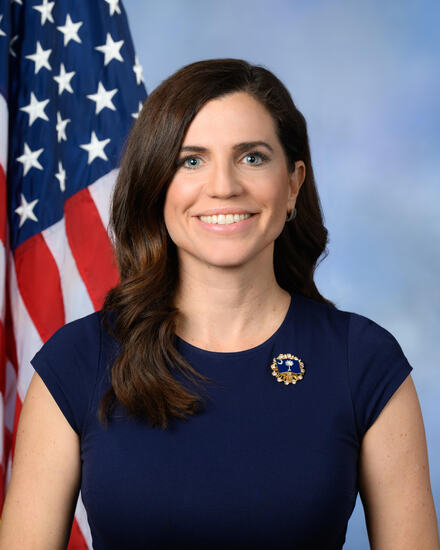
Rep. Nancy Mace
Sponsored bills
Maddy summaryHR 1007, the Nuclear Assistance for America’s Small Businesses Act, delays collection of nuclear regulatory fees for small businesses applying for permits to build or operate advanced nuclear reactors. It allows eligible small businesses (defined as those with NAICS code 221113 that responded to NRC's RIS-20-02) to delay up to 50% of pre-application fees and 35% of post-application fees. The delayed fees must be repaid over 10 years at 10% annually, or accelerated to 25% if the business fails to submit a covered application within 5 years, withdraws it, or faces denial. This applies specifically to applications for construction permits, operating licenses, or combined licenses for advanced nuclear reactors under NRC oversight.
Maddy summaryHR 1006, the NRC Survey Act, requires the Nuclear Regulatory Commission (NRC) to conduct surveys of its employees and nuclear industry stakeholders to identify ways to improve the efficiency of reactor licensing. The employee survey asks about internal processes, communication, funding, and barriers to innovation, while the stakeholder survey seeks industry input on regulatory challenges and engagement. The Inspector General must distribute these surveys within 60 days of enactment and submit reports to Congress with aggregated feedback and individual responses. This bill gathers direct input to inform potential future regulatory improvements without changing existing laws or creating new requirements.
Maddy summaryHR 1009 requires the President to develop a national strategy for using microreactors (small nuclear reactors under 20 MW thermal) to replace diesel generators during natural disasters. The strategy must evaluate current diesel generator use, compare environmental impacts, and address deployment logistics like storage, transportation, and maintenance. It mandates collaboration between agencies like FEMA, the Department of Energy, and the Nuclear Regulatory Commission, with annual reports to Congress. The bill aims to improve disaster response by providing reliable, low-emission power to critical facilities like hospitals and water plants, while reducing reliance on diesel.
Humane and Existing Alternatives in Research and Testing Sciences Act of 2022 [ sic ] or the HEARTS Act of 2022 [ sic ] This bill establishes a center within the National Institutes of Health (NIH) and requires other activities to promote alternatives to using animals in research and testing. The duties of the center include developing nonanimal research models (e.g., advanced cell cultures and advanced imaging systems) and training scientists about the methods. Additionally, if a federal department or agency or federally funded research entity uses animals for research and testing, it must develop and update plans for reducing such uses and periodically report on the number and types of animals that they use to the center. The center must establish a standard process for entities to submit and update their plans and reports and for making the plans and reports publicly available. The NIH must also provide incentives for the use of nonanimal research and generally ensure that nonanimal alternatives are considered when reviewing and approving research applications and proposals. Further, NIH applications for research grants must include an assurance that nonanimal methods for carrying out the research are unavailable.
CBDC Anti-Surveillance State Act This bill limits the ability of the Federal Reserve to (1) provide direct services to individuals, and (2) use a central bank digital currency. A central bank digital currency is a digital currency (e.g., Bitcoin or Ether) issued by a government-backed central bank. Specifically, the bill prohibits the Federal Reserve and the Federal Open Market Committee from using any central bank digital currency to implement monetary policy. In addition, a Federal Reserve bank is prohibited from offering products or services directly to an individual, maintaining an account on behalf of an individual, or issuing a central bank digital currency directly to an individual. The Federal Reserve must (1) consult with each Federal Reserve bank with respect to any central bank digital currency study or pilot program, and (2) issue quarterly reports on the findings and determinations of any such study or program.
Maddy summaryThe RISEE Act of 2023 creates a National Oceans and Coastal Security Fund to support coastal communities and ecosystems. It allocates 37.5% of offshore wind revenue directly to eligible coastal states using a formula based on tidal shoreline length, coastal population density, and distance from offshore wind projects. States must use these funds for coastal protection, habitat restoration, infrastructure, or fisheries research, with strict annual reporting requirements to the Department of the Interior. The bill prohibits using these funds for litigation or creating marine monuments, ensuring resources directly support coastal community needs.
Maddy summaryHR 726, the Veterans for Mustangs Act, amends the Wild Free-Roaming Horses and Burros Act to require the Secretary of the Interior to prioritize recruiting military veterans for training in on-range fertility control methods for wild horse and burro populations. The bill mandates that veterans complete a certification program (like the PZP applicator course) and receive appropriate compensation, with the Bureau of Land Management allowed to contract these veterans for management activities without classifying them as federal employees. This directly affects military veterans seeking employment opportunities and the Bureau of Land Management’s approach to managing wild horse populations. The key change is embedding veteran recruitment into the standard process for implementing fertility controls, replacing previous management language with specific veteran-focused provisions.
Maddy summaryHR 583, the American Shores Protection Act of 2023, extends a moratorium on new offshore oil and gas leasing along the coasts of Florida, Georgia, and South Carolina until June 30, 2032. It specifically adds two new coastal planning areas (the South Atlantic and Straits of Florida) to the existing ban. The bill clarifies that existing leases remain unaffected and allows the Secretary to issue leases for environmental conservation purposes, including shore protection, beach restoration, wetlands restoration, and habitat protection. This directly affects energy companies seeking new offshore drilling permits in those coastal regions.
This joint resolution expresses the sense of Congress that no state should enact any law that impedes a woman's ability to travel to another state or to receive services in another state that are unavailable in the woman's own state.