

Right to Try Clarification Act This bill specifies that investigational drugs that are provided via the Right to Try pathway are exempt from restrictions that would otherwise apply under the Controlled Substances Act (e.g., restrictions on the use or possession of schedule I controlled substances). The Right to Try pathway allows drug manufacturers to provide certain investigational drugs for which a Phase I clinical trial has been completed, but that have not yet received approval from the Food and Drug Administration, directly to individuals who have imminently life-threatening diseases or conditions and who have exhausted other treatment options and are unable to participate in clinical trials.
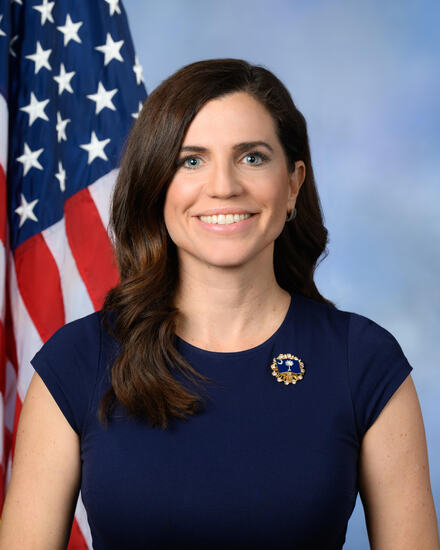
Rep. Nancy Mace
Sponsored bills
Maddy summaryHR 2532, the Women in NCAA Sports Act, establishes a 16-member Commission to study and compare how the NCAA treats men’s and women’s sports programs. The Commission will examine NCAA operations - including tournament venues, budgets, media contracts, and policies - to identify disparities in treatment across all sports and student-athlete programs. After 18 months, it must submit a report to Congress with findings and recommendations for improving fairness, while avoiding any review of athlete eligibility. The bill directly affects NCAA operations and requires Congress to consider the Commission’s findings for potential policy changes.
Maddy summaryHR 1465, "Violet’s Law," requires federal research facilities to establish standards for placing eligible animals (dogs, cats, primates, guinea pigs, hamsters, rabbits) no longer needed for research with animal rescue organizations, sanctuaries, shelters, or individuals. Federal departments and agencies operating such facilities must create these placement standards within one year of the law's enactment. The law mandates that animals must be vet-certified as healthy (free of infectious disease or physical issues) before placement and prohibits facilities from using animals for commercial trade, breeding, or public exhibitions. This policy directly affects federal research facilities and aims to provide permanent homes for research animals through defined, safe pathways.
Maddy summaryThe Free to Grow Act of 2023 repeals a specific felony provision related to hemp production under federal law. It removes Section 297B(e)(3)(B) of the Agricultural Marketing Act of 1946, which previously classified certain hemp production violations as felonies. This change directly affects hemp producers by eliminating the risk of felony charges for regulatory non-compliance in hemp cultivation. The bill simplifies legal consequences for growers by aligning penalties with the current federal regulatory framework for hemp.
Maddy summaryHR 1683, the Generic Animal Drug Advancement Act, simplifies the approval process for generic animal drugs by changing bioequivalence requirements. It requires manufacturers to demonstrate that a generic drug is bioequivalent to an approved drug in *at least one major species* (not all species), making it easier to bring generic versions to market. This directly affects animal drug manufacturers seeking to produce lower-cost alternatives to existing approved drugs. The bill clarifies key terms like "bioequivalent" and "patent" within the existing regulatory framework to streamline approvals.
Women’s Healthcare Anti-Death Penalty Construction Act This bill requires a federal court to construe the imposition of a death penalty sentence for an individual convicted of an offense under state law for receiving or providing a reproductive health service (e.g., an abortion) as cruel and unusual punishment and a miscarriage of justice. It also authorizes civil suits by affected individuals and a right to habeas corpus relief in federal district court.
Maddy summaryHR 2454, the United States-Israel PTSD Collaborative Research Act, establishes a grant program to fund joint research projects between U.S. academic or nonprofit entities and Israeli institutions focused on post-traumatic stress disorder (PTSD). The bill directs the Secretary of Defense, with coordination from the Departments of Veterans Affairs and State, to award grants for collaborative research addressing PTSD treatment gaps, building on existing U.S.-Israel scientific cooperation frameworks. It specifically targets research into improved PTSD diagnosis and treatment methods, rather than providing direct services or benefits. The program requires annual reporting to Congress on research outcomes and terminates seven years after the first grant is issued.
Visa Overstays Penalties Act This bill increases the civil penalties for unlawful entry into the United States and establishes criminal penalties for overstaying a visa. A non-U.S. national ( alien under federal law) apprehended while unlawfully entering the United States shall be subject to a fine of at least $500 and up to $1,000 (currently at least $50 and up to $250). If an individual overstays a visa (or otherwise fails to comply with the conditions of a visa) for 10 days or more, on first offense the individual shall be subject to fines or imprisonment for up to six months, or both. For subsequent violations, the individual shall be subject to fines or imprisonment of up to two years, or both.
Maddy summaryThis bill increases civil penalties for employers violating child labor laws under the Fair Labor Standards Act. It raises the minimum penalty for first violations from $11,000 to $5,000 (with a maximum of $132,270) and for repeat violations from $50,000 to $25,000 (with a maximum of $601,150). The changes directly affect employers who exploit child labor by raising the financial consequences of violations. The amendments apply to violations occurring on or after the bill's enactment date.
Maddy summaryHR 2383 prohibits federal employees from conducting financial trading (buying/selling stocks, bonds, crypto, or complex investments) on government property or using government resources like computers or internet for such activity. It directly affects most federal employees, with exceptions for those whose job duties involve trading (e.g., certain Treasury roles) or trading related to their Thrift Savings Plan, and excludes the President/Vice President. Violations face fines up to $5,000 or 3 years in prison, plus agency disciplinary action, while agencies must report violations to ethics offices within 30 days. The bill defines "government property" broadly but excludes national parks, postal facilities, and overseas sites, and requires ethics offices to create implementation rules.