

Maddy summaryThis bill prohibits the Department of Veterans Affairs from changing its anesthesia care policies to allow nurse anesthetists (CRNAs) to provide anesthesia independently without a physician anesthesiologist. It specifically blocks implementation of a 2016 proposed rule that would have expanded CRNAs' authority in VA facilities. The law maintains current requirements that physician anesthesiologists must oversee or provide anesthesia care for veterans during surgical procedures. Emergency orders for veteran safety during surgery remain permitted under the bill's exception clause.
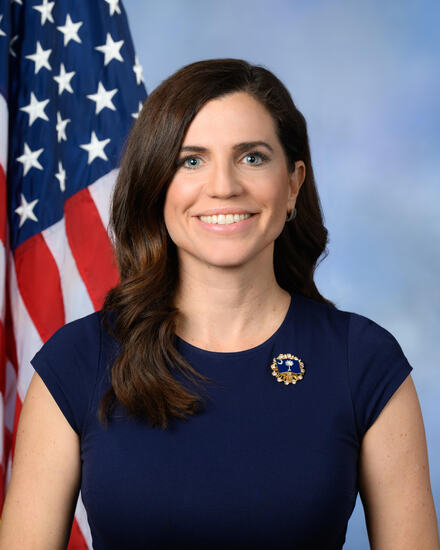
Rep. Nancy Mace
Sponsored bills
Maddy summaryHR 3326, the HAVENS Act, establishes a 6-year pilot program to address veteran homelessness by funding five communities of tiny homes (240 sq ft for individuals, 340 sq ft for families) paired with supportive services. The program provides grants to nonprofits or local governments to build these villages, which must include energy-efficient design, community centers, and services like job training, addiction counseling, and case management. It directly affects homeless veterans (estimated at 37,252 in 2020), aiming to help them achieve stable housing and self-sufficiency through structured support. The program requires grantees to report on outcomes like housing retention and employment, with $20 million allocated for fiscal years 2023-2028.
Maddy summaryThis House resolution symbolically recognizes May as Jewish American Heritage Month, celebrating Jewish Americans' historical contributions to U.S. society and culture. It references rising antisemitism in 2022 (including ADL data showing a 36% increase in incidents) and includes a non-binding call for leaders to combat antisemitism. As a purely symbolic resolution, it does not create new policies or legal requirements.
Maddy summaryHR 3792 extends U.S. security funding for Israel through 2028 (Section 3) and expands energy cooperation to include advanced nuclear technologies and carbon capture (Section 5). It requires annual reports on regional security partnerships involving Israel (Section 6) and ensures countries in the Abraham Accords can access U.S. development programs (Section 8). The bill also mandates reports on diplomatic efforts against ICC investigations targeting the U.S. and Israel (Section 10) and encourages people-to-people programs to strengthen the Abraham Accords (Sections 7, 9). These provisions directly affect Israel’s diplomatic engagement, security partnerships, and economic cooperation in the Middle East.
Maddy summaryThe Disaster Assistance Fairness Act helps condominiums and housing cooperatives (types of residential common interest communities) access federal disaster aid more easily after major disasters. It requires the President to issue rules allowing debris removal from these communities when state or local officials determine the debris threatens safety, health, or economic recovery. The bill also expands federal funding to cover repairs of essential shared areas (like roofs, elevators, and electrical systems) in these communities, provided owners can document their share of costs. This change applies to disasters declared after the bill's enactment.
Maddy summaryHR 3766, the TRACKS Act, requires federal agencies to track and disclose subawards (funds passed to subrecipients) made to entities in foreign countries designated as "countries of concern" under the 2021 National Defense Authorization Act. It directly affects prime federal award recipients and subrecipients who distribute funds to foreign entities in these designated countries. The bill mandates that covered subawards be disclosed in the same manner as standard subawards, with the Director of the Office of Management and Budget issuing implementation guidance within 90 days of enactment. This creates a new transparency requirement for federal funds flowing to foreign entities deemed high-risk by U.S. security standards.
Maddy summaryHR 3751, the Department of Defense Overdose Data Act of 2023, requires the Secretary of Defense to submit annual reports on overdoses among active-duty military personnel (servicemembers) and their military family members. These reports must include detailed data on fatal and non-fatal overdoses, such as demographics, substances involved, prior mental health or substance use treatment, naloxone use, and overdose intent. The bill also mandates a separate report analyzing barriers to care and recommending improved access to mental health services, non-opioid pain management, and overdose prevention tools like naloxone. Privacy protections under HIPAA ensure personal information remains confidential, and the data aims to identify patterns and guide better treatment responses within the military system.
Maddy summaryHR 3684, the Douglas Mike Day Psychedelic Therapy to Save Lives Act of 2023, authorizes the Department of Defense to fund research on using psychedelic substances for treating specific conditions in active-duty military personnel. The bill creates a grant program to support phase II clinical trials (using substances like MDMA, psilocybin, or ibogaine) or training for treating PTSD, traumatic brain injury, or chronic traumatic encephalopathy, with participants including active-duty service members. It removes barriers for military personnel to join these trials, regardless of federal scheduling of the substances or military justice rules. The bill appropriates $15 million annually from 2024 to 2028 for this research and requires regular reports to Congress on grant recipients and trial findings.
Maddy summaryThis bill makes it a federal crime to knowingly distribute non-consensual intimate images of adults (without consent, not in public, and not a matter of public concern) or images of minors in nude states (with intent to abuse/humiliate). It defines prohibited content, imposes penalties including up to 5 years in prison, and requires forfeiture of assets used in violations. Exceptions cover law enforcement, legal reporting, and service providers who don’t actively promote such content. The law directly affects victims of non-consensual image sharing and individuals distributing prohibited content.
Maddy summaryThis bill allows the U.S. Postal Service to ship alcoholic beverages under specific conditions. It enables registered businesses (like wineries, breweries, and retailers) to mail alcohol directly to consumers, provided the recipient is at least 21 with valid ID, the shipment isn’t for resale, and state alcohol taxes are paid upfront. The Postal Service must establish rules for delivery, registration, and verification, while explicitly preserving all existing state, local, or tribal laws governing alcohol sales and shipments. The bill does not override state restrictions on alcohol delivery, and the Postal Service remains liable for violations under state law.