

CHAMPVA Online Act This bill requires the Department of Veterans Affairs (VA) to establish a system under which applications for benefits under the Civilian Health and Medical Program of the VA (CHAMPVA) may be submitted electronically through a VA website. The VA must also take other steps to ensure the online administration of the program.
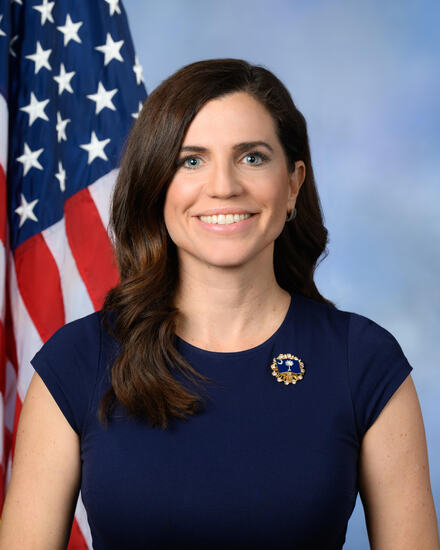
Rep. Nancy Mace
Sponsored bills
Maddy summaryHR 4245, the "Enforce the Caps Act," sets specific annual spending limits for discretionary federal programs from fiscal years 2026 through 2029. It establishes new budget authority caps at $1.622 trillion for 2026, increasing to $1.671 trillion for 2029. The bill directly affects how Congress allocates funds for non-mandatory programs like education, transportation, and defense by legally binding these spending levels. This is a procedural adjustment to existing budget control law, not a new policy affecting specific groups or creating new programs.
Maddy summaryThis bill increases criminal penalties for non-citizens who reenter the U.S. after being deported or excluded. It specifically targets individuals with prior convictions for drug offenses, violent crimes, or multiple prior removals, imposing stricter fines and longer prison terms. For example, those convicted of an aggravated felony or two prior illegal reentries face mandatory minimum sentences of 5 years in prison, up to 20 years. The law also expands penalties for those who reenter without Homeland Security's permission after being removed under certain provisions.
Maddy summaryThis bill establishes the John Lewis Civil Rights Fellowship Program within the Fulbright exchange system to honor civil rights leader John Lewis and advance U.S. foreign policy through global civil rights education. It creates a new fellowship for U.S. early- to mid-career professionals, selecting at least 25 annually for 10-month programs to conduct research or intern with approved organizations in countries participating in Fulbright exchanges. Fellows must complete a work plan, attend an orientation in Washington, DC, and present findings at an annual summit, with the State Department covering costs for travel, lodging, and expenses. The program requires annual reports on participant demographics and program effectiveness, and expires seven years after enactment.
Maddy summaryHR 277 would require Congress to approve major federal regulations before they take effect. Major rules are defined as those with significant economic impact ($100 million+ annually), major cost increases for consumers or industries, or significant adverse effects on competition, employment, or innovation. Agencies must submit detailed information about these rules to Congress, including cost-benefit analyses, before they can take effect. Congress would have 70 session days to approve the rule with a joint resolution; if they don't act within that timeframe, the rule would not take effect. This would increase congressional oversight of federal regulations and require more detailed information about proposed rules before they become law.
Maddy summaryHR 4076 establishes a joint U.S.-Israel program to fund health technology development, authorizing $4 million annually (2024-2026) through the U.S. Health and Human Services Department. It requires Israel to match U.S. funding and focuses on collaborative projects in artificial intelligence, vaccines, telemedicine, diagnostic tests, and data-driven personalized medicine for emerging infectious diseases. The program can either build on an existing U.S.-Israel agreement or create a new one under a 2008 science cooperation framework. This bill directly affects U.S. federal health agencies and the Israeli government, with funds restricted to joint projects meeting specific technological and health priorities.
Pre-Pilot Pathway Act This bill directs the Department of Transportation (DOT) to establish an apprenticeship program with flight schools in order to establish a commercial pilot pipeline; DOT must issue any necessary regulations to implement the program within one year of the bill's enactment. Each flight school participating in the program may select up to eight applicants per academic year to serve as apprentices. DOT must take appropriate actions to develop methods to incentivize pilots, including retired pilots, to become flight school instructors. This includes developing pathway programs for pilots to gain initial qualification or concurrent qualification as certified flight instructors.
Maddy summaryHJRES 72 proposes a constitutional amendment to remove the exception in the Thirteenth Amendment that allows slavery and involuntary servitude as punishment for a crime. If ratified, this amendment would ban the use of forced labor in prisons as a criminal penalty, directly affecting how the U.S. criminal justice system handles sentencing. The resolution clarifies it does not interfere with voluntary work programs in correctional facilities, existing employment protections for incarcerated people, or community service alternatives. This change aims to eliminate a historical loophole that has disproportionately impacted Black Americans since the 1860s.
Maddy summaryThis bill prohibits mandatory pre-dispute arbitration agreements for age discrimination claims involving individuals aged 40 or older. It directly affects older workers who face age discrimination, ensuring they can pursue court cases instead of being forced into private arbitration. The key provision invalidates any arbitration clause in contracts related to age discrimination disputes under federal, tribal, or state law. The law applies to claims arising after its enactment, allowing affected individuals to choose court litigation over arbitration for such cases.
Maddy summaryHR 1525, the FAIR Act of 2023, reforms federal civil forfeiture laws to require all property seizures to go through a court process rather than allowing agencies to take property without judicial review. It raises the evidence standard from "preponderance of the evidence" to "clear and convincing evidence" for the government to prove forfeiture, and mandates courts to review cases within 7 days of seizure. The bill also requires courts to appoint attorneys for low-income individuals unable to afford legal representation and ensures property owners receive timely notice of their rights. These changes directly affect individuals whose property is seized in civil forfeiture cases, particularly those with limited financial means.