

Maddy summaryThis bill, the Veteran Care Improvement Act of 2023, establishes new standards for when veterans can receive care from private providers instead of the Department of Veterans Affairs (VA). It requires the VA to allow veterans to seek community care if they cannot get an in-person appointment within 30 days for primary care or 60 days for specialty care at a VA facility within a 30 or 60-minute drive, respectively. The legislation also mandates that the VA notify veterans of their eligibility for community care within two business days, provide information about telehealth options, and explain reasons for denied care requests along with appeal instructions. Additional provisions include requiring the VA to conduct outreach to inform veterans about community care options, mandate the use of value-based reimbursement models for community care, and establish a pilot program to improve care administration through scheduling improvements and provider incentives. The bill also extends the deadline for health care entities to submit claims under the prompt payment standard from 180 days to one year, and requires the VA Inspector General to assess VA medical center performance in implementing community care programs within three years of enactment.
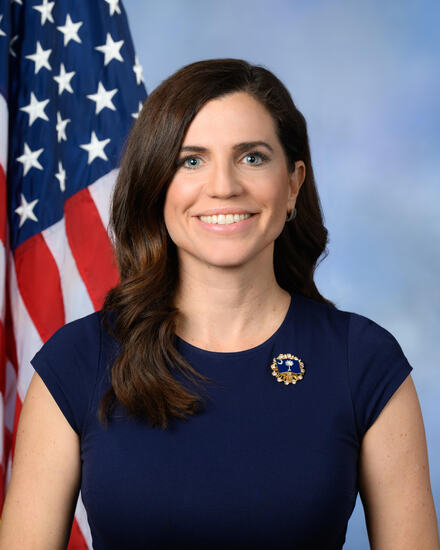
Rep. Nancy Mace
Sponsored bills
Maddy summaryThe VA Flood Preparedness Act (HR 2683) allows the Department of Veterans Affairs (VA) to provide funding to local authorities for projects that reduce flood risks near VA medical facilities, including risks from rising sea levels. It directly affects VA medical facilities and local communities working with the VA to implement flood mitigation measures. The bill amends existing law to permit these contributions and requires the VA Secretary to submit a report within two years assessing flood risks at each VA medical facility and whether additional resources are needed for mitigation. This creates a concrete mechanism for proactive flood risk management at VA healthcare locations.
Maddy summaryThis bill, HR 1282 (Major Richard Star Act), expands benefits for certain military retirees by allowing them to receive both veterans' disability compensation and military retirement pay simultaneously. It specifically affects combat-related disabled retirees under Chapter 61 of the military retirement system who have fewer than 20 years of service. The key change removes the automatic reduction of military retirement pay when these retirees also receive disability compensation, as amended in Section 1413a(b)(3) of Title 10. Technical updates to the law’s structure and effective date (starting after enactment) complete the provisions.
No Sanctuary for Criminals Act of 2023 This bill addresses issues related to state and local government cooperation with federal immigration enforcement efforts. A government entity may not prohibit its personnel or another government entity from cooperating with federal immigration enforcement efforts or making inquiries about an individual's immigration status. Currently, a government entity is only barred from prohibiting the sharing of immigration-related information with the Department of Homeland Security (DHS). DHS may (1) decline to transfer a detained non-U.S. national ( alien under federal law) to a noncomplying government entity even if that entity has issued a writ or warrant, and (2) issue a detainer if there is probable cause to believe that an individual arrested for any criminal or motor vehicle offense is inadmissible or deportable. DHS may not transfer an individual with a final order of removal to a noncomplying government entity. Furthermore, the bill provides legal immunity for a state or local government entity or official temporarily detaining a non-U.S. national under federal authority.
Maddy summaryThis bill prohibits entities controlled by Iran, North Korea, China, or Russia from purchasing or leasing agricultural land in the United States, including both public land managed by federal agencies and private land. It also bars such entities from participating in most U.S. Department of Agriculture programs (with exceptions for food safety, health, and labor safety initiatives). The bill expands reporting requirements to include leases and security interests in foreign land ownership, mandates public online disclosure of foreign ownership data with specific details, and imposes penalties like liens on land for violations. Additionally, it requires annual reports to Congress on risks of foreign ownership, enforcement effectiveness, and foreign investment motives.
Orally Taken Contraception Act of 2023 or the OTC Act of 2023 This bill requires the Food and Drug Administration (FDA) to issue guidance on the approval process for over-the-counter oral contraceptives so as to encourage drug manufacturers to submit applications for approval. The FDA must also evaluate (1) whether and to what extent consumers understand the labeling on oral contraceptives, and (2) whether the labeling could be improved.
Maddy summaryThe Afghan Adjustment Act creates a pathway for certain Afghans who directly supported U.S. missions in Afghanistan during the 20-year U.S. military presence to adjust to lawful permanent resident status (green card holders). It specifically targets Afghans who worked with U.S. forces or agencies, including military personnel, security personnel, and their families, who received "Chief of Mission approval" for special immigrant status. Key provisions include new vetting requirements (in-person interviews and biometric screening), exemption from immigration numerical limits, $20 million annually for implementation, and a task force to develop resettlement strategies. The bill also establishes a new category of special immigrant visas for at-risk Afghan allies and sets a two-year application deadline after guidance is published.
Maddy summaryThe Mount Rushmore Protection Act prohibits federal funding for any changes to the Mount Rushmore National Memorial, including altering, destroying, or removing its carved faces or features. It specifically bans the use of federal funds to modify the memorial's existing names, faces, or other physical elements. The bill also formally designates the site as "Mount Rushmore" in all federal records, maps, and documents. This legislation directly affects federal agencies and government documents that reference the memorial, ensuring its current appearance remains protected from funded modifications.
Maddy summaryThe AI Training Expansion Act of 2023 broadens federal AI training requirements to include data and technology employees, management officials, and supervisors - expanding beyond the original focus on acquisition staff. It mandates training covering AI fundamentals, risks, data usage, and responsible development/deployment practices for all executive agencies. Agencies may incorporate existing training programs into the new requirements, streamlining implementation. This update to the 2022 "Artificial Intelligence Training for the Acquisition Workforce Act" now applies broadly across federal roles, with the law's title changed to "Artificial Intelligence Training Act."
Maddy summaryHR 3358, the Mission not Emissions Act, prohibits federal contractors from being required to report greenhouse gas emissions or climate-related financial risks. The bill blocks compliance with the proposed Federal Acquisition Regulation rule that would have mandated contractors to disclose Scope 1, Scope 2, and Scope 3 emissions, create emissions inventories, or set emissions reduction targets for validation. It directly affects businesses holding federal contracts by removing these specific reporting obligations. The law focuses solely on eliminating disclosure requirements, not on changing emissions standards or reduction efforts.