

Maddy summaryHRES 1373 is a non-binding House resolution calling on Vice President Kamala Harris to invoke Section 4 of the 25th Amendment to declare President Biden unable to perform his duties, based on concerns about his cognitive ability following his June debate performance and subsequent comments. The resolution demands Harris immediately convene Cabinet officials to formally declare the President incapacitated and assume acting presidential powers. It does not alter any legal process - the 25th Amendment’s Section 4 requires actual medical certification and Cabinet action, not a congressional resolution. The resolution is symbolic, reflecting political concerns raised by some lawmakers, but has no legal effect on the presidential succession process. It directly addresses the President’s capacity to serve but does not change current procedures or require any action beyond the House’s statement.
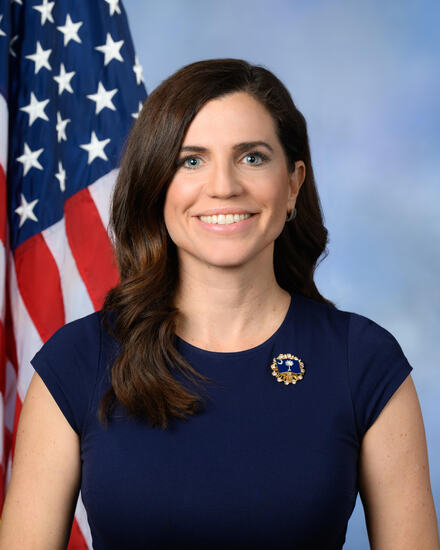
Rep. Nancy Mace
Sponsored bills
Maddy summaryHRES 1365 is a non-binding House resolution calling for the immediate termination of Kimberly Cheatle as U.S. Secret Service Director. It directly addresses the Secret Service Director and the executive branch, though it has no legal force to remove her from office. The resolution’s sole provision is a formal request for her termination, reflecting the sponsors' position on her leadership. As a symbolic gesture, it does not change her employment status or require any action from the President or Secret Service.
Maddy summaryThis bill requires major U.S. mortgage regulators (HUD, USDA, VA, and FHFA) to update their underwriting systems within 24 months to mandate that lenders include the U.S. dollar value of cryptocurrency held in brokerage accounts when evaluating mortgage applications. It directly affects homebuyers who hold cryptocurrency assets, allowing those balances to count toward their mortgage eligibility. The key mechanism is updating automated underwriting programs to treat crypto brokerage account balances as liquid assets equivalent to cash in dollar terms. The bill does not change crypto regulations or tax treatment but modifies how lenders assess borrower assets for mortgage approval.
Maddy summaryHR 9034, the Secret Service Accountability Act, would prevent federal funds from being used for the salary or expenses of Secret Service Director Kimberly Cheatle. This bill directly affects the current director by blocking all federal funding for her compensation and related costs. The key provision prohibits any federal money from covering her salary or expenses, regardless of other laws. This is a funding restriction targeting the director's position, not a change to the Secret Service's operations or public policies.
Maddy summaryHR 4581, the Maternal and Child Health Stillbirth Prevention Act of 2024, amends Title V of the Social Security Act to explicitly allow federal funds to support stillbirth prevention efforts. The bill directs states receiving Title V maternal and child health funds to use these resources for evidence-based programs and research aimed at reducing stillbirths, including tracking fetal movements, screening for growth issues, smoking cessation, and community support. It directly affects state maternal health programs by clarifying that existing funding can now cover specific stillbirth prevention activities previously not explicitly permitted. The law changes how Title V funds may be spent, adding clear provisions for research and programs targeting stillbirth reduction. This is a policy change that updates funding guidelines without creating new programs or mandates.
Maddy summaryHR 8983, the Childcare Worker Opportunity Act, repeals specific District of Columbia regulations that required childcare workers in DC facilities to hold a college degree, certificate, or minimum college credits. This directly affects childcare workers and facilities operating under DC's current rules, removing a barrier to employment. The bill targets the repeal of sections 164.1, 165.1, 166.1(a), 170.2(a), 173.3, 174.2(a), and 174.2(b) from DC's childcare regulations. The policy change eliminates a mandatory higher education requirement for childcare staff positions within the District.
Maddy summaryThe TAKE IT DOWN Act (HR 8989) creates new federal criminal penalties for publishing nonconsensual intimate images or deepfakes without consent, directly affecting platforms hosting user-generated content and individuals who share such material. It defines "deepfake" as AI-generated intimate content falsely depicting someone, and prohibits publishing these without consent - especially when the victim expected privacy - imposing fines or up to 3 years in prison for offenses involving minors. The bill also requires "covered platforms" (like social media sites) to establish a 48-hour removal process for reported nonconsensual content and shields platforms from liability when removing content in good faith. The Federal Trade Commission enforces these provisions as unfair or deceptive practices.
Maddy summaryThis bill increases military pay rates for all service members across pay grades and years of service, effective January 1, 2025, with specific rate adjustments detailed in the legislation. It expands eligibility for the basic needs allowance to 200% of current rates and authorizes $1.2 billion for housing allowances in fiscal year 2025. The bill also improves child care access by requiring competitive pay for military child care staff, reducing fees for children of child care employees, and mandating regular reports on child care services. Additionally, it enhances health care access by waiving referral requirements for certain services in military medical facilities and establishes a permanent program to support military spouses' employment.
Maddy summaryThis bill (HR 2365, Public Law 118-66) directs the U.S. Department of Health and Human Services (HHS) to establish the National Parkinson’s Project. It requires HHS to create and update a coordinated national plan for preventing, diagnosing, treating, and researching Parkinson’s disease and related disorders (including multiple system atrophy and progressive supranuclear palsy), while coordinating federal research and care efforts across agencies like the NIH, CDC, and VA. The law mandates annual progress assessments, an advisory council with patient advocates and diverse experts, and annual reports to Congress on federal Parkinson’s programs and recommendations for improvement. It affects federal agencies managing Parkinson’s-related programs and aims to improve care coordination and research efficiency for patients and caregivers, with the law sunsetting in 2035.
Maddy summaryHJRES 171 is a joint resolution seeking congressional disapproval of a proposed rule by the Department of Health and Human Services (HHS) regarding the Unaccompanied Children Program. The rule, published in the Federal Register on April 30, 2024, aimed to update regulations governing the placement, care, and services for unaccompanied alien children (children entering the U.S. without a parent or guardian). This resolution would block the rule from taking effect, preserving existing regulations under the current program framework. It uses a standard congressional disapproval process under Title 5 of the U.S. Code to halt the rule without altering the program’s underlying policy.