

Maddy summaryThis bill creates a federal database identifying state or local governments that conflict with immigration enforcement laws. It prohibits federal funding for any jurisdiction listed in this database, which includes entities that block cooperation with immigration detainers, restrict arrests of certain immigrants, or prevent officials from interviewing incarcerated individuals about immigration status. The database must be updated quarterly and made public within 90 days of the bill's enactment. This directly affects local governments that have policies limiting collaboration with federal immigration authorities.
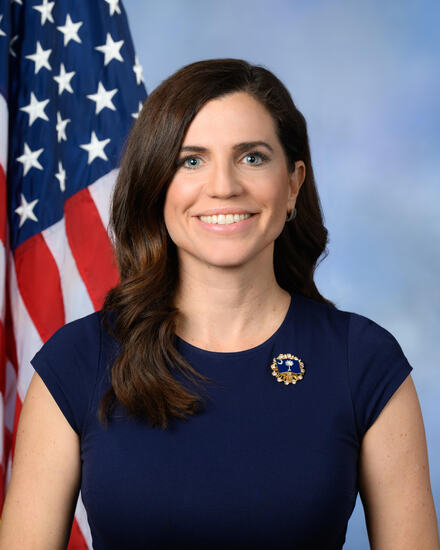
Rep. Nancy Mace
Sponsored bills
Maddy summaryHR 4984, titled the "No Appointments by Rogue Judges Act," amends Section 546 of title 28, U.S. Code, which governs vacancies for U.S. Attorneys. It updates the time limit for filling these vacancies to reference the expiration of time limits in section 3346 of the U.S. Code and removes an existing subsection (d) from the law. This change directly affects the process for filling U.S. Attorney positions nationwide, impacting how quickly vacancies can be addressed by the Department of Justice. The bill makes a procedural adjustment to appointment rules without altering substantive qualifications or authority.
Maddy summaryHR 4953, the "Gender-Affirming Child Abuse Prevention Act," creates a private right for individuals who received gender-related medical treatment as minors to sue healthcare providers for financial compensation. The bill allows lawsuits seeking $250,000 per instance of treatment, plus legal fees, if the care occurred while the person was under 18. It defines "gender-related medical treatment" broadly to include specific surgeries (like hysterectomy or phalloplasty), hormone therapies, and puberty blockers for minors, while excluding care for disorders of sex development. The law applies when the treatment involved interstate commerce, such as through medical payments or communications. This bill directly affects healthcare providers who treat minors with gender-affirming care, creating a new financial liability for such services.
Maddy summaryHRES 631 is a symbolic House resolution (not a law) declaring that the U.S. national debt - citing $36.2 trillion in public debt as of January 2025 - is a threat to national security. It references debt-to-GDP ratios, interest expenses, and warnings from former defense officials like James Mattis and Dan Coats to support this stance. The resolution calls for restoring budget process reforms and addressing fiscal challenges but contains no binding policy changes or new spending rules. It affects no specific groups, as it is a formal congressional declaration without legislative effect.
Maddy summaryHR 4863, the Fairness for Khobar Act of 2025, provides lump sum catch-up payments to victims of the 1983 Beirut barracks bombing and 1996 Khobar Towers bombing who were previously denied compensation due to confusing Department of Justice guidance. The bill requires the Special Master to authorize these payments to individuals who relied on outdated guidance stating they could not apply for lump sum payments if already eligible for regular distributions. Victims can prove their reliance through documentation, sworn statements, or other methods approved by the Special Master. Payments will be made from a reserve fund or the main compensation fund, ensuring those who were wrongly excluded can now receive full compensation they were entitled to under the law.
Maddy summaryHR 4788 would amend a 1932 District of Columbia law to allow Members of Congress (Senators and Representatives) to carry concealed firearms in Washington, D.C., if they hold a valid concealed carry license from a state where they are permitted to carry, or are otherwise legally allowed to carry concealed in their home state. The bill requires these members to not be federally prohibited from possessing firearms, to carry a valid state-issued license or proof of residency rights, and to present photo identification. This exception applies only to Members of Congress and does not alter D.C.'s general concealed carry laws for other individuals. The provision would take effect upon the bill's enactment.
Maddy summaryHJRES 111 is a joint resolution seeking congressional disapproval of a U.S. Fish and Wildlife Service rule on barred owl management. The rule, published in September 2024, outlined strategies to reduce barred owl populations to protect the endangered spotted owl. Under the Congressional Review Act, this resolution would nullify the rule, preventing its implementation. If enacted, the rule would have no legal effect, and the agency could not enforce the barred owl management strategy.
Maddy summaryThe PRIME Act exempts custom slaughter facilities from federal meat inspection requirements when they follow state laws and sell meat exclusively within the same state. It specifically allows facilities to slaughter animals and prepare meat without federal oversight if the products go only to household consumers or local businesses (like restaurants, hotels, or grocery stores) serving consumers directly in that state. The bill clarifies that this exemption does not override stricter state regulations governing custom slaughter or meat sales. This primarily affects small-scale slaughter operations and local food businesses operating within a single state's borders.
Maddy summaryThe End the Vaccine Carveout Act changes the National Vaccine Injury Compensation Program (NVICP) to allow individuals to sue vaccine manufacturers or administrators directly in court for vaccine-related injuries or deaths, without first needing to file a claim under the NVICP. It removes time limits for filing NVICP claims and repeals rules that previously let people choose between the program and a lawsuit for the same injury. The bill also specifically excludes COVID-19 vaccines from the definition of "covered countermeasure," meaning they are no longer protected by the same emergency liability shield that applied to other pandemic vaccines. This affects vaccine manufacturers, providers, and individuals who experience vaccine-related harm, shifting liability from the NVICP to the court system for most cases.
Maddy summaryHR 4698, the PAAW Act, prohibits the National Institutes of Health (NIH) from conducting or funding research that causes significant pain or distress to dogs or cats. This directly affects NIH-funded studies involving these animals, specifically banning research assigned to USDA-defined severe pain categories (D or E). The law takes effect 90 days after enactment and relies on existing USDA pain classification standards under the Animal Welfare Act. It creates a clear policy change limiting NIH research involving dogs and cats when severe pain is anticipated.