

Maddy summaryHR 6415, the CARE for First Responders Act, creates targeted mental health support for first responders, including law enforcement, firefighters, EMTs, and 911 operators (previously excluded from many services). It establishes a 24/7 confidential mental health hotline integrated with the 988 Suicide Lifeline, funds mobile crisis teams for disaster response, and mandates specialized training to reduce stigma and improve access to culturally competent care. The bill requires the development of peer support programs and education for responders and their families on mental health coping strategies. It authorizes $5 million annually (2024-2028) for grants to states and organizations to implement these services, specifically addressing the higher rates of mental health challenges and suicide among first responders compared to the general population.
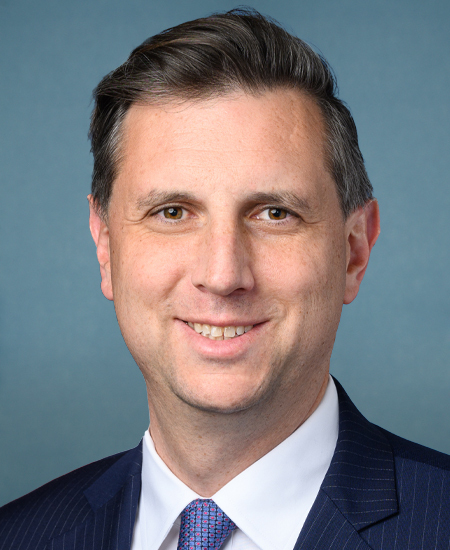
Rep. Seth Magaziner
Sponsored bills
Maddy summaryThis bill establishes a federal grant program to fund state-run telephone check-in services for older adults (60+) and adults with disabilities who are socially isolated and lack support systems, with priority for rural and medically underserved communities. States would use grant funds to provide regular phone calls from volunteers or staff, with voluntary referrals to services like mental health care or nutrition programs - never mandatory interventions. The program requires annual reporting on participation, call frequency, and satisfaction, while excluding personal data, and authorizes $5 million annually for fiscal years 2025-2027, effective October 2024. It directly affects vulnerable seniors and disabled adults facing isolation, particularly in areas with limited community resources.
Maddy summaryHR 6404, the Disarming Cartels Act, requires the Department of Homeland Security to enhance border security efforts to disrupt the smuggling of U.S.-sourced firearms and related munitions into Mexico. Key provisions mandate increased collaboration between U.S. Customs and Border Protection, Immigration and Customs Enforcement, and Mexican authorities; establishing information-sharing mechanisms for firearm interdictions; analyzing recovered firearms in Mexico to trace U.S. sources; and expanding outbound inspections at the U.S.-Mexico border. The bill also requires annual reports to Congress detailing implementation progress, joint operations, and performance metrics for these efforts. This legislation directly affects DHS agencies, Mexican government partners, and aims to address cross-border firearm trafficking through concrete operational changes.
Maddy summaryThis bill requires the Department of Energy to develop a national roadmap for bidirectional EV charging within 12 months, outlining strategies, costs, and obstacles for expanding this technology. It mandates that all new electric vehicles (including cars and school buses) manufactured starting in 2027 must support bidirectional charging - allowing EVs to both receive power from chargers and supply power back to the grid or other devices. Manufacturers failing to comply face civil penalties of up to $21,000 per vehicle, with penalties adjusted based on factors like violation scale and business size. Additionally, the bill directs FEMA to require state and local disaster recovery plans to incorporate bidirectional charging capabilities for emergency power resilience.
Maddy summaryThis resolution designates the week beginning November 13, 2023, as "National Apprenticeship Week" through symbolic congressional support. It does not create new laws or programs but formally recognizes the value of registered apprenticeships in providing paid on-the-job training, industry credentials, and career pathways. The resolution highlights apprenticeships' role in developing skilled workers, supporting high-wage sectors like healthcare and green energy, and promoting diversity in training opportunities. It aims to increase public awareness of apprenticeships as an effective "earn-and-learn" model for workers and employers.
Maddy summaryThis bill establishes a federal working group under the Department of Health and Human Services to standardize how loneliness and isolation are measured across government agencies and research. The Working Group, composed of HHS agencies, state representatives, and experts, will develop consistent definitions and measurement tools to improve data collection for public health research and healthcare planning. It aims to create reliable methods for tracking these issues across populations and fields, with a report due to Congress within one year of enactment. The effort expires in 2026, focusing solely on measurement standards rather than direct services or funding.
Maddy summaryThe Protecting Consumer Access to Generic Drugs Act of 2023 prohibits "pay-for-delay" agreements between brand-name drug manufacturers (NDA/BLA holders) and generic drug applicants (subsequent filers) that delay market entry of lower-cost alternatives. It bans arrangements where generic companies receive value from brand-name companies in exchange for limiting or delaying their development, manufacturing, marketing, or sales of generic drugs. The Federal Trade Commission will enforce these provisions as unfair or deceptive practices under existing law, with specific filing requirements for such agreements and a provision to forfeit 180-day exclusivity periods if violations occur. This legislation aims to increase competition in the generic drug market, potentially lowering drug prices for consumers.
Maddy summaryHRES 861 is a non-binding resolution calling on Azerbaijan to immediately release all detained Armenian prisoners of war, hostages, and civilians. It demands Azerbaijan provide information on missing persons, allow independent monitoring of detainees' conditions, and comply with international law. The resolution also urges the U.S. President to impose sanctions on Azerbaijani officials responsible for abuses and suspend military aid under existing law. This resolution directly addresses Azerbaijan’s government, targeting its actions regarding Armenians detained since the 2020 conflict and the 2023 Artsakh offensive.
Maddy summaryThis bill codifies the Young African Leaders Initiative (YALI) as a formal U.S. government program. It authorizes annual fellowships for African leaders aged 25-35 to participate in U.S.-based leadership training (including the Mandela Washington Fellowship) and establishes at least four regional leadership centers across sub-Saharan Africa for ongoing professional development in business, civic engagement, and public administration. The program requires annual congressional reports on progress and impacts, with implementation ending after five years. Directly affecting young African leaders (ages 18-35 for regional centers) in business, civic leadership, and governance, it provides structured training, networking, and technical assistance to strengthen U.S.-Africa partnerships.
Maddy summaryThis bill would authorize the U.S. government to confiscate Russian sovereign assets held in U.S. jurisdiction and use those funds to support Ukraine's reconstruction and humanitarian needs following Russia's invasion. It prohibits releasing these blocked assets until Russia fully compensates Ukraine or agrees to an international compensation mechanism. The bill establishes a "Ukraine Support Fund" to hold confiscated assets and requires regular congressional reporting on how these funds are allocated for Ukraine's recovery. It also includes provisions for international coordination with allies on sanctions and asset management related to Russia's invasion of Ukraine.