

Maddy summaryThis bill prohibits transplant centers and healthcare providers from denying organ transplants or related services solely based on a patient's disability. It requires covered entities to make reasonable modifications to policies (like considering a patient's support network or using communication aids) and to avoid denying care due to lack of auxiliary aids. The law applies to all transplant stages - including evaluation, listing, and post-transplant care - and explicitly states it complements, rather than replaces, existing disability rights laws like the ADA. It allows medical considerations only if a physician determines a disability is medically significant to the transplant, after individual evaluation.
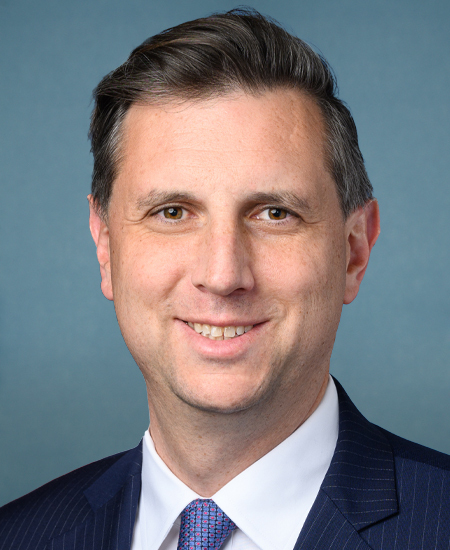
Rep. Seth Magaziner
Sponsored bills
Maddy summaryHR 4074, the Optimizing Postpartum Outcomes Act of 2025, requires the Health and Human Services Secretary to issue guidance within one year on improving Medicaid and CHIP coverage for pelvic health services during pregnancy and the postpartum period (defined as up to 6 months after birth or during lactation). The bill directs the GAO to study coverage gaps for these services and mandates a new CDC-led education campaign to train healthcare providers and inform postpartum women about pelvic floor exams and physical therapy. Key provisions include standardizing terminology for pelvic health conditions, sharing state best practices for payment models, and authorizing $2 million annually for the education program through 2030. This bill directly affects postpartum women covered by Medicaid or CHIP by aiming to increase access to evidence-based pelvic health care.
Maddy summaryThe Downpayment Toward Equity Act of 2025 creates a federal program to provide financial assistance to first-generation homebuyers for down payments, closing costs, and other home purchase expenses. It authorizes $100 billion in funding to be distributed through states and eligible entities, with grants that can cover up to $20,000 or 10% of a home's purchase price (whichever is greater). To qualify, homebuyers must meet income limits (up to 120-140% of median area income), be first-time homebuyers with no prior home ownership by their parents, and complete homebuyer counseling. The program requires recipients to occupy homes as primary residences for at least five years, with repayment required if they sell sooner, and states must report on program demographics to ensure equitable outcomes.
Maddy summaryHRES 523 is a symbolic resolution designating June 21, 2025, as National ASK (Asking Saves Kids) Day. It does not create new laws but encourages parents and guardians to ask two specific questions before children visit other homes: "Is there a gun in your house?" and "Is it locked and unloaded?" The resolution directly supports families and aims to promote secure gun storage practices, referencing the ASK Campaign administered by the Brady Campaign since 2000. It cites statistics about child firearm injuries to highlight the campaign's focus on preventing accidental harm through simple, proactive conversations.
Maddy summaryHR 4047, the Coastal Communities Ocean Acidification Act of 2025, amends the 2009 Federal Ocean Acidification Research and Monitoring Act to improve collaboration on ocean acidification issues. The bill requires the National Oceanic and Atmospheric Administration (NOAA) to establish ongoing input mechanisms for affected industries, coastal stakeholders, fishery councils, Indigenous groups (including Indian Tribes and Native Hawaiian organizations), and non-Federal scientists. It mandates specific tribal representation on the Advisory Board, directs NOAA to coordinate with tribes on vulnerability assessments and research planning, and prioritizes underserved coastal communities in resource allocation. These changes aim to integrate community and tribal knowledge into federal research and management efforts related to ocean acidification impacts on coastal economies and ecosystems.
Maddy summaryHRES 512 is a symbolic resolution expressing the House of Representatives' support for designating Sunday, June 15, 2025, as "Father's Day." It recognizes fathers' roles in families and society, citing statistics about fatherhood and the benefits of involved fathering. The resolution urges support for existing policy proposals like universal paid family leave, affordable childcare, and a child tax credit - though it does not create new laws or funding. As a commemorative measure, it has no legal effect beyond formally acknowledging Father's Day.
Maddy summaryHR 3968, the School Violence Prevention Act, creates a federal grant program to fund school-based violence prevention programs in communities with severe gun violence. It authorizes $25 million annually (2025-2031) for grants to partnerships between state/local education agencies and community nonprofits in areas experiencing high homicide rates (e.g., 35+ homicides annually) or double the national violent crime arrest rate for youth. Grants must support evidence-based programs for K-12 students - including trauma-informed counseling, conflict resolution skills, mental health access, and community engagement - while requiring annual data collection on outcomes like graduation rates. All programs must be evaluated by grantees and independent researchers, with reports shared publicly and submitted to Congress every three years.
Maddy summaryHR 3991, the Research for Healthy Soils Act, authorizes federal research grants to study how microplastics and PFAS chemicals (like those in firefighting foam) in agricultural compost and biosolids affect farmland. It directs research on measuring these substances in soil, developing filtration methods for compost, assessing crop uptake, and finding ways to clean contaminated soil. The bill does not regulate or ban these chemicals but funds scientific study to understand their agricultural impacts. It also extends funding deadlines for existing research programs through 2031. This affects researchers, agricultural extension services, and farmers through future scientific findings, not immediate policy changes.
Maddy summaryThe PHARA Act of 2025 requires the National Institutes of Health (NIH) to immediately release all required funding for existing research grants and rapidly pay pending reimbursements. It prohibits NIH from terminating active research grants (entered after the bill's enactment) solely due to shifting agency priorities or program goals, and mandates new termination clauses requiring 90 days' written notice and attempts to amend terms before ending agreements. This directly affects researchers and institutions receiving NIH grants, ensuring funding continuity for ongoing projects. The bill aims to prevent abrupt halts in scientific research by restructuring grant termination processes.
Maddy summaryThe Domestic Workers Bill of Rights Act (HR 3971) would establish key labor protections for domestic workers, including nannies, housekeepers, and caregivers who work in private homes. The bill requires written agreements for workers employed 8+ hours per week, provides earned sick days (1 hour for every 30 hours worked), mandates fair scheduling practices with 72-hour notice for schedule changes, and extends overtime protections to live-in domestic employees. It also prohibits unfair wage deductions, guarantees meal and rest breaks, and ensures privacy protections including no monitoring in private living spaces. The bill directly affects approximately 2.2 million domestic workers across the U.S., who are disproportionately women of color and immigrants. Enforcement would be handled by the Department of Labor through new complaint resolution mechanisms and oversight.