

Give Kids a Chance Act of 2025 This bill expands the Food and Drug Administration’s (FDA’s) authority with respect to research on rare pediatric diseases, including by permitting the FDA to take enforcement action against drug sponsors that fail to satisfy pediatric study requirements and by reauthorizing programs that support pediatric research. Specifically, the bill modifies requirements relating to molecularly targeted pediatric cancer investigations to permit research on new drugs in combination with active ingredients that have already been approved, provided certain conditions are met; permits the FDA to take enforcement action against drug sponsors that fail to comply with pediatric study requirements, if such sponsors demonstrated a lack of due diligence in satisfying the requirement; renews the FDA’s authority to award priority review vouchers to sponsors of new products intended to treat rare pediatric diseases through September 30, 2029; and reauthorizes through FY2027 certain funding for the National Institutes of Health to support priority pediatric research. The bill also provides statutory authority for the FDA’s interpretation of the orphan drug exclusivity period. The bill specifies, consistent with FDA regulations, that the seven-year market exclusivity period for drugs for rare diseases or conditions (i.e., orphan drugs) prohibits the approval of the same drug for the same approved use or indication with respect to the disease or condition. (In Catalyst Pharmaceuticals, Inc. v. Becerra , a court rejected the FDA’s interpretation and held that orphan drug exclusivity extends to all uses or indications for the disease or condition.)
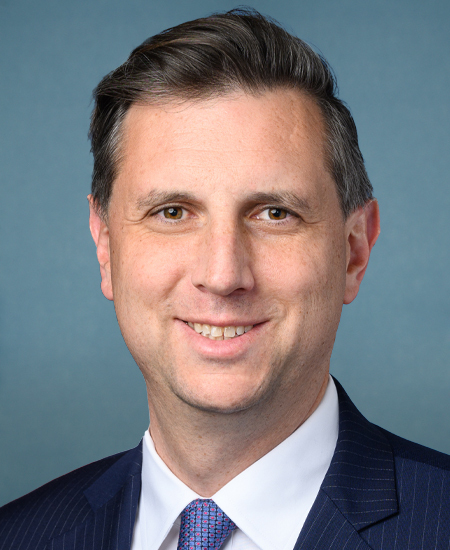
Rep. Seth Magaziner
Sponsored bills
Maddy summaryThis bill establishes a federal program to help low-income households pay for drinking water and wastewater services. It provides $500 million annually (2026-2030) in grants to states and tribes that already administer energy assistance programs, allowing them to cover past-due bills or other costs for households meeting specific income criteria (e.g., receiving certain federal benefits or earning ≤150% of the poverty level). The program prohibits using these funds to replace existing assistance and requires technical help to streamline eligibility. It directly affects low-income households in participating states and tribes, particularly those facing water affordability challenges.
Maddy summaryThe ROTOR Act narrows the definition of "sensitive government mission" for aircraft operations, excluding training flights and flights by officials below Cabinet rank. It requires regular reporting to Congress about exceptions to ADS-B Out requirements, establishes deadlines for requiring ADS-B In equipment on most aircraft, and mandates safety reviews for airports with military operations. The bill also improves coordination between the FAA and Department of Defense on airspace management and safety information sharing. These changes increase transparency around aircraft operations that don't broadcast their location while enhancing safety oversight. The bill directly affects Federal agencies operating aircraft, the FAA, and aircraft operators required to equip with ADS-B technology.
Maddy summaryThis bill directs the FEMA Administrator to take over administration of the Next Generation Warning System grant program, requiring them to disburse all existing obligated funds within 180 days and begin awarding new grants for fiscal years 2023 and 2024. It mandates the Secretary of Homeland Security to conduct research on improving emergency warning system accessibility, security, and resiliency within one year, with a report to Congress within two years. The bill primarily affects state, local, tribal, and territorial governments that receive these grants for emergency warning systems. It focuses on streamlining existing grant administration and research, without creating new funding or policy changes.
Maddy summaryThe Electricity Transmission Scorecard Act (HR 6176) requires electricity transmission owners and regional grid operators to publicly report on their performance using standardized metrics. It mandates biannual reports from transmission owners (TIAPS) and annual reports from regional grid operators (RIAPS) covering affordability, investment effectiveness, system reliability, interconnection fairness, and other key performance indicators. The bill establishes a framework for transparent, comparable data that would be publicly accessible through a government portal, allowing ratepayers and stakeholders to evaluate transmission service quality. This applies to all entities operating transmission facilities, including those not previously subject to FERC reporting requirements, aiming to improve transparency and accountability in electricity transmission.
Maddy summaryThis bill prevents the Secretary of Commerce from ending cloud storage contracts for NOAA data without meeting specific requirements. It directly affects the Secretary of Commerce and NOAA's data storage contracts with cloud providers. The law requires the Secretary to create a plan for transitioning data to another cloud provider and to work with NOAA's Administrator to maintain continuous data protection. This ensures NOAA's critical environmental and oceanographic data remains accessible and secure during any contract changes.
Maddy summaryThe Grid Research and Development Act (HR 6177) requires transmission utilities and grid operators to report standardized data to the Federal Energy Regulatory Commission (FERC) on transmission projects, including costs, project timelines, system performance, and interconnection expenses. FERC must create a public, searchable data repository and an Interconnection Data Dashboard displaying real-time queue data, project statuses, and system costs to improve transparency. The Department of Energy will use this data to research transmission cost drivers, efficiency, and affordability, publishing annual reports on grid investment impacts. These requirements directly affect transmission utilities, grid operators, and ratepayers by standardizing reporting and enabling public analysis of grid investments.
Maddy summaryHR 6231 extends and enhances the Work Opportunity Tax Credit (WOTC), a federal tax credit for employers hiring from specific target groups like veterans, SNAP recipients, and summer youth workers. The bill extends the program through 2030 (from 2025), increases the credit rate to 50% for certain wages (up from 40%), adds automatic inflation adjustments to the $6,000 wage cap, and expands eligibility to include military spouses and removes age limits for SNAP recipients. Key provisions also modify credit calculations for veterans, agricultural workers, and long-term assistance recipients, while requiring federal agencies to promote hiring from target groups in critical sectors like healthcare and construction. This bill directly affects employers who hire from these designated groups, making the tax credit more valuable and accessible.
Maddy summaryHR 3965, the PEARL Act, requires U.S. Customs and Border Protection (CBP) to establish a 3-year pilot program adopting dogs from local animal shelters to train as support dogs for CBP’s existing Support Canine Program. The program must begin within 60 days of the bill’s enactment and will terminate three years after its start date. This bill directly affects CBP by creating a new mechanism to source and train support dogs from animal shelters, rather than purchasing or acquiring them through other means. The legislation focuses solely on implementing this specific pilot program with no additional policy changes.
Maddy summaryThis bill amends federal law to expand appeal rights for certain postal employees to the Merit Systems Protection Board (MSPB). It specifically applies to postal workers in supervisory, professional, technical, clerical, administrative, or managerial roles who are not represented by a union under Section 1203 of federal labor law. The key change clarifies that these employees can now directly appeal personnel decisions (like discipline or termination) to the MSPB, rather than relying solely on internal postal processes. This modifies eligibility criteria for MSPB appeals under Title 39 of the U.S. Code.