

Maddy summaryHR 2394, the Protection from Abusive Passengers Act, creates a federal list of passengers who commit specific aviation security offenses, such as assaulting crew members, threatening flight safety, or tampering with security systems. Individuals added to this list are banned from boarding commercial flights until removed through established procedures. The bill requires the Transportation Security Administration (TSA) to develop clear policies for adding individuals to the list, handling appeals within 5 days for potential errors, and maintaining annual reports on the list's composition. These provisions directly affect passengers convicted of or penalized for the specified offenses, aiming to enhance safety by restricting repeat offenders from flying.
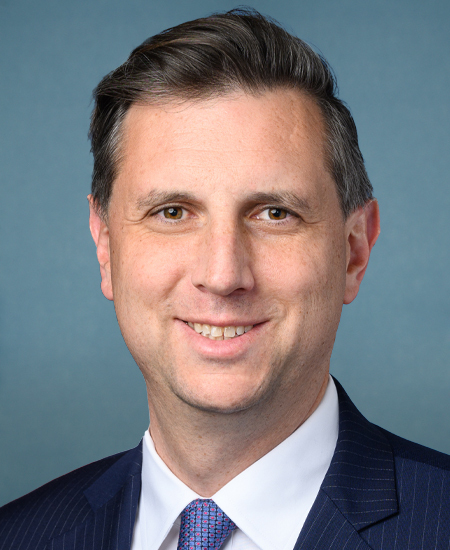
Rep. Seth Magaziner
Sponsored bills
Maddy summaryThe International Human Rights Defense Act of 2023 creates a permanent Special Envoy at the State Department to coordinate U.S. efforts against discrimination and violence targeting LGBTQI+ people globally. The bill requires the development of an annual global strategy to address criminalization, discrimination, and violence based on sexual orientation, gender identity, or sex characteristics. It also mandates that U.S. country reports on human rights practices include detailed information about laws and practices affecting LGBTQI+ communities. The legislation authorizes U.S. foreign assistance programs to support LGBTQI+ rights through health services, legal protections, and community capacity building. This bill aims to strengthen U.S. diplomatic engagement on LGBTQI+ rights as part of broader human rights policy.
Maddy summaryHR 1139, the GUARD VA Benefits Act, amends federal law to strengthen penalties for individuals or organizations charging veterans unauthorized fees when helping with VA benefit claims. It directly affects veterans seeking assistance with VA claims and the representatives (like advocates or attorneys) who might charge them fees. The bill adds a new provision making it a violation to solicit, charge, or receive any fee for preparing, presenting, or prosecuting VA claims, punishable by fines under Title 18. This change specifically targets unauthorized fee-charging while excluding fees covered under existing exceptions in sections 5904 or 1984 of the law.
Maddy summaryHRES 262 is a non-binding House resolution supporting the integration of climate change education into K-12 school curricula across the U.S. It urges the Department of Education to collaborate with states and schools to develop science-based climate education standards, promote equitable access for all students, and address climate-induced mental health impacts on youth. The resolution encourages schools to adopt place-based, solution-oriented teaching methods and supports developing vocational programs for renewable energy careers. It does not mandate curriculum changes or allocate funding but calls for research on climate education's impact and collaboration with educators and scientists.
Maddy summaryHR 1831 would award Billie Jean King a Congressional Gold Medal to honor her lifelong advocacy for equal rights in sports and society. The bill directs the Secretary of the Treasury to strike the medal and have it presented by congressional leaders, recognizing her pivotal role in advancing women's equality through tennis (including founding the Women’s Tennis Association and securing equal prize money) and her broader impact on society through initiatives like Title IX advocacy.
Maddy summaryThis bill changes how U.S. foreign aid is provided to international health organizations. It prevents U.S. agencies from denying aid to foreign non-governmental organizations (NGOs) solely because they offer health services (like counseling or referrals) using their own funds, as long as those services follow local laws. It also stops applying stricter rules about how foreign NGOs can use their own funds for advocacy compared to U.S. NGOs receiving similar aid. The bill directly affects foreign health-focused NGOs that rely on U.S. foreign assistance funding.
Maddy summaryHR 1808 prohibits the military from considering gender identity, sexual orientation, or sex characteristics when determining service eligibility or implementing policies. It requires that all eligibility decisions and military treatment be based solely on a person's ability to meet job-specific military standards, not on protected characteristics like race, religion, or sex. The bill directly affects all current and prospective military members by mandating equality in service through new provisions added to Title 10 of U.S. Code.
This resolution congratulates the people of Greece as they celebrate the 202nd anniversary of the War of Greek Independence. The resolution also expresses support for the principles of democracy, human rights, and the rule of law to which the people of the United States and Greece are committed.
Maddy summaryHR 1794 authorizes the minting of commemorative coins to honor the 2028 Los Angeles Olympic and Paralympic Games. It specifies four coin types ($5 gold, $1 silver, half-dollar clad, and proof silver $1) with defined weights, sizes, and mintage limits (e.g., up to 100,000 gold coins). A surcharge is added to each coin sale (e.g., $35 for gold coins), with all surcharge funds directed to the U.S. Olympic and Paralympic Properties to support legacy programs and the Games' operations. The coins must be issued only during 2028 and are legal tender, though the bill focuses solely on commemorative coinage, not policy changes.
Historic Tax Credit Growth and Opportunity Act of 2023 This bill increases the rehabilitation tax credit and modifies certain requirements for the credit. The bill increases the rate of the credit for qualified rehabilitation expenditures in taxable years beginning after December 31, 2020, and before January 1, 2028, after which the rate reverts to 20%. The bill increases the rate of the credit to 30% for certain small projects whose qualified rehabilitation expenditures do not exceed $2.5 million. The bill also expands the types of buildings eligible for rehabilitation by decreasing the rehabilitation threshold from 100% to 50% of project expenses. It also eliminates the basis adjustment requirement for the credit and modifies rules relating to tax-exempt use property eligible for the credit.