

Maddy summaryThis bill protects living organ donors from insurance discrimination by prohibiting life, disability, and long-term care insurers from denying coverage, raising premiums, or altering policy terms solely because someone donated an organ while alive. It also updates the Family and Medical Leave Act to include recovery from organ donation surgery as a qualifying health condition, allowing donors to take protected leave for this purpose. Additionally, the bill requires the Health and Human Services Secretary to update public educational materials about living donation benefits, risks, and insurance protections within six months of enactment. These changes directly affect living organ donors, insurers, employers, and healthcare systems by ensuring fair access to insurance and workplace leave.
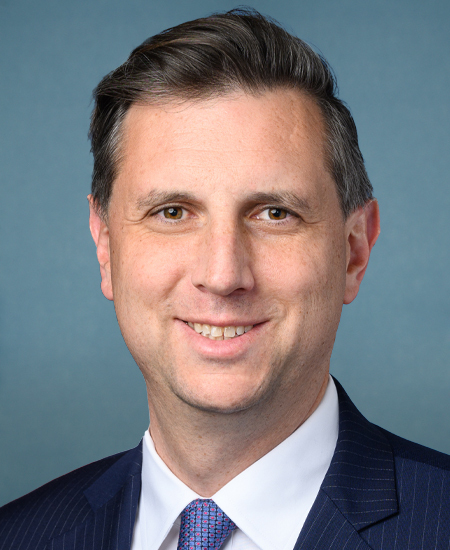
Rep. Seth Magaziner
Sponsored bills
Maddy summaryHR 2955, the Stop Institutional Child Abuse Act, establishes a Federal Work Group to improve data collection and best practices for youth in residential programs (like therapeutic schools, treatment centers, and group homes). The Work Group, composed of federal agency representatives and diverse stakeholders, must develop national data standards, create risk assessment tools, and issue biennial reports with recommendations to enhance safety, reduce restraints, and expand community-based alternatives. It directly affects youth with mental health, substance use, or disability needs placed in these facilities, as well as agencies overseeing them. The bill also mandates a National Academies study to examine funding, oversight, and barriers to community care. These mechanisms aim to standardize data tracking and promote less restrictive, trauma-informed care for youth in residential programs.
Bruce's Law This bill reauthorizes certain grants through FY2028 and sets out other activities to address the dangers of fentanyl-related drug overdoses, with a particular focus on drug contamination with fentanyl or other synthetic opioids. Specifically, the bill (1) reauthorizes grants that are available through the White House Office of National Drug Control Policy (ONDCP) for community-based coalitions to address local drug crises, and (2) authorizes new grants for coalitions to implement education and prevention strategies in communities that face significant levels of drug overdoses related to fentanyl and other synthetic opioids. The ONDCP may delegate authority to execute the new grants to the Centers for Disease Control and Prevention. Additionally, the Department of Health and Human Services (HHS) must carry out a campaign to increase public awareness of the dangers of fentanyl, including the risk of contamination of counterfeit drugs with fentanyl or other synthetic drugs. The bill also establishes an interagency work group to coordinate and improve federal efforts to reduce and prevent drug overdoses involving contamination with fentanyl or other synthetic opioids. Work group members include the ONDCP, HHS, the Department of Justice, and the Department of State.
Maddy summaryHR 2985, the HEAR Act of 2023, makes it generally illegal for most people to possess firearm silencers or mufflers (devices that reduce gun noise), while creating specific exemptions. It allows law enforcement officers (including campus police at eligible colleges), federal/state agencies, and nuclear facility personnel to legally possess them for official duties. The bill also requires the federal government to establish a nationwide buy-back program using Byrne grant funds to purchase silencers from the public, with implementation starting 90 days after enactment. This law directly affects the general public by restricting silencer access, while exempting authorized law enforcement personnel and enabling voluntary surrender through the buy-back program.
Maddy summaryThe College Transparency Act requires the National Center for Education Statistics to develop a secure, privacy-protected system that collects and organizes student-level data from colleges and universities. The system will track enrollment patterns, progression, completion rates, costs, financial aid, and post-graduation outcomes, with data disaggregated by characteristics like race, gender, program of study, and credential level. Colleges participating in federal financial aid programs must submit this data, while the system will provide the public with customizable summary information to help students and families make informed college decisions. The bill includes strict privacy protections, prohibiting collection of sensitive data like health information or exact addresses, and requires data minimization to only what's necessary for the system's purposes.
Maddy summaryThe Election Mail Act (HR 2987) establishes new requirements for handling mail-in ballots in federal elections to improve reliability and accessibility. It requires the Postal Service to process absentee ballots on the same day received, place postmarks indicating mailing dates on ballot envelopes, and treat election mail as first-class mail with free postage for completed ballots. The bill also mandates states to use intelligent mail barcodes on return envelopes, affix specific tags for ballot visibility, and adopt a uniform 7-day deadline for accepting mailed ballots postmarked on or before election day. These changes apply to federal elections, with most provisions taking effect for the 2024 election cycle. The bill includes additional provisions for the Postal Service to consult with Indian Tribes about voting barriers on tribal lands.
Maddy summaryThe Child Care for Working Families Act establishes a federal entitlement program providing subsidized child care for working families with children under age 6 who are not yet in kindergarten. It creates a sliding fee scale where families at or below 85% of State median income pay no copayment, while higher-income families pay up to 7% of their income based on income thresholds. The bill requires states to develop quality rating systems for child care providers and ensures providers receive sufficient funding to meet quality standards, including wages equivalent to elementary educators. It prioritizes access for underserved populations including children with disabilities, infants and toddlers, children experiencing homelessness, and families in low-income communities. The program is funded with $20 billion for fiscal year 2024 and subsequent years through 2029.
Forced Arbitration Injustice Repeal Act of 2023 or the FAIR Act of 2023 This bill prohibits a predispute arbitration agreement from being valid or enforceable if it requires arbitration of an employment, consumer, antitrust, or civil rights dispute.
Maddy summaryThe Student Empowerment and Financial Literacy Act (HR 2943) creates a federal grant program to fund innovative financial literacy education in elementary and secondary schools. It provides competitive grants to eligible entities - like schools, community groups, or financial institutions - to develop programs teaching personal finance topics (e.g., budgeting, credit, student loans, saving) that improve student awareness and teacher training. Grants last up to 3 years, with renewal possible for successful programs, and prioritize projects serving underbanked communities, diverse geographic areas, and students with varying needs. The program aims to expand voluntary financial literacy resources for K-12 students nationwide.
Maddy summaryHR 2974 establishes the United States Interagency Council on Housing Affordability and Preservation, a new federal body composed of heads from 21 agencies (including HUD, Treasury, and Justice) to coordinate efforts on affordable housing. The Council’s key duties include developing a national strategic plan for affordable housing within 12 months, reviewing federal housing programs, providing regional support to states and localities to access federal resources, and requiring annual agency reports on housing barriers. It mandates $4.8 million annually for operations (2024-2028) and encourages states to create their own housing councils to align with federal goals. The bill directly affects federal agencies, state/local governments, and low-income renters by improving coordination and access to housing programs, without directly changing housing subsidies or tenant protections.