

Maddy summaryHR 1213, the RESCUE Whales Act of 2023, repeals Title I of Division JJ in the Consolidated Appropriations Act of 2023 (Public Law 117-328). This provision specifically removed a modification that had altered how certain conservation funding was allocated under environmental laws protecting whales. The bill directly affects the implementation of that funding mechanism by restoring the prior legal framework. It is a procedural change with no new policy requirements or direct impact on whale conservation efforts beyond reversing the 2023 funding adjustment.
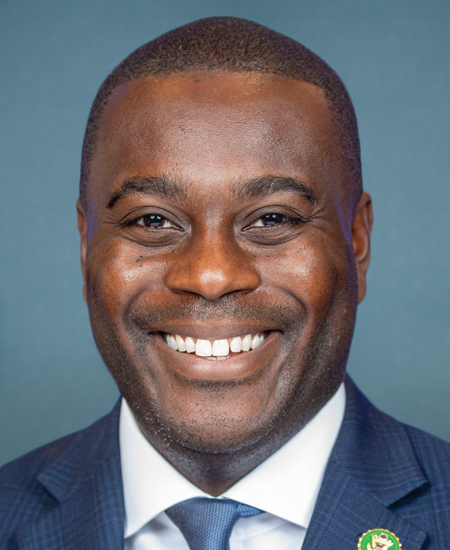
Rep. Gabe Amo
Sponsored bills
Maddy summaryThe VA Same-Day Scheduling Act of 2023 requires the Department of Veterans Affairs to schedule appointments for enrolled veterans during the same phone call when they request care. This applies to veterans enrolled in the VA healthcare system who contact the VA by phone to request appointments. The law mandates that the VA must complete the scheduling during the call - without delay or future scheduling - regardless of the appointment date. The requirement takes effect 120 days after the bill is enacted.
Maddy summaryHR 2413, the Dental Care for Veterans Act, reclassifies dental care as standard medical services under the VA's existing benefits structure, eliminating prior restrictions that treated dental care separately. It modifies how dental appliances are procured and establishes a phased eligibility timeline: veterans already eligible for dental benefits gain immediate access, while others qualify over 1-4 years based on their current benefit status. The bill affects all veterans currently covered under VA dental programs, changing their access to care without creating new funding. Key provisions streamline dental service delivery under Title 38, aligning it with other medical benefits.
Freedom to Decide Act This concurrent resolution expresses the sense of Congress to (1) affirm that federal law authorizes the distribution of medication abortion, including by mail, as stated in a 2022 Department of Justice memorandum; and (2) condemn restrictions on the access and coverage of reproductive health care, including medication abortion.
Maddy summaryThe Family Violence Prevention and Services Improvement Act of 2023 amends the Family Violence Prevention and Services Act to improve services for victims of domestic violence, dating violence, and family violence. The bill authorizes $270 million annually for fiscal years 2024-2028, with specific allocations including 12.5% for Tribal grantees, 2.5% for culturally specific services, and funds for national hotlines and resource centers. It establishes a national domestic violence hotline, a National Indian Domestic Violence Hotline, and resource centers for Alaska Native and Native Hawaiian populations, requiring all services to be trauma-informed, culturally relevant, and accessible to underserved populations including racial and ethnic minorities, people with disabilities, and Tribal communities. The bill also mandates a study on financial stability support for survivors of domestic violence.
Maddy summaryHR 2630, the Safe Step Act, requires group health plans and health insurance issuers to establish a clear, transparent process for patients or their doctors to request exceptions to medication step therapy protocols. These protocols typically force patients to try cheaper drugs first before covering more expensive alternatives. The bill mandates that plans must approve exceptions when prior treatments failed, delay would cause serious harm, a treatment is unsafe, or a patient is stable on a previously approved drug, with strict 72-hour (or 24-hour in emergencies) decision timelines. It also requires plans to publish the exception process online and limit documentation requests to only necessary medical information. This law directly affects health insurers, employers offering health plans, and patients using step therapy for prescription drugs.
Maddy summaryThis bill creates a 2-year pilot program to establish or improve state-based nursing workforce centers. It provides $1.5 million annually (2024-2025) for up to six state or regional centers, requiring non-Federal matching funds (1:4 ratio). These centers will analyze nursing workforce data - including education, retention, and shortages - and develop strategies to recruit, retain, and diversify nurses, especially in rural and underserved areas. The program mandates annual reports to Congress on outcomes and best practices for addressing nursing shortages. It directly affects states, nursing schools, healthcare employers, and nursing workforce centers through federal grants and data-driven planning.
Maddy summaryHR 2439, the Ally’s Act, requires most private health insurance plans to cover hearing-related services and devices for qualifying individuals. It mandates coverage for cochlear implants, bone conduction devices, maintenance, upgrades every five years, hearing assessments, surgery, and rehabilitation, without separate cost-sharing or medical necessity reviews. This directly affects people with hearing loss who need implantable devices, as defined by a physician or audiologist. The law applies to group health plans under the Public Health Service Act, ERISA, and Internal Revenue Code, taking effect for plan years beginning January 1, 2025.
Helping Kids Cope Act This bill establishes programs within the Health Resources and Services Administration (HRSA) to support pediatric behavioral health care. Specifically, HRSA must award grants, contracts, or cooperative agreements to eligible health care providers for (1) integrating and coordinating pediatric behavioral health care within communities, and (2) pediatric mental health and substance use disorder workforce training. Additionally, HRSA must award grants, contracts, or cooperative agreements to hospitals or rural health clinics that predominately treat individuals under age 21 for expanding their capacity to provide pediatric behavioral health services. Recipients may use awards for constructing or modernizing sites of care and enhancing digital infrastructure, telehealth capabilities, or other improvements to patient care infrastructure.
Resident Physician Shortage Reduction Act of 2023 This bill increases the number of residency positions eligible for graduate medical education payments under Medicare for qualifying hospitals, including hospitals in rural areas and health professional shortage areas. Current law provides for an increase of up to 200 positions per fiscal year beginning in FY2023, with a total increase of 1,000 positions; each hospital may receive up to 25 additional positions. Current law also provides for an additional increase of up to 200 positions for FY2026, with at least 100 of these positions for psychiatry or related specialties; each hospital may receive up to 10 additional positions. The bill provides for an additional increase of 2,000 positions per fiscal year from FY2025-FY2031; during this period, each hospital may receive up to 75 additional positions in total under the bill and current law. Additionally, one-third of the positions that are made available under the bill must be allocated to hospitals that are already operating above applicable resident limits. The bill also requires the Government Accountability Office to report on strategies to increase the diversity of the health professional workforce, including with respect to representation from rural, low-income, and minority communities.