

Maddy summaryThis bill amends the Equal Credit Opportunity Act to require lenders to collect and report data on loans to LGBTQI-owned businesses. It specifically adds "LGBTQI-owned" to existing categories for data collection, includes sexual orientation, gender identity, and intersex status as protected characteristics in lending data, and defines an "LGBTQI-owned business" as one where over 50% of ownership/control and net profit/loss accrues to self-identifying LGBTQI individuals. The policy change directly affects financial institutions that report lending data to the government, mandating they track and disclose these new categories. This provides concrete data on lending practices for LGBTQI business owners, who face documented barriers in accessing credit.
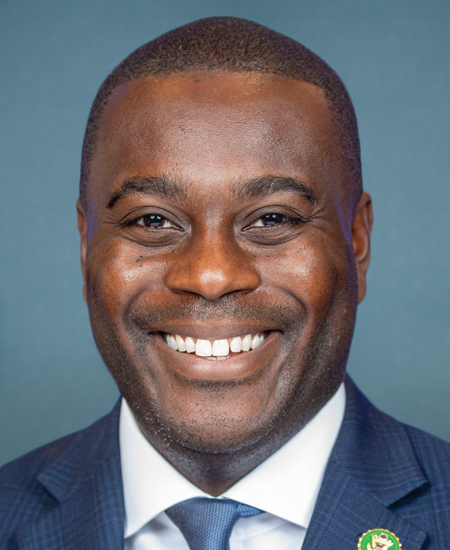
Rep. Gabe Amo
Sponsored bills
Maddy summaryThe TRAIN Act creates a federal grant program to help community colleges develop career training programs in partnership with local industries. It directly affects community colleges, which would receive funding to establish or improve programs aligned with in-demand industries and occupations. The bill requires 15% of grant funds to cover supportive services like childcare, transportation, and mental health services to help participants complete training. It also mandates performance tracking to ensure programs lead to quality jobs with good wages, benefits, and career advancement opportunities. The program is funded with $110 million in 2024, increasing to $176 million by 2029.
Maddy summaryThe IMAGINE Act encourages research and use of innovative materials in infrastructure construction and preservation to improve performance, extend service life, and reduce costs. It establishes an Interagency Innovative Materials Standards Task Force to coordinate federal standards and identify barriers to new materials, and creates Innovative Material Innovation Hubs at qualifying institutions like universities to conduct research on these materials. The bill also establishes specific grant programs for innovative bridge construction (Innovative Bridge Program) and water infrastructure projects (Water Infrastructure Innovation Program), with preferences for domestically sourced materials and projects in at-risk areas. Funding is authorized for these programs through fiscal year 2028, with annual reporting requirements to Congress.
Maddy summaryHR 6415, the CARE for First Responders Act, creates targeted mental health support for first responders, including law enforcement, firefighters, EMTs, and 911 operators (previously excluded from many services). It establishes a 24/7 confidential mental health hotline integrated with the 988 Suicide Lifeline, funds mobile crisis teams for disaster response, and mandates specialized training to reduce stigma and improve access to culturally competent care. The bill requires the development of peer support programs and education for responders and their families on mental health coping strategies. It authorizes $5 million annually (2024-2028) for grants to states and organizations to implement these services, specifically addressing the higher rates of mental health challenges and suicide among first responders compared to the general population.
Maddy summaryThis resolution (HRES 872) reaffirms the U.S. commitment to transatlantic cooperation in combating antisemitism across Europe. It calls on European governments and the European Union to implement national strategies against antisemitism, standardize data collection on incidents, share best practices, and include Holocaust education in school curricula. The resolution specifically urges European countries to address rising antisemitic incidents documented by reports from ADL and Tel Aviv University, which show widespread antisemitic attitudes in multiple European nations. It does not create new laws but emphasizes collaboration to protect Jewish communities and counter online hate. The resolution directly affects European governments and Jewish communities in Europe through its recommendations for policy action.
Maddy summaryHRES 861 is a non-binding resolution calling on Azerbaijan to immediately release all detained Armenian prisoners of war, hostages, and civilians. It demands Azerbaijan provide information on missing persons, allow independent monitoring of detainees' conditions, and comply with international law. The resolution also urges the U.S. President to impose sanctions on Azerbaijani officials responsible for abuses and suspend military aid under existing law. This resolution directly addresses Azerbaijan’s government, targeting its actions regarding Armenians detained since the 2020 conflict and the 2023 Artsakh offensive.
Maddy summaryThis bill would authorize the U.S. government to confiscate Russian sovereign assets held in U.S. jurisdiction and use those funds to support Ukraine's reconstruction and humanitarian needs following Russia's invasion. It prohibits releasing these blocked assets until Russia fully compensates Ukraine or agrees to an international compensation mechanism. The bill establishes a "Ukraine Support Fund" to hold confiscated assets and requires regular congressional reporting on how these funds are allocated for Ukraine's recovery. It also includes provisions for international coordination with allies on sanctions and asset management related to Russia's invasion of Ukraine.
Maddy summaryHR 5976, the Youth Mental Health Research Act, establishes a new NIH research initiative led by the National Institute of Mental Health. The bill directs collaboration between three NIH institutes to coordinate research on youth mental health, focusing specifically on building community resilience for at-risk youth and improving how mental health services reach young people in schools, communities, and other settings where they live and work. It authorizes $100 million annually for fiscal years 2024 through 2028 to fund this research. The bill does not create direct services but aims to generate evidence to inform future mental health support strategies for young people.
Maddy summaryHR 6201, the Iranian Sanctions Enforcement Act of 2023, creates the Iran Sanctions Enforcement Fund to cover costs related to seizing and forfeiting property from Iran or its designated proxies (like Hezbollah or the Revolutionary Guard Corps) that violate U.S. sanctions. The fund, initially $150 million, pays for investigative costs, property management, informant rewards, and equipment for federal, state, and local agencies involved in enforcement. It also establishes an Export Enforcement Coordination Center within Homeland Security to improve interagency cooperation on enforcing export controls targeting Iran. The bill requires annual reports on fund usage and mandates repayment of the initial $150 million by 2034, unless waived for national security reasons.
Maddy summaryThis bill authorizes a one-time $40,000 payment to former Air America employees who served at least five years during 1950-1976, or to their survivors (widows/widowers, dependents, or children). Additional $8,000 payments are provided for each full year of service beyond five years. The total funding is capped at $60 million, with claims due within two years of regulations being finalized. It does not create ongoing benefits or change Air America’s legal status, and payments are issued as a single lump sum.