

Maddy summaryHRES 1063 is a non-binding resolution passed by the U.S. House of Representatives to reaffirm America's commitment to NATO ahead of its 75th anniversary. It formally recognizes NATO's role in collective security, emphasizes Article 5's importance for mutual defense, and supports Finland and Sweden's membership. The resolution also calls on NATO allies to meet the 2% defense spending target, but does not create new laws or affect specific individuals or groups.
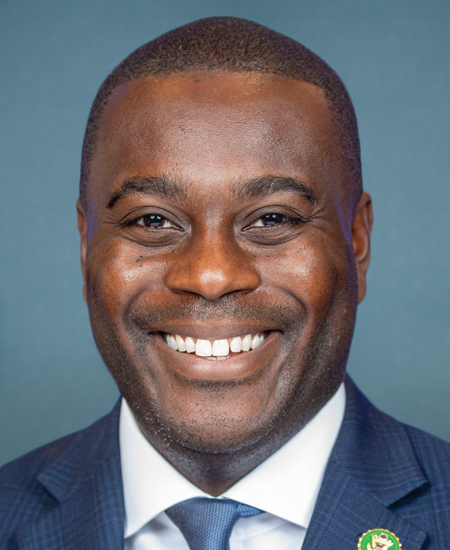
Rep. Gabe Amo
Sponsored bills
Maddy summaryThe Public Service Freedom to Negotiate Act of 2024 establishes federal minimum standards for collective bargaining rights for public employees and supervisory employees. The Federal Labor Relations Authority will determine if each state's laws "substantially provide" for these rights, and if not, federal standards will apply to that state. These standards include the right to self-organization, collective bargaining, recognition of labor organizations, and procedures for resolving disputes. The bill preserves existing collective bargaining agreements and excludes certain employee categories like emergency services workers from some provisions.
Maddy summaryHR 8427, the Stop Arming Cartels Act of 2024, bans the civilian possession, sale, or transfer of rifles capable of firing .50 caliber ammunition, with exceptions for government use and rifles already owned before the law's enactment. It requires owners of such rifles to register them with the federal government within 12 months (without fees) and adds a new provision allowing lawsuits against sellers who knowingly supply these rifles to foreign drug traffickers. The bill also expands federal firearm prohibitions to bar individuals designated as significant foreign narcotics traffickers under existing law from purchasing or possessing firearms. These changes directly affect civilian rifle owners, gun sellers, and foreign drug traffickers targeted by U.S. sanctions.
Maddy summaryHRES 1225 is a symbolic resolution designating June 9, 2024, as "Veterans Get Outside Day" to support veterans' mental health. It does not create new programs or funding but expresses congressional support for connecting veterans with nature-based activities. The resolution encourages coordination between the Department of Veterans Affairs, the Forest Service, and the National Park Service to align with existing initiatives like National Get Outdoors Day and Month. It focuses on raising awareness of nature's therapeutic benefits for veterans dealing with PTSD, traumatic brain injuries, and depression, based on cited research linking outdoor exposure to improved mental well-being. The resolution has no binding effect but aims to promote existing outreach efforts.
Maddy summaryHRES 1206 is a symbolic House resolution supporting the designation of May 2024 as "Mental Health Awareness Month." It does not create new laws or funding but aims to raise public awareness about mental health challenges, emphasizing the need to reduce stigma and treat mental well-being as equally important as physical health. The resolution cites statistics on rising mental health crises - including increased anxiety, depression, and suicide rates among youth, LGBTQ+ individuals, veterans, and communities of color - to underscore the urgency of the issue. It encourages nationwide efforts to promote mental health awareness and access to care during this designated month.
Maddy summaryHR 8358, the Taiwan Allies Fund Act, creates a $40 million annual fund (2025-2027) to support countries that maintain or strengthen unofficial ties with Taiwan despite pressure from China. It targets nations facing Chinese economic or diplomatic coercion for their relations with Taiwan, such as recent diplomatic switchers like Nauru. Funds can be used for specific activities including countering Chinese propaganda, building civil society resilience, diversifying supply chains away from China, and supporting Taiwan's participation in international organizations. The bill limits aid per country to $5 million annually and requires annual reports on fund usage and coordination with Taiwan.
Maddy summaryThis bill establishes the Project Turnkey Program, allocating $1 billion annually to fund affordable housing and homelessness services. It directly helps vulnerable populations including homeless individuals, those at risk of homelessness, and victims fleeing domestic violence or trafficking. Key provisions allow funds for rental assistance, rehabilitating vacant properties (like hotels and motels), supportive services, and shelter operations, while requiring states to use funds to supplement - not replace - existing local housing investments. The program runs through 2034 with specific rules to streamline housing development and expand capacity for community organizations.
Maddy summaryThis bill provides $280 million in funding for the Department of Education's Office for Civil Rights (OCR) for fiscal year 2024, with funds available through September 2025. The OCR investigates school discrimination complaints related to race, sex, disability, and other protected characteristics. This funding directly supports the OCR's ability to handle civil rights cases involving students and schools nationwide, without creating new student requirements or altering existing laws.
Maddy summaryThis resolution (HRES 1198) commemorates the 105th anniversary of formal diplomatic relations between the United States and Poland, established in 1919. It honors historical milestones including Poland’s fight for independence, Polish-American contributions (like the Blue Army and figures such as Kosciuszko and Paderewski), and shared democratic values. The resolution highlights key events like the 1918 Fourteen Points and Poland’s NATO/EU membership, but does not create new laws or affect any individuals or entities. It serves as a ceremonial recognition of enduring U.S.-Poland ties, reaffirming mutual commitment to democracy and security. As a commemorative resolution, it has no legal effect beyond expressing congressional sentiment.
Maddy summaryHRES 1180 is a non-binding resolution recognizing the importance of diversity, equity, and inclusion (DEI) efforts in medical education. It affirms that a diverse medical workforce better serves the nation's diverse patient populations and supports medical schools in fostering inclusive environments to improve health equity. The resolution highlights existing disparities in health outcomes and representation, such as Black and Hispanic patients experiencing higher rates of chronic conditions compared to White patients, and notes that current medical school demographics (e.g., 10.8% Black or African American matriculants in 2023) do not reflect U.S. population diversity. It does not create new laws or funding but symbolically endorses DEI initiatives as essential for enhancing patient trust, clinical learning, and equitable care delivery.