

Maddy summaryThis bill increases the Small Business Administration's (SBA) guarantee rate to 90% for certain loans made to businesses in U.S. territories (like Puerto Rico or Guam) under the SBA's standard 7(a) loan program. It directly affects businesses operating in these territories by making it easier for them to secure loans with higher federal backing. The key provision amends the Small Business Act to set this 90% guarantee rate as the default for covered territory loans, with exceptions for specific existing loan types (e.g., certain disaster loans or pilot programs). This change aims to improve access to capital for territorial businesses without altering other SBA loan terms.
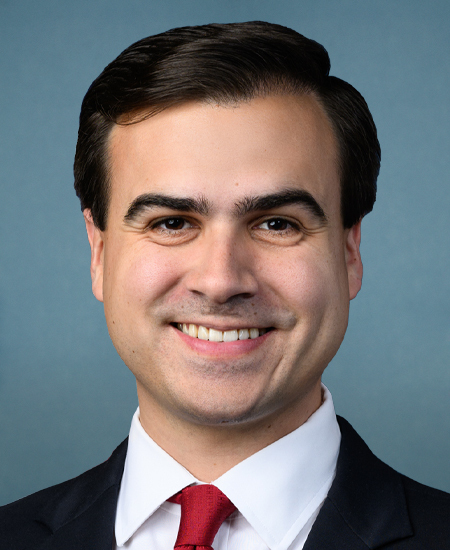
Rep. Pablo José Hernández
Sponsored bills
Maddy summaryHR 7179, the Historic Infrastructure Management and Jobs Training Act, creates a competitive grant program to fund workforce training in historic preservation. The program provides grants to states, tribes, nonprofits, and educational institutions for projects developing specialized skills like historic masonry, timber framing, and archival conservation for preserving culturally significant properties. Priority is given to projects serving high-unemployment areas and underserved communities, with grantees required to track participants and certification completions. The bill directly supports workers entering preservation trades and organizations managing historic resources.
Maddy summaryThe PrEP Access Act expands Medicare Part B coverage to include pharmacist-provided HIV prevention services, such as pre-exposure prophylaxis (PrEP) counseling, medication administration, and related testing. It directly affects Medicare beneficiaries (primarily seniors) and pharmacists, allowing pharmacists to bill Medicare for these services under state law. Key provisions set payment at 80% of the lesser of actual charges or 85% of physician rates, and prohibit balance billing for these services. The policy change takes effect January 1, 2027, making PrEP more accessible through pharmacy settings.
Maddy summaryHR 7137, the Shutdown Fairness Act, requires federal agencies to pay covered employees (including most federal workers and military personnel) and covered contractors their regular pay during government shutdowns. It appropriates funds from the Treasury to cover standard employee compensation and contractor payments for work performed during a lapse in regular appropriations, ensuring pay continues without delay (within 7 days if a shutdown is ongoing at enactment) and aligns with regular pay schedules. The bill applies only to individuals employed or with accepted offers before the shutdown began and mandates that these payments be charged to future appropriations. It does not change agency obligations under existing contracts or authorize new spending beyond the specified shutdown period.
Maddy summaryThis bill allows U.S. territories - American Samoa, Guam, the Northern Mariana Islands, Puerto Rico, and the U.S. Virgin Islands - to contribute statues to the National Statuary Hall Collection, which currently features statues from states. It amends existing law to define "State" in relevant statutes to include these territories, enabling their statues to be placed alongside state statues. The Architect of the Capitol will manage acquiring and installing these statues. The bill does not change voting rights or policy for residents but updates procedural rules for statue placement.
Maddy summaryHR 7064, the AI in Health Care Efficiency and Study Act, requires the U.S. Department of Health and Human Services (HHS) to study how artificial intelligence can streamline administrative tasks in healthcare while protecting patient privacy. The study will examine AI applications for scheduling, claims processing, electronic health records, and cybersecurity threats like ransomware, involving healthcare providers, health plans, AI developers, and privacy experts. HHS must report findings and recommendations to Congress within 6 months of completing the study, focusing on reducing provider workload, improving data security, and ensuring compliance with health privacy laws. This bill does not create new regulations but directs a federal study to inform future policy on AI in healthcare administration.
Maddy summaryThe SATOS Act of 2025 provides federal grants and loans to fund the construction, renovation, or equipment upgrades for animal shelters, clinics, and related facilities in rural areas (defined as communities with populations under 50,000). It prioritizes lower-income rural communities by offering up to 75% federal funding coverage (capped at $10 million annually) for eligible entities like local governments, tribes, and nonprofits. The bill also includes technical assistance grants (3-5% of program funds) to help organizations plan, apply for, and manage these facilities. Recipients must report program outcomes to Congress biennially. This directly affects rural animal welfare infrastructure and the communities relying on these services.
Maddy summaryHR 6088, the *Restoring Food Security for American Families and Farmers Act of 2025*, repeals specific sections (10101-10108) from a prior reconciliation law. This action revives previous provisions related to food security programs that were modified by those repealed sections. The bill directly affects federal food assistance and agricultural support programs by restoring their prior legal framework. It does not create new policies but reverses recent changes to existing food security measures.
Maddy summaryThe RTCP Revitalization Act amends funding provisions for geographically disadvantaged farmers and ranchers under the Food, Conservation, and Energy Act of 2008. It establishes mandatory annual funding from the Commodity Credit Corporation, starting at $10 million for fiscal year 2026 and increasing to $15 million annually through 2031 and beyond. The bill removes payment limits for eligible farmers when sufficient funds are available, ensuring they receive full payments without arbitrary caps. This directly affects farmers and ranchers in geographically disadvantaged areas who qualify for these payments. The changes provide predictable funding and protect payment access for this specific group.
Maddy summaryThis bill updates federal nutrition law to include Puerto Rico in the Supplemental Nutrition Assistance Program (SNAP), allowing it to transition from its current funding method to the same SNAP benefits available to U.S. states. Puerto Rico must submit a 180-day plan to the USDA detailing its transition to SNAP, with approval required within another 180 days. The transition period lasts up to 5 years from the bill's effective date, during which Puerto Rico would continue receiving block grants while preparing for full SNAP participation. This change directly affects Puerto Rico's 1.4 million residents who currently receive nutrition assistance under a separate funding structure.