

Maddy summaryThis bill, HR 2102 (Major Richard Star Act), allows veterans with combat-related disabilities to receive both full military retired pay and veterans' disability compensation simultaneously, without the previous offset that reduced retired pay. It directly affects veterans already eligible for both benefits due to combat-related injuries, removing the requirement that their retired pay be reduced by the disability compensation amount. The key provision amends Title 10 and Title 38 to eliminate the offset rule (sections 5304 and 5305 of Title 38) for these veterans. The change applies to payments starting after the bill’s enactment date, effective for all qualifying veterans. This is a policy change to increase financial support for affected veterans, not a new benefit.
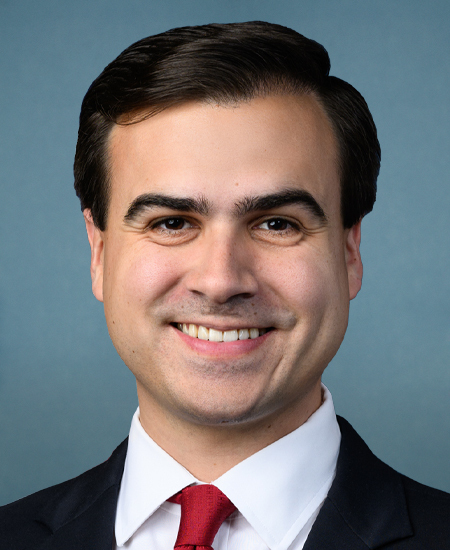
Rep. Pablo José Hernández
Sponsored bills
Maddy summaryThis bill increases loan limits for farmers under the Farm Service Agency. It raises farm ownership loan caps from $600,000/$1.75 million to $850,000/$3.5 million (for direct/guaranteed loans) and operating loan caps from $400,000/$1.75 million to $750,000/$3 million, effective 2025. It also creates a refinancing program allowing distressed guaranteed loans to convert to direct loans if borrowers prove problems can be fixed and the farm can return to financial stability. Additionally, it doubles the microloan limit from $50,000 to $100,000 and updates inflation calculations for loan adjustments using USDA land value data instead of previous metrics.
Maddy summaryHR 2632, the TRICARE Equality Act, updates how the TRICARE health program operates for military beneficiaries in Puerto Rico. It requires the Defense Secretary to treat Puerto Rico similarly to U.S. states when designating TRICARE Prime service areas, expands travel benefits for eligible Puerto Rico residents who would qualify on the mainland, and mandates coordination between federal health offices and Puerto Rico’s health department for health information sharing. The bill also requires the Defense Secretary to report to Congress within 180 days on implementation progress. These changes directly affect military service members, retirees, and their families using TRICARE in Puerto Rico.
Maddy summaryHRES 276 is a non-binding resolution recognizing racial disparities in colorectal cancer outcomes for the Hispanic community. It specifically highlights that Hispanic adults are less likely to receive screening (49% vs. 58% for non-Hispanic White adults) despite colorectal cancer being a leading cause of cancer death in this group. The resolution encourages the CDC to research screening disparities and develop strategies to reduce them, while also supporting National Colorectal Cancer Awareness Month in March. It urges individuals to discuss screening with healthcare providers and calls for NIH research on risk factors in young adults. This resolution does not create new laws or funding but aims to raise awareness and guide future public health efforts.
Save America's Forgotten Equines Act of 2025 or the SAFE Act of 2025 This bill permanently prohibits the slaughter of equines (e.g., horses and mules) for human consumption. (Current law prohibits the slaughter of dogs and cats for human consumption. This bill extends the prohibition to equines.) Specifically, this bill prohibits a person from knowingly (1) slaughtering an equine for human consumption; or (2) shipping, transporting, possessing, purchasing, selling, or donating an equine to be slaughtered for human consumption or equine parts for human consumption. The bill subjects a violator to a fine. The bill applies to conduct in or affecting interstate or foreign commerce or within the special maritime and territorial jurisdiction of the United States. However, it does not apply to an activity carried out by an Indian for a religious ceremony. As background, in recent years, the appropriations acts have prohibited the Department of Agriculture (USDA) from using federal funds to inspect horses before they are slaughtered for human consumption. Therefore, there are currently no USDA-inspected horse slaughter facilities in the United States.
Maddy summaryHRES 261 is a symbolic resolution recognizing the heritage, culture, and contributions of Latinas in the United States. It celebrates Latinas' historical and ongoing roles in fields like business, military service, science, arts, and public office, while acknowledging persistent challenges like wage gaps and systemic barriers. The resolution specifically highlights that Latinas make up approximately 1 in 6 U.S. women (31 million people) and emphasizes their economic impact (contributing $1.3 billion to GDP in 2021) and cultural achievements. It does not create new policies or allocate funds but formally honors these contributions and calls for continued efforts to address inequities. This resolution directly affects Latinas as a recognized demographic group within U.S. society.
Maddy summaryThe COST of Relocations Act (HR 2470) requires federal agencies to conduct a detailed benefit-cost analysis before relocating more than 5% or 100 employees (whichever is smaller) outside their current commuting area. Agencies must submit an unredacted report to their Inspector General, covering expected outcomes, stakeholder impacts, risk assessments, and how the move affects the agency's mission. The Inspector General then reviews the report and submits findings to Congress within 90 days, including an assessment of whether the relocation complies with existing OMB guidance. This law applies specifically to significant relocations of federal operations, ensuring transparency without overriding other legal requirements for such moves.
Maddy summaryHR 2398, the Rural Veterinary Workforce Act, amends federal tax law to exempt certain student loan repayment or forgiveness assistance from income tax for veterinarians working in rural areas. It specifically expands existing tax exclusions to include programs under the National Agricultural Research, Extension, and Teaching Policy Act (7 U.S.C. 3151a) and similar state-level programs designed to increase rural veterinary access. This change directly affects veterinarians participating in qualifying loan repayment or forgiveness programs in states prioritizing rural veterinary services. The policy change modifies IRS tax treatment to reduce the financial burden on veterinarians serving underserved rural communities.
Maddy summaryThe Providing Veterans Essential Medications Act requires the Department of Veterans Affairs to reimburse State homes or provide medications directly for certain high-cost drugs used by veterans in State-run nursing homes. A medication is defined as high-cost if its price (including a 3% fee) exceeds 8.5% of the VA's monthly payment for the veteran's care at that home. This applies specifically to State homes that provide such medications to veterans under VA contracts. The bill ensures veterans receive essential medications without financial burden on the State homes, using clear cost thresholds to determine eligibility.
Maddy summaryThe Paycheck Fairness Act strengthens equal pay protections by expanding the definition of "sex" to include pregnancy, childbirth, sexual orientation, gender identity, and sex characteristics. It modifies employer defenses for pay disparities to require proof that any pay difference is job-related, not based on sex, and accounts for the entire pay gap. The bill prohibits employers from asking about salary history, enhances penalties for violations, and requires employers with 100+ employees to collect and report detailed pay data by race, sex, and job category. It also establishes training programs for employers on eliminating pay bias and creates a National Equal Pay Enforcement Task Force to coordinate enforcement efforts. This legislation directly affects employers, particularly those with 100+ employees, and aims to address pay disparities impacting women, people of color, and other underrepresented groups.