

Maddy summaryHR 5689, the "Shutdown Guidance for Financial Institutions Act," requires federal banking regulators (like the Fed and FDIC) to issue guidance within 180 days of enactment. The guidance directs financial institutions to help consumers and businesses affected by government shutdowns - such as furloughed federal workers, District of Columbia employees, or contractors with reduced income - by offering flexible payment options, modifying loan terms, and preventing temporary payment difficulties from harming credit scores. Regulators must also issue a press release within 24 hours of a shutdown starting to notify institutions and the public. The bill mandates a post-shutdown report to Congress within 90 days and potential guidance updates if issues arise.
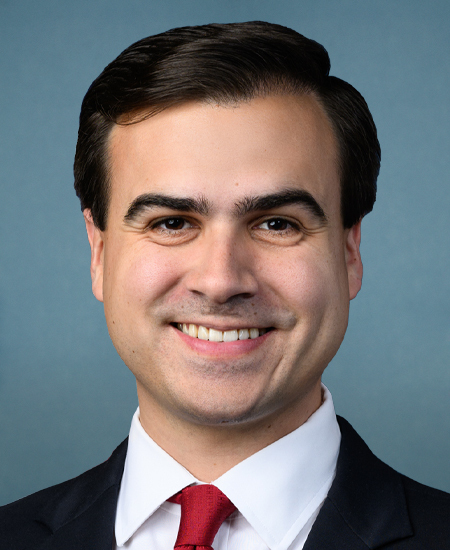
Rep. Pablo José Hernández
Sponsored bills
Maddy summaryThis bill adds Medicare coverage for multi-cancer early detection screening tests (blood or biological tests analyzing cell-free DNA) starting January 1, 2028. It directly affects Medicare beneficiaries aged 68 and older (starting in 2028, with the age limit increasing by 1 year annually), requiring tests to be FDA-cleared and deemed reasonable/necessary by the Secretary for early cancer detection across multiple organ sites. Payment will initially match current stool DNA test rates before 2031, then shift to a lower rate or new payment system after 2031, with limits preventing more than one test per year. The bill explicitly states it does not alter coverage for existing cancer screenings like breast, colorectal, or prostate cancer tests.
Maddy summaryHRES 784 is a symbolic House resolution designating September 29, 2025, as "National Coffee Day." It recognizes coffee's economic importance, noting it supports over 2.2 million U.S. jobs and contributes $343 billion annually to the economy. The resolution expresses support for coffee's role in trade, culture, and global supply chains but does not create new laws or policies. It serves as a non-binding acknowledgment of coffee's value, with no direct impact on individuals or regulations.
Maddy summaryThis resolution condemns the use of federal regulatory agencies (like the FCC) or lawsuits to suppress lawful speech critical of political parties or the President, specifically referencing concerns about tactics mirroring authoritarian practices. It does not create new laws but formally warns that such actions undermine First Amendment protections and democratic norms. The resolution directly affects media organizations, journalists, and public discourse by calling on government agencies to avoid using their power for political retaliation. It reaffirms the House’s commitment to protecting free expression and urges officials to refrain from pressuring media to silence criticism.
Maddy summaryHRES 746 is a non-binding resolution passed by the U.S. House of Representatives condemning all political violence - including attacks on elected officials, candidates, and public figures - and rejecting rhetoric that dehumanizes opponents. It specifically urges law enforcement to investigate and prosecute such violence, calls on public officials and media to avoid inflammatory language, and references recent incidents like the 2025 assassination of activist Charlie Kirk and targeted shootings of Minnesota legislators. The resolution does not create new laws but formally expresses the House’s commitment to protecting public servants and promoting peaceful political discourse. It directly affects the House’s public stance and serves as a call to action for officials, media, and communities to foster civil engagement.
Maddy summaryHR 5464, the Net Metering Protection Act, protects state-level net metering standards that allow residential and commercial solar customers to receive credit for excess electricity they send back to the grid. The bill prevents federal commissions, state boards, or other entities from blocking or interfering with state regulatory agencies or nonregulated utilities from implementing these net metering standards. This directly affects homeowners with solar panels, local utilities, and state energy regulators by ensuring they can continue offering fair compensation for solar-generated power without federal or state-level obstruction. The law specifically targets barriers to existing net metering policies under federal energy law, not creating new requirements.
Maddy summaryThe Tyler Clementi Higher Education Anti-Harassment Act of 2025 requires U.S. colleges and universities participating in federal financial aid programs to create and distribute clear anti-harassment policies covering harassment based on race, color, national origin, sex (including sexual orientation and gender identity), disability, or religion. These policies must explicitly prohibit harassment in all settings - including online, on campus, off-campus housing, and during school-sponsored activities - and outline reporting procedures and support services for victims. The bill also establishes a $50 million annual grant program to fund schools developing prevention programs, victim support services, or staff/student training on recognizing and addressing harassment. Grants are competitive, require annual reporting on effectiveness, and must be used to improve existing efforts without replacing existing civil rights laws like Title IX.
Maddy summaryHRES 724 is a symbolic House resolution commemorating the eighth anniversary of Hurricane Maria’s 2017 devastation of Puerto Rico and the U.S. Virgin Islands. It honors victims and survivors while urging the Federal Emergency Management Agency (FEMA) to expedite disbursement of recovery funds and calling for Congress to prioritize resilient infrastructure investments in these territories. The resolution highlights ongoing challenges like power grid fragility, healthcare access gaps, and bureaucratic delays in federal aid - despite $23.4 billion in FEMA assistance and $20 billion in HUD disaster funds already allocated. As a non-binding resolution, it does not create new laws or funding but serves as a formal recognition of the storm’s lasting impacts and a call for continued support.
Maddy summaryHR 5432, the Puerto Rico Energy Oversight and Accountability Act, requires the U.S. Comptroller General to conduct two studies examining LUMA Energy and Genera PR's operations, Federal coordination, and funding efficiency in Puerto Rico's energy sector from June 2021 onward. The studies will assess how these entities' decisions impacted grid projects, Federal recovery efforts, and local government policies, and must include recommendations to improve oversight, coordination, and accountability. This procedural bill does not enact policy changes but mandates factual analysis to inform future energy resilience efforts in Puerto Rico.
Maddy summaryHR 5395, the Disaster Relief Disbursement Accountability Act, requires federal disaster fund recipients (like state and local governments) to report how quickly they distribute funds to subrecipients after disaster declarations. It mandates recipients to submit annual reports on average disbursement times for programs including hazard mitigation grants and public assistance (sections 403, 404, 406, 407, 428, and 502 of the Stafford Act). Recipients must also provide a retroactive report within one year for disasters declared before the bill’s enactment. The Administrator must then compile these reports and submit an annual summary to Congress starting three years after the bill’s enactment. This focuses on transparency and accountability in the disbursement process, not on changing eligibility or funding levels.