

Maddy summaryHR 6479, the Puerto Rico Affordable Care Act of 2025, would extend key provisions of the Affordable Care Act to Puerto Rico. Specifically, it requires Puerto Rico to establish a health insurance marketplace (Exchange) one year after enactment, applies federal health insurance market reforms (like banning lifetime limits) to coverage sold there, and treats Puerto Rico like a state for federal premium tax credits. This means Puerto Rico residents would gain access to the same health insurance marketplaces, consumer protections, and federal subsidies for low-income residents as those in states. The bill directly affects all Puerto Rico residents seeking health insurance coverage by aligning their access with the ACA framework.
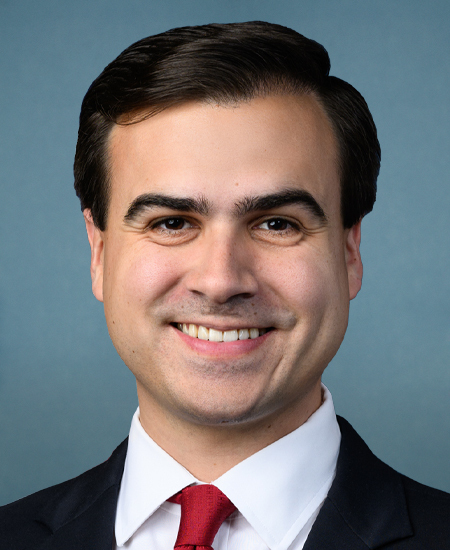
Rep. Pablo José Hernández
Sponsored bills
Maddy summaryThe Dignity for Detained Immigrants Act establishes minimum standards for detention facilities operated by the Department of Homeland Security, requiring them to follow the American Bar Association's Civil Immigration Detention Standards. It mandates annual unannounced inspections by the DHS Inspector General, with penalties including fines for noncompliant private facilities and transfers of detainees from noncompliant facilities. The bill requires DHS to publicly report on facility compliance, phase out private detention facilities over three years, and prohibit solitary confinement. It also ensures detainees have access to legal orientation, counsel, and more frequent custody review hearings. The bill directly affects all individuals detained in DHS custody, including immigrants, asylum seekers, and refugees held in facilities operated by or contracted to DHS.
Maddy summaryHRES 856 is a non-binding resolution expressing the House of Representatives' view that the U.S. Department of Agriculture (USDA) should use its existing contingency funds and interchange authority to fund the Supplemental Nutrition Assistance Program (SNAP) for November 2025. The resolution cites that the USDA holds over $5 billion in contingency funds set aside for emergencies and has legal authority under the Department of Agriculture Organic Act to transfer funds between nutrition programs to maintain SNAP benefits. This would directly support approximately 42 million people relying on SNAP, including 16 million children, 8 million seniors, 4 million people with disabilities, and 1.2 million veterans, preventing disruption during a potential funding gap. The resolution does not create new law but urges the administration to use existing resources to ensure continued food assistance.
Maddy summaryHR 5562, the Tropical Plant Health Initiative Act, authorizes research and extension grants to address plant health threats affecting specific tropical crops. The bill directly supports researchers and agricultural programs working with crops like coffee, cacao, bananas, mangos, and vanilla by funding science-based tools to combat pests and weeds. Key provisions include developing pest management strategies, collecting production data, and researching biological factors affecting these plants' health. The initiative extends federal funding authorization through 2030, focusing on practical research to protect economically important tropical agriculture.
Give Kids a Chance Act of 2025 This bill expands the Food and Drug Administration’s (FDA’s) authority with respect to research on rare pediatric diseases, including by permitting the FDA to take enforcement action against drug sponsors that fail to satisfy pediatric study requirements and by reauthorizing programs that support pediatric research. Specifically, the bill modifies requirements relating to molecularly targeted pediatric cancer investigations to permit research on new drugs in combination with active ingredients that have already been approved, provided certain conditions are met; permits the FDA to take enforcement action against drug sponsors that fail to comply with pediatric study requirements, if such sponsors demonstrated a lack of due diligence in satisfying the requirement; renews the FDA’s authority to award priority review vouchers to sponsors of new products intended to treat rare pediatric diseases through September 30, 2029; and reauthorizes through FY2027 certain funding for the National Institutes of Health to support priority pediatric research. The bill also provides statutory authority for the FDA’s interpretation of the orphan drug exclusivity period. The bill specifies, consistent with FDA regulations, that the seven-year market exclusivity period for drugs for rare diseases or conditions (i.e., orphan drugs) prohibits the approval of the same drug for the same approved use or indication with respect to the disease or condition. (In Catalyst Pharmaceuticals, Inc. v. Becerra , a court rejected the FDA’s interpretation and held that orphan drug exclusivity extends to all uses or indications for the disease or condition.)
Maddy summaryThis bill ensures FEMA can continue disaster relief payments during government funding gaps. It requires the agency to keep using existing Disaster Relief Fund money for active disaster assistance, emergency aid, and recovery programs - even if Congress hasn’t passed new funding. Essential staff handling these disbursements are protected from furloughs during such gaps, treated as "excepted" under federal law. The bill directly affects disaster victims receiving aid and FEMA employees managing relief operations during budget lapses.
Maddy summaryThis bill amends federal law to allow the U.S. Virgin Islands and Puerto Rico to issue commercial driver's licenses (CDLs), which they were previously ineligible to do under Title 49 of the U.S. Code. It directly affects commercial drivers in these territories by granting them eligibility to obtain CDLs, aligning their licensing with mainland U.S. requirements. Key provisions include adding the territories to the definition of eligible jurisdictions, creating a 5-year grace period to avoid federal funding penalties for non-compliance during implementation, and requiring the Federal Motor Carrier Safety Administration to collaborate with the territories on full compliance. The change removes a barrier for commercial drivers in these regions while providing time to meet federal standards.
Maddy summaryThe VIVAS Act (HR 6301) directs the U.S. Comptroller General to conduct a comprehensive study on gender-based violence in Puerto Rico, including femicides, domestic abuse, and sexual violence. The study will analyze prevalence, causes, and impacts across communities - particularly affecting women, LGBTQIA+ individuals, and marginalized groups - while assessing institutional responses (like law enforcement and health services), data systems, and barriers to justice. It requires input from local organizations, survivors, and community groups to evaluate gaps in services and recommend improvements for prevention, data transparency, and policy. The Comptroller General must issue an interim report within 270 days and a final report within 540 days, with findings to inform federal and local efforts addressing this public health crisis.
Maddy summaryThis bill expands Medicare coverage to include genetic counseling services provided by licensed or certified genetic counselors, effective January 1, 2027. It defines "covered genetic counseling services" as those furnished by qualified counselors under state law or certification, with payments set at 80% of the lesser of the actual charge or 85% of the physician fee schedule. Medicare beneficiaries seeking genetic counseling will gain access to these services through covered providers, while preventing balance billing for these specific services. The bill does not restrict physicians from billing for similar services under existing Medicare rules.
Maddy summaryThis bill directs the FEMA Administrator to take over administration of the Next Generation Warning System grant program, requiring them to disburse all existing obligated funds within 180 days and begin awarding new grants for fiscal years 2023 and 2024. It mandates the Secretary of Homeland Security to conduct research on improving emergency warning system accessibility, security, and resiliency within one year, with a report to Congress within two years. The bill primarily affects state, local, tribal, and territorial governments that receive these grants for emergency warning systems. It focuses on streamlining existing grant administration and research, without creating new funding or policy changes.