

Maddy summaryThis bill requires IRS employees currently authorized to telework (under policies established during the pandemic) to return to physical offices. It mandates this return starting 5 business days after the bill's enactment and continues until the IRS eliminates its backlog of unprocessed tax returns for all taxable years. The requirement applies specifically to IRS staff who were permitted to telework as of the bill's enactment date. Additionally, the bill blocks the use of Inflation Reduction Act funds for the IRS until the backlog is cleared, tying funding directly to this operational goal.
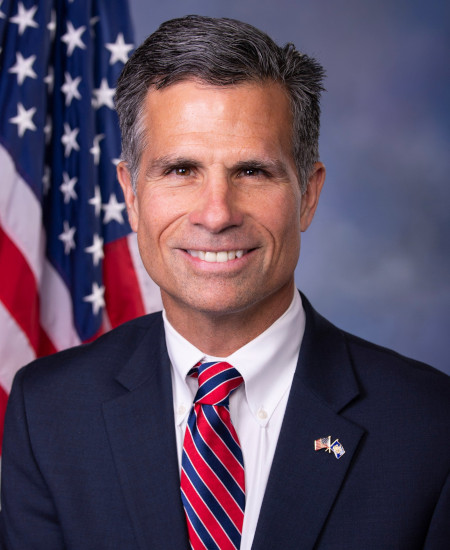
Rep. Daniel Meuser
Sponsored bills
Maddy summaryHR 488, the SNOOP Act of 2023, modifies tax reporting requirements for third-party payment platforms like PayPal or Venmo. It sets new thresholds requiring these platforms to report transaction data to the IRS only when a business or individual receives over $20,000 in payments or has more than 200 transactions in a year. This directly affects payment processors by reducing the number of transactions they must report compared to current rules. The bill aims to streamline reporting for smaller transactions while maintaining oversight for significant activity. It applies to tax returns filed for calendar years starting after 2021.
Maddy summaryHR 484, the Natural Gas Tax Repeal Act, repeals Section 136 of the Clean Air Act, which established a methane emissions and waste reduction incentive program for natural gas systems. This directly affects natural gas operators who previously participated in the program by ending their eligibility for associated incentives. The bill also rescinds any unobligated funds allocated under that program before its repeal. The change removes a federal requirement for the industry to reduce methane emissions through this specific incentive mechanism.
Maddy summaryThe Putting Investors First Act of 2023 requires proxy advisory firms (companies that provide voting recommendations to investors) to register with the Securities and Exchange Commission and disclose potential conflicts of interest. It mandates these firms to establish procedures ensuring recommendations are based on accurate information, provide public companies with reasonable time to review data used in recommendations, and maintain an ombudsman for complaint resolution. The bill also requires investment advisors and asset managers with over $100 million in assets to report how they use proxy advice and provide economic analysis for votes not aligned with board recommendations. Additionally, it prohibits "robovoting" (automatically voting based on proxy advice) and mandates ESG funds to disclose performance comparisons with standard index funds. The legislation aims to increase transparency and accountability in the proxy advisory industry to better protect investor interests.
Maddy summaryHCONRES 3 is a non-binding congressional resolution expressing support for pro-life facilities, groups, and churches targeted by vandalism and threats following the Supreme Court's Dobbs decision. It condemns specific incidents like graffiti, window-smashing, and arson at pregnancy centers and churches (e.g., in Frederick, MD, and Portland, OR), while recognizing the role of these organizations in supporting pregnant women. The resolution calls on the Biden Administration to use law enforcement to protect these facilities but does not create new laws or policies. As a symbolic measure, it has no legal effect on the incidents described.
Maddy summaryHRES 51 is a non-binding House resolution expressing support for designating the week of January 22-28, 2023, as "National School Choice Week." It encourages parents to learn about K-12 education options (including public, charter, private, and homeschooling) and urges public awareness events during that week. The resolution does not create new policies, funding, or legal requirements - it solely serves as a symbolic expression of support for parental choice in education. It directly affects no individuals or entities, as it is a procedural resolution with no legislative force.
Maddy summaryThe RETURN Act requires IRS employees currently authorized to telework (due to pandemic policies) to return to physical offices starting 5 business days after the bill's enactment. This mandate continues until the IRS Commissioner certifies that the backlog of 2020 tax returns has been resolved. The bill also prohibits the Treasury Department from spending funds allocated to the IRS under the Inflation Reduction Act until the backlog is eliminated. It directly affects IRS staff permitted to work remotely and ties federal funding to the resolution of a specific tax processing backlog.
Maddy summaryHR 361, the "Stop Inflationary Spending Act," requires the Congressional Budget Office (CBO) to analyze how major budget bills (reconciliation legislation) impact inflation. Specifically, the CBO must provide an inflation analysis for such bills covering the fiscal year they take effect and the next four years, including the basis for each estimate. This applies to bills reported by a House committee, submitted to the Budget Committee, or directly to the Rules Committee. The bill affects Congress and the CBO by adding a new procedural requirement for budget-related legislation. It does not change spending levels but mandates a specific analysis before such bills are considered.
Maddy summaryThe BASIC Act (HR 362) requires the Congressional Budget Office (CBO) and the Joint Committee on Taxation (JCT) to include the costs of servicing the national debt in their budget estimates, where practicable. This means when analyzing proposed legislation, these agencies must account for interest payments on the federal debt resulting from new spending or tax changes. The bill amends the 1974 Congressional Budget and Impoundment Control Act by adding a new section mandating this inclusion. The primary effect is on the CBO and JCT, which will adjust their budget scoring methods to reflect debt servicing costs.
Maddy summaryThis bill creates new federal crimes for killing or assaulting law enforcement officers, judges, and certain public safety officers (including firefighters) while they are on duty or for past duties, with penalties including minimum 10-year sentences for killing and varying assault penalties based on severity. It adds a new factor that would make the federal death penalty more likely for killing such officers, limits federal legal challenges for convictions related to these killings, and expands law enforcement officers' rights to carry firearms in certain circumstances. The bill also provides funding for grants to improve community-law enforcement relationships through transparency, accountability, and officer wellness programs. It directly affects law enforcement officers, judges, and public safety personnel across the country, establishing new federal protections and procedures for violence against these personnel.